
Fast Self-Serve AI Answer Tracking Alternatives
Compare self-serve AI answer tracking alternatives by setup, raw-response evidence, benchmarks, exports, and migration readiness.

Fast Self-Serve AI Answer Tracking Alternatives
AI answer tracking is increasingly global and market-specific. Google says AI Mode is available in over 200 countries, which makes controlled prompts, locales, and engine settings essential for any enterprise comparison.
A viable self-serve AI answer tracking alternative gives an enterprise team a documented route from account creation to a reviewable report: defined engine coverage, preserved response text and citations, transparent peer benchmarks, downloadable evidence, and written commercial terms. Treat any missing item as an evaluation risk, not as an implied capability.
We cover the selection matrix, evidence standards, category-average method, seven-day migration workflow, and readiness score that let marketing, growth, SEO, and content leaders compare options without relying on opaque dashboard scores.
What Should Teams Verify Before Choosing Self-Serve AI Answer Tracking Alternatives?
We start with operational proof, not a feature checklist. A platform can appear easy to buy while requiring a sales call, manual configuration, an annual commitment, or several collection cycles before anyone can produce a usable report.
Use the same fields for the current platform, PageLens.ai, and every shortlisted option. This keeps a low starting price from masking an unsupported engine, unavailable exports, or an unclear first reporting date. Our fast-start tracking guide explains why prompt, engine, and cadence must be priced together.
| Comparison Field | What To Confirm | Decision Standard |
|---|---|---|
| Price | Public monthly price, annual requirement, usage limits, and overages | Record only documented terms |
| Sales Gate | Checkout, guided onboarding, demo, or procurement review | Treat sales-led setup separately from self-service |
| Trial | Trial length, card requirement, and access limits | Mark absent or unstated trials clearly |
| First Usable Data | First evidence-backed report date | Confirm in writing |
| Engines | ChatGPT, Perplexity, Claude, Gemini, Google AI experiences | Test required engines, not a total count |
| Raw Responses | Full answer, prompt, citations, date, and locale | Require row-level access |
| Benchmarks | Peer set, sample size, denominator, and formula | Reject unexplained averages |
| Exports | CSV, API, scheduled report, retention, and ownership | Validate with a sample export |
| Contract Term | Monthly, annual, custom, renewal, and cancellation rules | Capture the contractual version |
Is the Setup Path Actually Self-Serve?
We define self-service narrowly: an authorized user can create a workspace, add or import prompts, set engines and markets, invite approved stakeholders, and obtain reviewable evidence without waiting for a sales-led implementation. Guided onboarding can still be valuable, but it is not the same claim.
Does the Plan Match the Required Engine Mix?
A total engine count is not enough. Teams should list the specific surfaces they need, then test whether each is included at the purchased tier and in the target country. PageLens.ai’s published Enterprise plan lists ChatGPT, Claude, Gemini, Perplexity, Copilot, Google AI Mode, and Grok, alongside 200 tracked prompts and 1,400 daily AI answers.
Can the Team Produce a Report Within a Week?
A first report should mean more than a dashboard login. It should contain a frozen prompt panel, identifiable engines, preserved answer evidence, defined comparison peers, and a short explanation of any missing data. We recommend recording the expected first usable date before procurement approval.
Which Evidence Makes an AI Visibility Metric Auditable?
Raw mention totals are useful for trend scanning, but they do not explain why a number changed or whether the metric is correct. We look for evidence that lets a marketer, analyst, and content lead inspect the same answer without translating an aggregate score back into a hidden dataset.
Each tracked row should preserve the prompt, engine, market, run date, full answer, cited URLs, brand status, recommendation context, and phrase supporting any sentiment label. That is the minimum record needed to challenge a false classification or explain a movement in executive reporting.

Can You Inspect Verbatim Answers?
We require the exact model language behind a metric. If a report says sentiment declined, reviewers should be able to see the relevant phrase in answer context, the prompt that elicited it, and the citations shown with that response.
This matters because visible citations are not a guarantee of complete evidence. OpenAI advises users that search results and citations can be incomplete or wrong and should be checked directly. We apply the same discipline to monitoring reports.
Are Citations Connected to the Prompt and Response?
A citation table without its prompt and answer is incomplete. The useful unit is a traceable chain: buyer question, answer text, cited page, date, engine, market, and outcome label. Our citation tracking method helps teams preserve that chain when reviewing source gains and losses.
Can Sentiment Be Traced to Exact Language?
A sentiment label should be an index into evidence, not a verdict. We recommend storing the phrase, nearby answer text, associated prompt, run date, and reviewer interpretation so stakeholders can distinguish a genuine objection from neutral wording or model noise.
Reviewers should also document why a phrase was classified as positive, negative, neutral, or mixed. That makes sentiment changes easier to audit when a model changes its wording but preserves the same underlying recommendation.
How Should Category Benchmarks Be Calculated?
Category averages often look authoritative because they reduce many answers to one number. They are useful only when readers can inspect who is in the comparison set, what was sampled, and how the calculation handles different engines and missing answers.
We publish the peer definition before interpreting the average. It should identify the brands included, exclusions, market, language, prompt themes, collection window, engine mix, and any changes to the set. A benchmark without peer membership is a score, not a comparable category result.
Define the Peer Set Before Measuring
The peer set should remain fixed for a reporting period. Adding or removing entities midway through a trend changes the benchmark itself, which can make a stable brand appear to rise or fall for arithmetic reasons.
Disclose the Denominator and Sample Size
Report prompt count, engine count, market count, answer count, missing-response treatment, and collection cadence. Keep separate rates for mention, recommendation, citation, and sentiment. Combining them creates a dashboard number that cannot answer a specific leadership question.
| Benchmark Component | Transparent Disclosure | Red Flag |
|---|---|---|
| Peer Set | Named membership and inclusion rule | “Category average” with no peer count |
| Prompt Panel | Prompt text, themes, market, and language | Prompts selected after results appear |
| Engine Coverage | Individual engine and AI search surface | One blended multi-engine total |
| Sample Size | Prompts, answers, and collection dates | No denominator |
| Formula | Mean, median, and missing-data treatment | Proprietary score without method |
| Evidence | Prompt-level answers and cited URLs | Aggregates with no drill-down |
Show the Calculation Plainly
For a visibility rate, we use the number of eligible responses that mention, recommend, or cite a brand divided by all eligible responses in the same fixed panel. The category average is the mean of those peer rates, while the median provides a useful check when a small number of large brands skew results.
That is more defensible than claiming a platform has access to internal ranking signals. Google explicitly notes that external tools do not have its internal data and cannot guarantee results, so we treat a share-of-voice audit as a reproducible sample rather than an engine ranking.
How Can Teams Migrate AI Answer Tracking Within Seven Days?
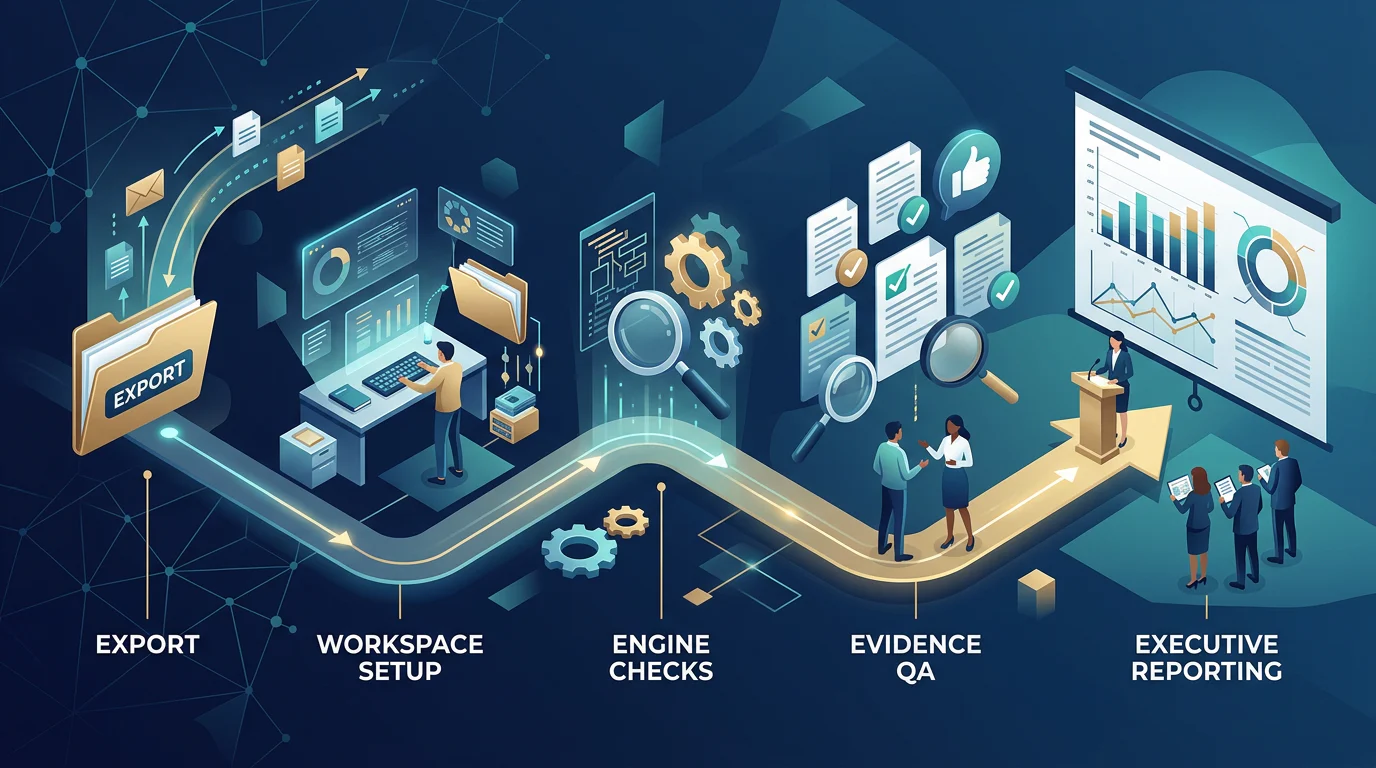
A fast migration protects continuity by separating what can be exported from what must be measured again. Historic answers from the current provider may remain useful evidence, but they are not automatically comparable with a new collection method, engine configuration, locale, or prompt set.
The right goal is not to force a false trend line. It is to preserve legacy evidence, create a controlled new baseline, then label any methodological gap before the first executive readout.
Days One and Two: Preserve the Existing Baseline
Export prompts, tags, markets, peer lists, report definitions, raw answers, cited URLs, screenshots, stakeholder permissions, and historic reports. Record the current contract end date, renewal notice, data retention period, export format, and ownership terms.
Days Three and Four: Configure a Frozen Parity Panel
Remove duplicate prompts but retain the exact language, market, intent tag, and priority of the approved panel. Map older metrics to distinct fields for mention, recommendation, citation, source context, and sentiment. Our multi-engine method helps teams keep ChatGPT, Perplexity, Claude, Gemini, and Google AI experiences separate.
Days Five Through Seven: Run QA and Publish the First Report
Run the frozen panel, inspect a meaningful sample against saved answers, validate citation and sentiment labels, then publish the first report with a visible “not comparable” column wherever engine coverage, timing, or methodology differs. This gives leaders a usable baseline without pretending that new data recreates old history.
How Do You Validate Readiness Before Switching?
A selection decision should end in a controlled parity test. We use the same prompt panel, markets, engines, peer set, and reporting definitions across every finalist, then score only evidence that can be reviewed by the buying team.
The score below is an evidence-completeness measure, not a claim that one platform is universally better. Unverified information earns no points until a public document, contract, test result, or demonstrated export confirms it.
| Readiness Area | Weight | Evidence Required |
|---|---|---|
| Self-Service Setup | 25 | Workspace creation, prompt import, engine setup, and first-report path |
| Data Integrity | 30 | Verbatim answers, prompt-level citations, dates, markets, and QA sample |
| Stakeholder Access | 20 | Roles, seats, shared reports, exports, and ownership terms |
| Security Review | 25 | Security documentation, access controls, and contractual confirmation |
Review the first report with marketing, SEO, content, analytics, procurement, and security represented. The test should include a source gain, a source loss, a mention change, a sentiment phrase, and a missing-answer scenario. That creates a real reporting workflow rather than a polished demo.
We also recommend recording the remediation path after a visibility change. A lost citation should lead to evidence review, content or technical investigation, and a measured recheck. Our citation recovery workflow provides a practical structure for that loop.
Why PageLens.ai Fits a Fast-Start Evaluation
At PageLens.ai, we built our platform for teams that need a reviewable record of how AI answers describe their category, not another opaque score. Our published plans list monthly pricing, guided onboarding, unlimited users, verbatim answer evidence, citation analysis, sentiment analysis, competitor reporting, and share-of-voice reporting. We publish clear tracking limits so teams can align workload with the plan they buy: Launch lists 100 weekly prompts and 300 weekly answers, Growth lists 100 daily prompts and 500 daily answers, and Enterprise lists 200 daily prompts and 1,400 daily answers. Enterprise also lists the broader engine coverage many larger teams need. We still encourage buyers to confirm exports, retention, security terms, and the first usable reporting date for their own rollout. Our job is to make the evidence and next action visible, then help teams turn recurring gaps into governed content work. Review our methodology, then Book a demo
FAQs on Self-Serve AI Answer Tracking Alternatives
What Makes a Tracking Platform Truly Self-Serve?
A truly self-serve platform lets an authorized user create the workspace, import prompts, configure engines, invite stakeholders, and generate reviewable evidence without a required sales-led implementation.
Why Are Verbatim AI Responses Important?
Verbatim responses let teams verify mentions, citations, recommendations, and sentiment against the exact model language and context, so dashboard metrics can be independently checked and explained.
Can Old and New Tracking Data Be Compared?
Compare data only when prompts, engines, markets, timing, response rules, and metric definitions match. Otherwise preserve historic results as context and clearly label the new baseline separately.