

TL;DR
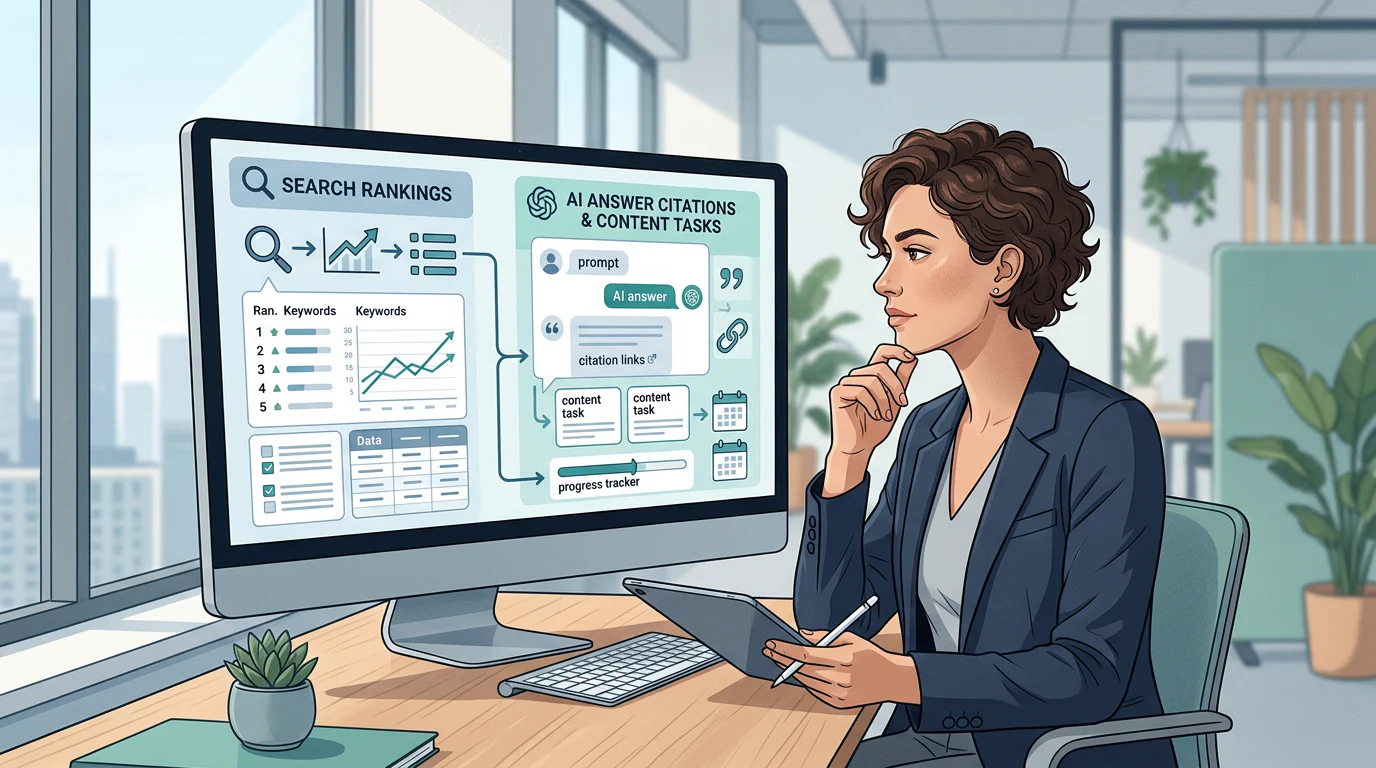
At PageLens.ai, we use ChatGPT brand tracking to measure whether buyer-facing answers mention, recommend, compare, or cite a company. This guide shows how to build a controlled prompt portfolio, capture evidence, account for response variation, choose manual or automated monitoring, and turn findings into content actions and monthly reporting.
Conventional search has a familiar reporting layer. Google’s branded-query filter provides 16 months of history, but ChatGPT answers do not arrive with a comparable rank report for your company.
ChatGPT brand tracking means monitoring a fixed portfolio of buyer prompts on a recurring schedule and recording whether each answer mentions, recommends, compares, or cites your company. Include brand, category, problem, comparison, alternative, and purchase-intent prompts, save the exact answers, and compare repeated runs over time. Random spot checks cannot separate a durable visibility pattern from ordinary response variation.
We will show you how to select buyer prompts, establish an evidence-based baseline, account for changing responses, choose a monitoring method, and turn findings into a useful monthly scorecard.
What Does ChatGPT Brand Tracking Measure?
ChatGPT brand tracking measures an answer, not a conventional search position. In traditional search, a page can earn impressions, clicks, and an average position. In ChatGPT, the useful evidence is whether your company appears in the answer, how it is described, whether it is actively recommended, and which sources support the response.
ChatGPT can search the web when a question benefits from current information, and answers that use search can include inline citations or a Sources panel. That is why we preserve the response and its cited sources together when conducting a ChatGPT Search review.
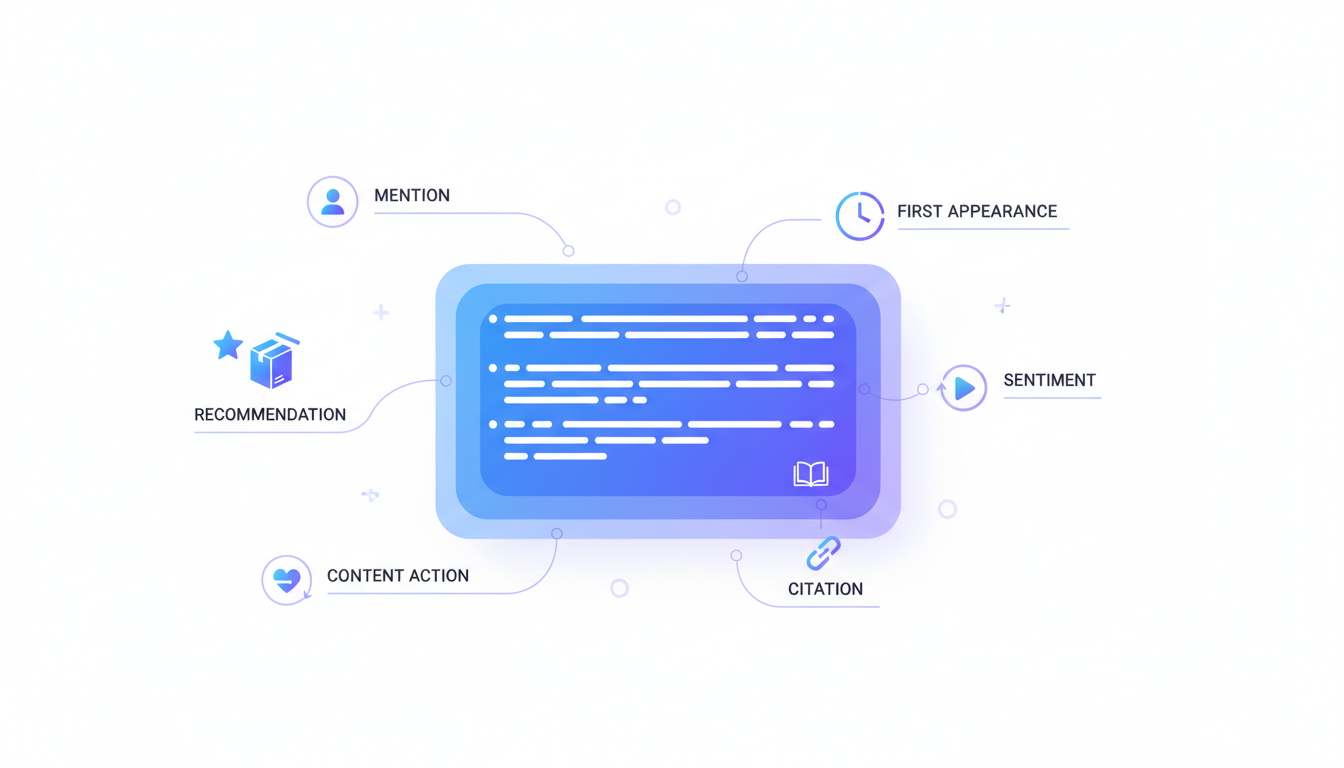
| Signal | What To Record | Why It Matters |
|---|---|---|
| Mention | Whether your company name appears | Establishes basic category presence |
| Recommendation | Whether the answer proposes your company for the buyer need | Separates visibility from endorsement |
| Comparison | Whether the answer evaluates your company against alternatives | Reveals positioning and trade-offs |
| First-Appearance Order | Where your company first appears in the written answer | Captures prominence without calling it rank |
| Citation | Cited URLs and source type | Shows the evidence surrounding the answer |
| Accuracy | Correct, incomplete, or incorrect description | Creates a content repair queue |
We use “first-appearance order” deliberately. A generated answer is not a fixed results page, so calling the second company listed “position two” creates false precision. Our AI visibility versus SEO guide explains why answer evidence and search performance should be reported separately.
Which Prompts Should a SaaS Team Track?
A useful portfolio mirrors the questions buyers actually ask when they are deciding whether to investigate, compare, or buy. Broad category prompts matter, but a startup that only tracks “best tools” questions will miss the problem statements and objections that shape recommendation behavior.
Start with a manageable set of 20 high-value prompts. Tag each one by prompt type, buyer role, use case, and priority so the final report can distinguish a category gap from a single weak comparison.
Start with Six Prompt Types
| Prompt Type | What It Tests | Example Prompt |
|---|---|---|
| Brand | Entity accuracy and perception | “What is this company used for?” |
| Category | Inclusion in a relevant shortlist | “What are the best project management tools for a 20-person startup?” |
| Problem | Relevance to a buyer pain point | “How can a team reduce project handoff delays?” |
| Comparison | Positioning and trade-offs | “Which option fits a growing SaaS team with complex approvals?” |
| Alternative | Substitution visibility | “What are alternatives to this tool for distributed teams?” |
| Purchase Intent | Recommendation readiness | “Which project management tool should a 20-person startup buy for this workflow?” |
Collect Buyer Language from Evidence
We recommend sourcing prompt wording from first-party evidence before expanding it with research. Sales calls reveal how prospects describe the problem. Support tickets reveal where expectations and product reality diverge. Win-loss notes expose objections that do not appear on a feature page.
Search Console can supply exact search queries, though the interface omits some anonymized queries and may truncate table rows. Treat it as one input to prompt selection, not a complete record of buyer language. See the query-data limits before using it to prioritize topics.
- Sales Conversations: Pull recurring category language, stated alternatives, and buying criteria.
- Support Requests: Turn repeated setup, integration, and workflow questions into problem prompts.
- Search Data: Identify non-branded needs that already bring relevant visitors to your site.
- Positioning Research: Capture the claims buyers use when they compare approaches.
A documented buyer prompt dataset keeps these sources connected to the final portfolio, so prompts do not become a collection of improvised questions.
Keep the Portfolio Controlled
Use one canonical wording for each buyer job. Add two phrasing variations only when the intent remains the same and wording could reasonably alter the answer. Lock that list for a reporting period, then log additions, removals, and wording changes before the next cycle.
This discipline matters because a changing portfolio can manufacture a gain or loss. If you replace difficult prompts with easier ones, the mention rate may rise even though your visibility has not changed.
How Do You Establish a Repeatable Baseline?
A baseline is a reproducible record of what ChatGPT said under defined conditions. We run prompts in fresh, documented sessions and save the exact response rather than relying on a screenshot or a recollection of which companies appeared.
Record the visible model, date and time, market, session condition, and whether web search was available. If citations appear, save the cited URLs with the answer. OpenAI explains that citation details may appear inline or through the Sources panel, which makes source capture part of the measurement, not an optional extra. Source display guidance
Run a Comparable Check
For a first baseline, run each of 20 prompts three times under the same conditions. If your team wants to compare web-search and non-search conditions, that produces 120 captured answers: 20 prompts, three runs, two conditions.
Do not treat that number as a universal standard. It is a practical starting protocol that makes variability visible without asking a small team to test hundreds of prompts.
Use a Row-Level Evidence Schema
| Field | Purpose |
|---|---|
| Prompt ID And Exact Prompt | Makes reruns comparable |
| Prompt Type And Buyer Tag | Supports useful rollups |
| Run Date, Time, And Market | Preserves test conditions |
| Model And Search Condition | Identifies material context changes |
| Exact Answer | Creates an auditable record |
| Mention And Recommendation | Separates presence from endorsement |
| First-Appearance Order | Captures answer prominence |
| Accuracy And Sentiment | Turns language into a repair queue |
| Citation URLs | Shows supporting evidence |
| Action Owner And Status | Connects findings to work |
We also separate answer visibility from referral traffic. Publishers may track visits from ChatGPT if their site allows the relevant crawler, but a click does not prove that a company was recommended, and a recommendation can influence a buyer without generating a click. Publisher guidance
Annotate the Answer Before Interpreting It
Mark the first occurrence of your company, then label the description as correct, incomplete, or incorrect. Note whether the answer recommends the company, merely lists it, or frames it as unsuitable for the buyer’s stated need.
This evidence-first approach makes a free daily workflow useful for learning, while preserving the detail a team needs before it takes action.
How Do You Sample Variation and Choose a Monitoring Method?
One answer is an observation, not a trend. Large language models generate outputs probabilistically, and repeatability research distinguishes consistency under identical conditions from consistency when conditions change. That is why we sample repeated runs before treating a single missing mention as a meaningful loss. Repeatability research
We use a simple confidence rule: investigate a movement that appears once, watch one that appears inconsistently, and report a directional change only when the same fixed prompt group moves across two reporting cycles. This gives founders a clear interpretation without pretending that generated answers are deterministic.
Set a Sampling Cadence
For a small startup portfolio, review the highest-priority prompts monthly and rerun each one three times. Move to weekly checks when a campaign, product launch, competitive change, or stakeholder reporting need makes a month too slow.
Always report the denominator. “Mentioned in 8 of 20 prompts across 60 runs” is informative. “Visibility improved” is not, unless the portfolio, run count, and test conditions are clear.
Choose the Monitoring Method by Workload
| Decision Factor | Spreadsheet Is Sufficient | Automated Monitoring Is Necessary |
|---|---|---|
| Portfolio Size | Up to 20 core prompts | More than 20 prompts or segments |
| Cadence | Monthly review | Weekly or more frequent review |
| Workload | Up to 60 prompt-runs monthly | More than 60 prompt-runs monthly |
| Evidence Capture | One owner can preserve outputs | Several people need consistent history |
| Reporting Need | Founder snapshot | Recurring stakeholder reporting |
| Primary Goal | Learn and validate | Detect changes and assign work quickly |
The threshold comes from the baseline math: 20 prompts multiplied by three runs equals 60 prompt-runs before you add markets, search conditions, or variants. We recommend automation when that workload makes teams skip runs, lose source evidence, or delay action. Use our tracking workload guide to make that decision based on operating needs.
How Do You Turn Results into Content Actions and a Monthly Scorecard?
Tracking only matters when it changes what the team does next. We route missing mentions, incorrect product descriptions, and recurring citations to a visible action queue with an owner and due date. The goal is not to force a mention. It is to make the company’s public information clearer, more accurate, and more useful for real buyer questions.
If a company is absent from a high-priority problem prompt, we review whether the site directly answers that problem. If the answer describes the product inaccurately, we correct the canonical product, use-case, pricing, or comparison page. If another company is consistently cited, we inspect the claim and format that source satisfies, then create a better first-party answer where we have genuine evidence.
Map the Finding to the Right Action
- Missing Mention: Create or improve a page that directly answers the buyer job.
- Incorrect Description: Update the most authoritative owned page with specific, current language.
- Weak Recommendation: Clarify fit, limitations, and use cases rather than adding vague claims.
- Unhelpful Citation Mix: Review the cited topics and build genuinely useful supporting content.
OpenAI says any public website can appear in ChatGPT Search, recommends allowing its search crawler for summaries and snippets, and does not guarantee top placement. That makes content quality and crawl accessibility prerequisites, not promises of a particular answer outcome. Crawler guidance
Our citation context guide helps teams distinguish between a cited owned page, a third-party citation, and an answer with no visible citations.
Report a Lightweight Monthly Scorecard

| Scorecard Field | What To Report |
|---|---|
| Portfolio Health | Active prompts and documented changes |
| Mention Rate | Mentioned answers divided by completed runs |
| Recommendation Rate | Recommended answers divided by completed runs |
| First-Appearance Order | Median order among answers containing the company |
| Accuracy | Correct, incomplete, and incorrect counts |
| Citation Mix | Owned-domain, third-party, and no-citation counts |
| Priority Gaps | High-value prompts with no mention |
| Action Progress | Owner, due date, and status |
| Confidence Note | Run count, variation observed, and comparability caveats |
This format gives marketing leaders a concise view while leaving the exact answers available for the people responsible for content. Once the monitoring loop is stable, use it to prioritize content optimization, not to chase isolated outputs.
We also recommend publishing the seven steps as HowTo structured data and the buyer questions as FAQPage structured data. Structured data helps search systems understand page content, though it does not guarantee a special search treatment. Structured-data guidance
Why PageLens.ai Fits a Repeatable Monitoring Workflow
At PageLens.ai, we built our approach for marketing teams that need an evidence trail, not another vanity chart. We help teams turn a stable prompt portfolio into a repeatable review process: define the buyer questions, preserve exact answers, identify whether a company was mentioned or recommended, and route inaccurate language or missing citations to the right content owner. That gives founders a concise monthly view and gives practitioners the detail needed to investigate individual answers.
Our platform fits when manual tracking no longer fits the work, whether the pressure comes from weekly reporting, more prompt segments, or a growing review queue. We will help you decide what to monitor, what to report, and where a content change has enough evidence behind it to earn attention. Start with PageLens.ai if you want to review the platform, or end the manual cycle with Book a demo.
FAQs on ChatGPT Brand Tracking
How Do I Track My Brand in ChatGPT?
Track fixed buyer prompts, run each under documented conditions, save responses and citations, then compare mention, recommendation, accuracy, and first-appearance rates across repeated runs over time.
What Tools Monitor Brand Mentions in ChatGPT?
Use a spreadsheet for a small monthly portfolio, then use automated monitoring when repeated runs, multiple markets, or weekly reporting make evidence capture and review inconsistent.
How Can a Startup Measure ChatGPT Visibility?
A startup can measure visibility by dividing answers that mention its company by completed runs, then reporting recommendation rate, description accuracy, citation mix, and unresolved priority gaps.
What Prompts Should I Track for My SaaS Category?
Track brand, category, problem, comparison, alternative, and purchase-intent prompts that reflect real buyer wording from sales conversations, support requests, search data, and positioning research within your category.
How Do I Know Whether ChatGPT Recommends My Product?
Treat a product as recommended when ChatGPT includes it in a shortlist or directly proposes it for the stated need, then record its first-appearance order and rationale.