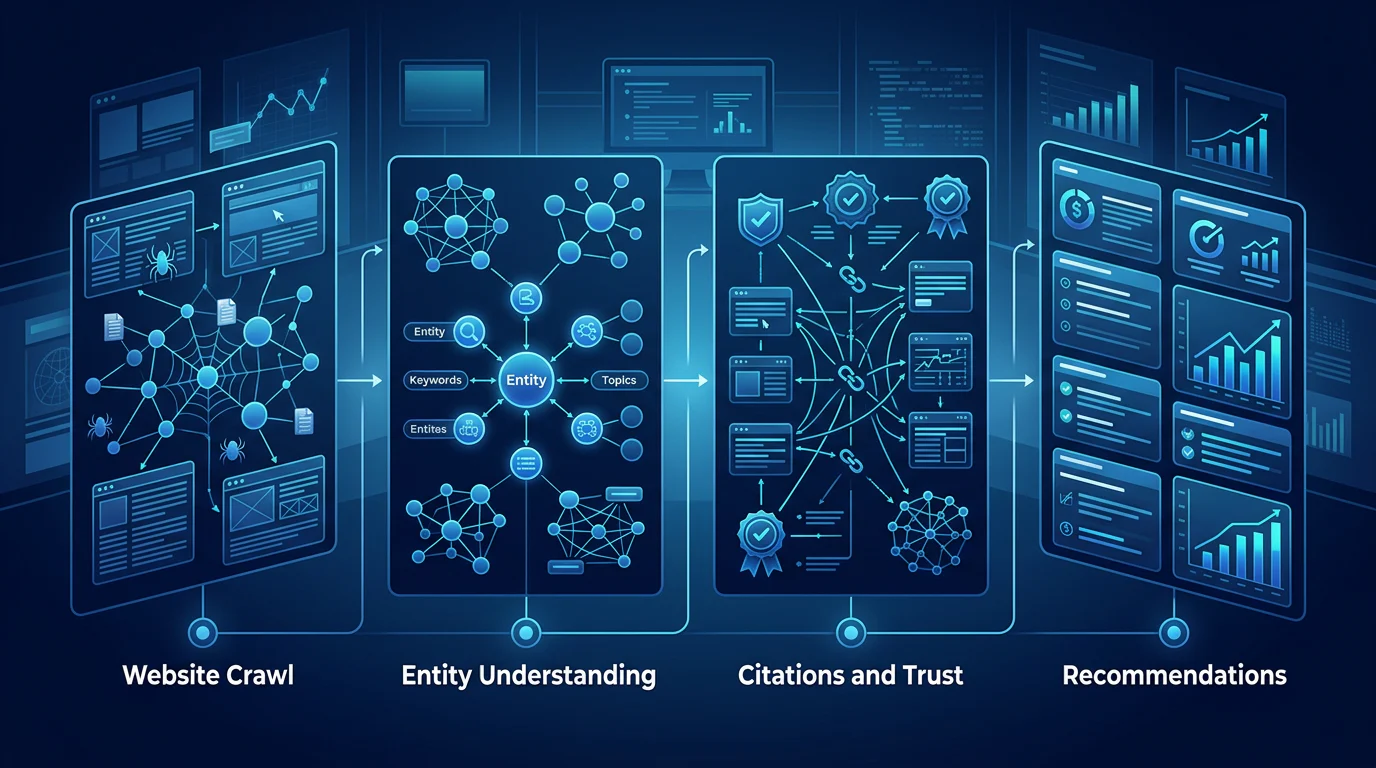
Google AI Mode Ads: What Runs, Who's Eligible, How to Check
Google AI Mode ads run from existing Performance Max, Shopping, and broad match or AI Max Search campaigns, labeled Sponsored. Measure your exposure yourself with a manual prompt sheet.

By Harjot Chopra, Co-Founder, PageLens.ai · Updated 14 Oct 2026

Key takeaways
- Google AI Mode ads need no separate campaign. They run from Performance Max, Shopping, and Search campaigns using broad match or AI Max for Search, and carry a Sponsored label.
- Since September 1, 2026, Google automatically upgrades Search campaigns that use campaign-level broad match or automatically created assets to AI Max for Search, so check which of your campaigns have changed.
- No source shows that buying an AI Mode ad puts your brand in the answer. Measure ad presence and citations as two separate things.
- Formats and eligibility changed several times between May and October 2026, so re-run your check monthly rather than once.
In this article
- 1How do Google AI Mode ads work, and do you need a separate campaign?
- 2Which campaigns are eligible for ads in AI Mode as of October 2026?
- 3Does buying an AI Mode ad get your brand into the answer?
- 4How do you measure your AI Mode ad exposure without a report?
- 5How does PageLens.ai track Google AI Mode?
- 6Frequently asked questions
Google Ads shows an AI Mode ad's clicks, not whether the answer around it names your brand. That gap matters because an ad can win its slot while the answer recommends a rival. Google said at its I/O 2026 keynote that AI Mode has passed a billion monthly active users, as MediaPost reported, and sponsored units now sit inside those answers.
Marketers arrive with three questions, and each one decides how much budget and content effort goes into AI Mode. Are my campaigns already showing there? Can I see it? Does paying for the ad put my brand in the answer?
The first question has a dated answer, because Google changed which Search campaigns qualify on September 1, 2026. The other two have no report to read. The ad is an auction result and the answer's citations are a separate record. Only a sample you run yourself shows how they overlap for your brand and your buyers' questions.
How do Google AI Mode ads work, and do you need a separate campaign?
You do not need a separate campaign. AI Mode is Google Search's conversational mode, where a question gets a written answer and follow-up questions. Ads reach it through campaigns you already run. Google's guidance for the new formats is to build on AI Max for Search, AI Max for Shopping and Performance Max, and ads carry a Sponsored label.
Three terms matter here:
- Performance Max (PMax) is Google's automated campaign type that runs across its channels.
- AI Max for Search is a setting on Search campaigns that widens how queries are matched to your ads.
- Broad match is the loosest keyword setting. It lets Google match related queries, not only your exact words.
The formats Google announced on May 20, 2026, with their status as of October 2026:
| Format | What it does | Status as of October 2026 |
|---|---|---|
| Conversational Discovery ads | Gemini, Google's AI model, builds the ad creative around the person's specific question | Announced May 20, 2026; in testing (Google) |
| Highlighted Answers | A high-quality ad appears inside an AI Mode recommendation list, such as "best language apps for a trip" | Announced May 20, 2026; in testing |
| AI-powered Shopping ads | Gemini writes a product explainer | Announced for "the coming months" from May 2026 |
| Business Agent for Leads | A chat assistant in the ad answers questions from your website | Announced as upcoming |
| Direct Offers | Discounts shown to shoppers ready to buy, in the AI Mode product viewer and, new for 2026, in an expanded AI Mode answer beside other products; AI Max and PMax advertisers create offers in Google Ads, and retailers manage them in Merchant Center, where retailers upload product data (Google) | Existing for eligible advertisers; bundling, native checkout and travel expansion announced as coming |
Google's Ads Liaison Ginny Marvin ties the newest formats to the automated products: "AI Max and PMax for Search are designed to capture complex conversational intent and access our latest ad formats (like Highlighted Answers)."
The practical consequence is that you cannot switch AI Mode on. You can only be eligible, so the first job is knowing whether you are.
Which campaigns are eligible for ads in AI Mode as of October 2026?
Performance Max, Shopping, and Search campaigns using broad match qualify, and Google's newer formats are built on AI Max for Search. As of September 1, 2026, Google automatically upgrades Search campaigns that use campaign-level broad match or automatically created assets to AI Max for Search. A Search campaign you never touched may now be an AI Max campaign.
Google announced the change in August 2026: "Starting September 1, 2026, campaigns using automatically created assets (ACA) and/or campaign-level broad match setting will automatically be upgraded to AI Max for Search campaigns." The original eligibility of Performance Max, Shopping, and broad-match Search campaigns came with the May 2025 announcement, which described ads as part of a test. Our recommendation is to open your Search campaigns and check which ones carry AI Max settings before you read any AI Mode result.
Exact and phrase match keywords joined on September 4, 2026. Marvin called it "a small experiment that recently kicked off", and said exact and phrase match keywords can serve text ads in AI Mode in cases of "explicit and direct user intent." Before this experiment, exact and phrase match campaigns could not show in AI Mode. Anthony Higman, the advertiser who spotted the change, argued it is bigger than Google's framing. Because Google calls it a small experiment, do not build a budget on it. Our recommendation: keep your exact and phrase match structure as it is and test with a small budget.
For control, Google's help page for AI Overviews ads states that you cannot target the placement, cannot opt out, and get no segmented reporting. Assume AI Mode works the same way and measure it yourself.
Does buying an AI Mode ad get your brand into the answer?
No source shows that buying an AI Mode ad puts your brand in the answer. Google labels the ad as a separate Sponsored unit, so the answer's text and citations come from a different process. Our recommendation is to measure both rather than assume one lifts the other.
The labeling is not always obvious to a reader. In one early test reported by MediaPost, a Sponsored listing appeared in the middle of a list of coffeemaker recommendations. When a sponsored entry sits in the same list as unpaid recommendations, your unpaid presence matters twice: it earns trust, and it is what a reader compares your ad against.
In our research at Citation Research (Study 007, fieldwork October 5, 2026), we asked 150 questions from India across 10 topics. Google AI Mode cited Reddit, YouTube or Quora in 117 of the 150 answers, and ChatGPT did so in 3. We have not run the US version of that question set, so treat this as a signal to check community sources, not a US rate.
Our inference, beyond what the study measures, is that an AI Mode answer can lean on threads and videos you cannot bid on. A brand that only buys the ad could win the slot and still be missing from the part of the answer that carries the recommendation. The sheet below tests whether that is true for you.
How do you measure your AI Mode ad exposure without a report?
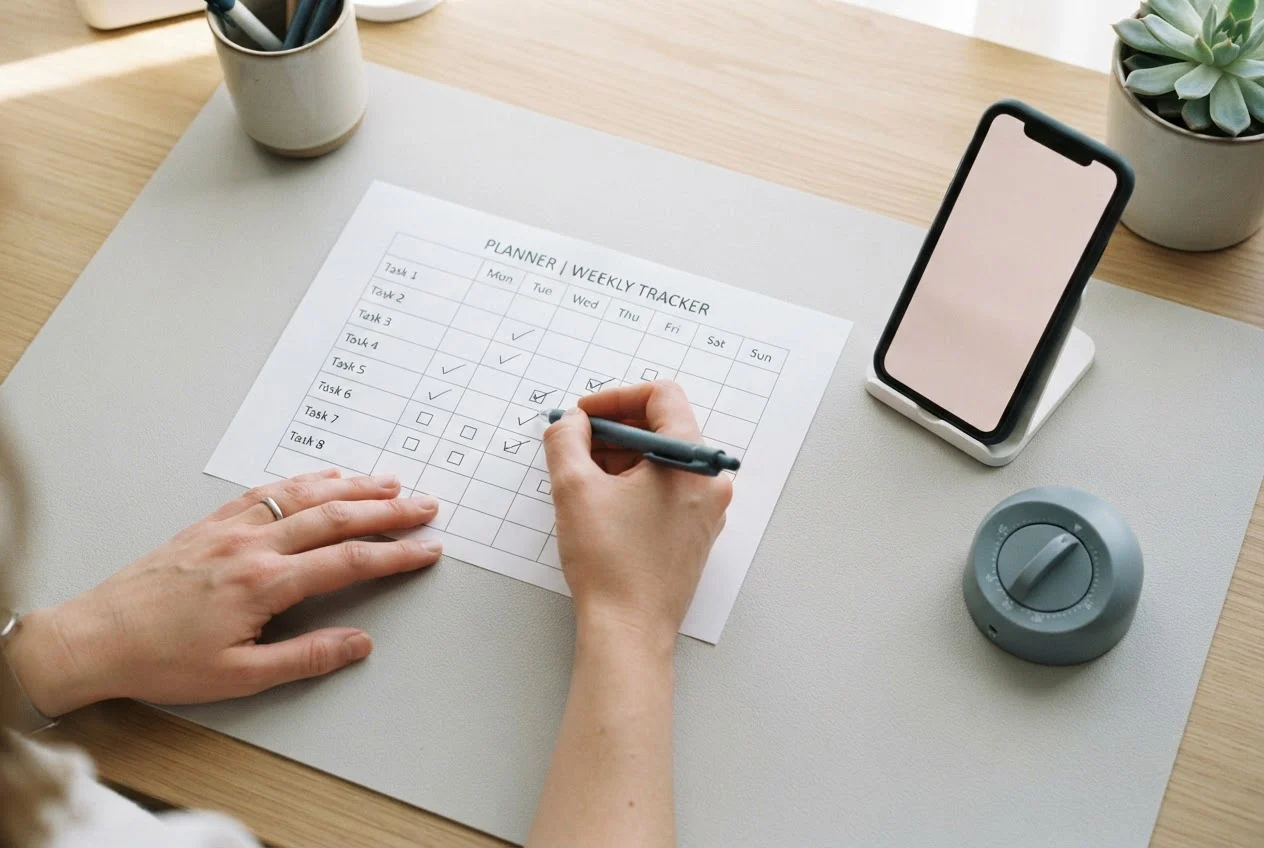
Run the same prompts several times and record, for each one, whether an ad appeared, whose it was, and whether you were cited. It takes a spreadsheet and a fixed setup. Start from the searches you already pay for, then widen to the questions buyers ask before they search for you.
The sheet. One row per prompt:
| Column | What counts as Y |
|---|---|
| Prompt, date, device, location, logged in or out | Keep identical across all runs so results are comparable |
| Ad shown | A unit labeled Sponsored is visible in the answer view |
| Advertiser | The domain of each sponsored unit |
| Your ad | Your domain is one of the advertisers |
| Named | Your brand name appears in the answer text |
| Cited | Your domain appears among the sources the answer shows |
| Rival ad / rival cited | The same two checks for each competitor you track |
Run rules. Run each prompt 3 times and count a cell as Y only if it appears in at least 2 of the 3 runs. That 2-of-3 rule is our recommendation, not a tested standard, and it exists because AI answers vary between runs. Repeats add reliability, not sample size.
How many prompts. Our model uses the standard proportion formula: n = z² × p × (1 − p) ÷ e². With 95% confidence (z = 1.96) and the cautious assumption p = 0.5:
- For ±10 percentage points: 1.96² × 0.25 ÷ 0.10² = 0.9604 ÷ 0.01 = 96.04, so 97 prompts.
- For ±5 percentage points: 0.9604 ÷ 0.0025 = 384.16, so 385 prompts.
The margin applies to each rate separately and is widest near 50%. It assumes independent prompts in one setup, and your rates describe your prompt set, not all of Google. The workload is real: 97 prompts at 3 runs each is 291 runs, and 385 prompts is 1,155. As a first pass, our recommendation is 20 to 30 prompts to learn the sheet; that is too small to put a rate on.
The rates:
- Ad rate = prompts with any ad ÷ total prompts.
- Your-ad rate = prompts with your ad ÷ total.
- Cited rate = prompts where you are cited ÷ total.
What to do with them. In this table, high means 50% or more of prompts and low means under 50%. Those cut-offs are our recommendation.
| Your-ad rate | Cited rate | Meaning | Move |
|---|---|---|---|
| High | Low | You pay for the slot but the answer cites others | Shift effort to the sources the answer cites, including community content |
| Low | High | Rivals' ads sit beside your citation | First check whether your Search campaigns were upgraded to AI Max on September 1, 2026; then check Performance Max, Shopping and broad match, and Direct Offers (discounts shown to shoppers in AI Mode) |
| Low | Low | You are absent where the buyer decides | Fix citations first, then bid |
| High | High | You are covered | Re-run monthly to catch slippage |
To connect the answer to revenue, tag paid clicks with UTM parameters, the tags added to a link that label its source, and read AI referrals in analytics. Our guide to tracking AI traffic in GA4 covers the channel group and the regular expression (regex) test. Choosing which prompts go on the sheet is covered in prompt research.
How does PageLens.ai track Google AI Mode?
We track the answer side. PageLens.ai publishes this page and sells AI answer tracking. On our Launch plan we run your prompts through ChatGPT, Google AI Mode and Perplexity, and record which brands each answer names and which pages it cites. The ad columns on the sheet are a manual check; the named and cited columns are what we track.
As of October 2026, Launch costs $299 a month and tracks 100 prompts weekly (300 AI answers a week), so a 97-prompt sheet fits and three weekly runs take three weeks. Growth costs $699 a month and tracks the same 100 prompts daily (500 AI answers a day), so three runs take three days. A 385-prompt sheet is larger than any standard plan (Enterprise tracks 200), so it needs a custom plan or prompts rotated across weeks. Growth also adds Gemini and Grok, which are separate engines from Google AI Mode. Annual billing saves 8% (pricing). You can also see how AI engines describe your brand in the free AI visibility audit.
A single run tells you little, so we repeat prompts and compare over time; the method is in tracking AI citations over time. Google AI Overviews, the summary shown above regular results, carry ads too, but PageLens.ai does not track Overviews as a separate engine. For getting cited there, see how to rank in Google AI Overviews.
To set up your prompts and run the sheet on a tracked basis, book a demo.
Track your brand in Google AI Mode answers
Frequently asked questions
Yes. Google says ads in AI Mode stay clearly labeled, and the unit carries a Sponsored tag. Because a sponsored entry can sit inside a recommendation list, check the label rather than the position.
In a limited way. Google says it is testing standard text and Shopping ads in AI Mode and AI Overviews, which it recently expanded to include certain pharmaceutical products, in the US, as of October 2026. It is a test, and coverage is limited.
Sources
- 1.Google: New AI search ad formats, Google Marketing Live 2026 (May 20, 2026)
- 2.Google: Ads in AI Mode
- 3.Google: Direct Offers
- 4.Google Ads Help: About ads and AI Overviews
- 5.TechCrunch: Google is bringing ads to AI Mode (May 21, 2025)
- 6.Search Engine Roundtable: Google Ads to migrate campaigns to AI Max on September 1 (August 7, 2026)
- 7.Search Engine Roundtable: Google Ads testing serving restrictive match types in AI Mode (September 4, 2026)
- 8.Search Engine Roundtable: Google may show pharmaceutical and drug ads in AI Mode and AI Overviews (October 2026)
- 9.ppc.land: Exact and phrase match keywords gain AI Mode ads in Google test
- 10.MediaPost: Google "Sponsored" ads emerge in AI Mode (May 27, 2026)
- 11.Citation Research Study 007: Reddit, YouTube and Quora in AI citations