Claude SEO: Get Cited by Claude, With a 20-Prompt Test
Claude SEO is making pages findable and citable by Claude, which has no rankings. Allow its search crawlers, then test twenty buyer questions repeatedly to measure how often Claude names you.

By Harjot Chopra, Co-Founder · Updated 10 Oct 2026

Key takeaways
- 01Claude does not rank pages. For each question it either answers from memory or searches and cites, so your visibility is a rate you measure with 20 buyer prompts run three times each, not a position.
- 02Anthropic runs three crawlers with separate robots.txt rules. Allow Claude-SearchBot and Claude-User on pages you want cited; ClaudeBot (training) is a separate policy choice.
- 03Check access three ways: robots.txt rules, the server's response to Anthropic's crawler names, and whether your key facts appear in the HTML a crawler receives.
- 04Tactics beyond access are unproven for Claude. Judge each one by whether your own name rate and citation rate move.
In this article
- 1What does Claude SEO mean, and does Claude rank pages?
- 2What if you meant using Claude to do SEO work?
- 3Which Anthropic crawlers should your robots.txt allow?
- 4How do 50 well-known sites handle Anthropic's crawlers?
- 5How do you test whether Claude can reach your pages?
- 6How do you measure whether Claude names and cites your brand?
- 7What is established and what is unproven about getting cited by Claude?
- 8When is a manual Claude test not enough, and how do we track Claude?
- 9Frequently asked questions
A buyer asking Claude about your category gets either a cited answer or an uncited one, depending on whether Claude decides to search. That makes search engine optimization (SEO) for Claude a measurement problem as much as a content one.
Comparison questions use the most searches. Anthropic's API documentation says simple factual queries typically use 1 to 3 searches, while comparative or multi-entity research can use 10 or more, which is the kind of question buyers ask when choosing between vendors.
This page gives you three access checks (robots.txt, server response and HTML), a repeatable 20-prompt log that turns "does Claude recommend us?" into a rate, and our own look at how 50 well-known sites handle Anthropic's crawlers. Plan about ten minutes for the access checks and roughly half an hour per round of 20 prompts, with three rounds on three different days (our estimate).
PageLens.ai publishes this page and sells AI answer tracking. PageLens.ai is not among the tools reviewed here, and the manual method works without any tool.
What does Claude SEO mean, and does Claude rank pages?
Claude SEO means getting your pages found, read and cited by Claude, Anthropic's AI assistant. Claude does not rank pages in a list. For each question it answers from memory or searches the web and cites what it used, so your visibility is a rate across questions, not a position.
Anthropic's API documentation for the web search tool says Claude searches when a request depends on current, changing or outside-training information, and answers directly for stable knowledge. The Claude Help Center describes the same behavior in the Claude app and says responses that use web search include citations. In the API, each citation carries a URL, a title and up to 150 characters of cited text; the app's display may differ.
Three outcomes matter for your brand on any question:
- Named: the answer text includes your brand name, with or without a link.
- Cited: the answer links a page on your domain.
- Absent: neither.
An answer can cite your page without naming you, so the log below tracks both.
What if you meant using Claude to do SEO work?
Claude speeds up five SEO tasks: page audits, content briefs, structured data, keyword grouping and robots.txt review. It works only on what you paste in, so check every output against the live page before publishing. Sample prompts:
Page audit
"Here is the HTML of our pricing page and the five questions a buyer asks before purchasing. For each question, say whether the first 100 words answer it, and quote the closest sentence."Content brief
"Here is the text of three pages that cover [topic]. List the sub-questions all three answer that our draft does not."
Structured data
"Write Organization and Product JSON-LD (JavaScript Object Notation for Linked Data, a format for page markup) using only the facts below. Add no property I did not supply."Keyword grouping
"Group these keywords by search intent. Return a table: cluster name, keywords, suggested page."robots.txt review
"Here is our robots.txt. Which group applies to Claude-SearchBot, Claude-User and ClaudeBot? Show the deciding line for each."
For a packaged version, the open-source claude-seo plugin for Claude Code (Anthropic's terminal-based coding assistant) runs a full site audit with /seo audit <url>. It uses the MIT License, a permissive open-source license, and its GitHub page says it is fully functional with zero API keys. Install with /plugin marketplace add AgriciDaniel/claude-seo, then /plugin install claude-seo@agricidaniel-claude-seo. As of October 10, 2026, the GitHub page lists version 2.4.2.
These tools examine your site. They do not show how Claude answers your buyers, which is what the rest of this page measures.
Which Anthropic crawlers should your robots.txt allow?
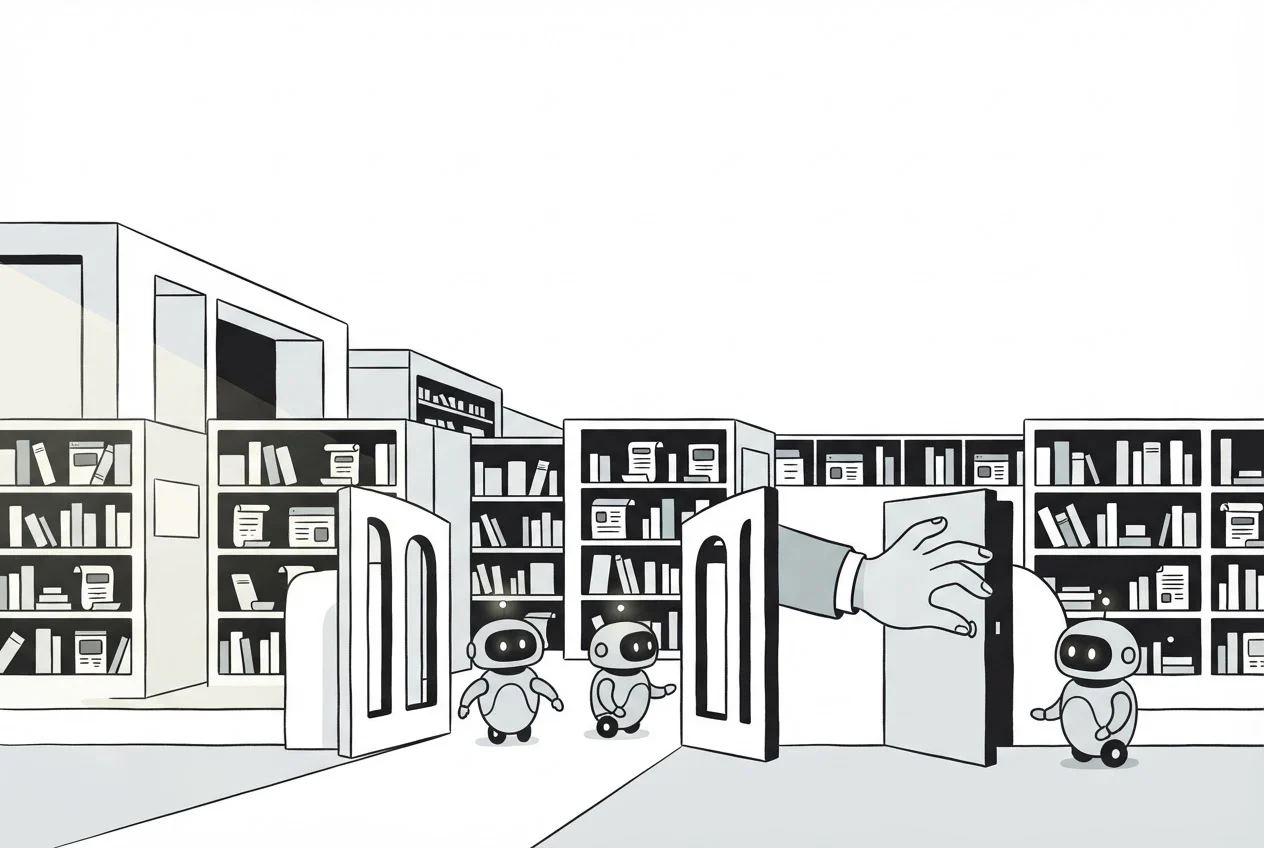
Allow Claude-SearchBot and Claude-User on every public page you want cited, and treat ClaudeBot as a separate training-policy choice. Anthropic runs three crawlers, each with its own rule in robots.txt, the text file at yourdomain.com/robots.txt that tells crawlers (programs that fetch web pages) which paths they may fetch.
| Crawler | What Anthropic says it does | What Anthropic says blocking does |
|---|---|---|
| ClaudeBot | Collects "web content that could potentially contribute to" training | Opts your site out of that collection |
| Claude-SearchBot | "Navigates the web to improve search result quality for users" | "May reduce your site's visibility and accuracy in user search results" |
| Claude-User | Accesses websites when "individuals ask questions to Claude" | "May reduce your site's visibility for user-directed web search" |
All three entries come from Anthropic's crawler documentation. A configuration that keeps search access and decides training separately:
User-agent: Claude-SearchBot
Allow: /

User-agent: Claude-User
Allow: /

# Training is a separate policy decision
User-agent: ClaudeBot
Disallow: /private-research/
Block by robots.txt rule, not by IP address: Anthropic warns that blocking IP addresses may not work correctly and stops it reading your robots.txt. Anthropic also supports Crawl-delay, a robots.txt rule asking crawlers to pause between requests, and each subdomain needs its own rules.
How do 50 well-known sites handle Anthropic's crawlers?
In our check on October 10, 2026, 39 of 50 well-known sites allowed all three Anthropic crawlers on the paths tested, and 6 blocked ClaudeBot while allowing Claude-SearchBot. Training and search access are separate settings, and some sites in this sample use them separately.
How we counted: We fetched robots.txt from 55 well-known sites: SEO and marketing tools, software as a service (SaaS) platforms, publishers and review sites. Fifty returned a readable file. For each, we tested the homepage and /blog/ against ClaudeBot, Claude-SearchBot, Claude-User and Googlebot with Python's urllib.robotparser.
| Result (50 sites) | Count | Sites |
|---|---|---|
| ClaudeBot blocked | 11 | BBC, Business Insider, Canva, CNN, LinkedIn, Medium, NYTimes, TechCrunch, The Verge, Wired, Yelp |
| Claude-User blocked | 6 | CNN, LinkedIn, NYTimes, The Verge, Wired, Yelp |
| Claude-SearchBot blocked | 5 | CNN, NYTimes, The Verge, Wired, Yelp |
| ClaudeBot blocked, Claude-SearchBot allowed | 6 | BBC, Business Insider, Canva, LinkedIn, Medium, TechCrunch |
| Googlebot blocked | 0 | None |
LinkedIn blocks Claude-User entirely but disallows only specific paths, such as /public-profile/, for Claude-SearchBot. The 39 sites allowing all three: Ahrefs, Anthropic, Asana, Atlassian, Backlinko, Clearscope, ClickUp, Forbes, G2, Gartner, GitHub, Harvard Business Review, Hootsuite, HubSpot, Intercom, Mailchimp, Monday.com, Moz, Notion, OpenAI, Otterly, Perplexity, Salesforce, Semrush, Shopify, Similarweb, Slack, Sprout Social, Squarespace, Stripe, Surfer, Trustpilot, Webflow, Wix, WordPress.com, Zapier, Zendesk, and two AI content and visibility software vendors. Five sites returned no readable file: Buffer, Capterra, McKinsey, Search Engine Journal and Search Engine Land.
Limits: This is a convenience sample of recognizable brands, not a representative one. Python's parser follows the basic robots.txt rules and may differ from Anthropic's crawler on edge cases, and sites change their files. Read your own raw robots.txt rather than relying on a summary.
How do you test whether Claude can reach your pages?
Run three checks: your robots.txt rules, your server's response to Anthropic's crawler names, and the HTML a crawler receives. Each has a clear pass or fail.
Does your robots.txt allow Claude-SearchBot and Claude-User?
import urllib.robotparser as rp

SITE = "https://yourdomain.com"
PATHS = ["/", "/pricing", "/blog/"]  # swap in your key pages
AGENTS = ["Claude-SearchBot", "Claude-User", "ClaudeBot"]

parser = rp.RobotFileParser(SITE + "/robots.txt")
parser.read()
for agent in AGENTS:
    for path in PATHS:
        ok = parser.can_fetch(agent, SITE + path)
        print(f"{agent:17} {path:10} {'ALLOWED' if ok else 'BLOCKED'}")
Pass: Claude-SearchBot and Claude-User print ALLOWED for every page you want cited. Fail: any BLOCKED line. Open robots.txt and find the group responsible, often a wildcard User-agent: * rule or a pasted list of AI bots.
Does your server answer requests that use Anthropic's crawler names?
curl -sL -o /dev/null -w "%{http_code}\n" -A "Claude-SearchBot" https://yourdomain.com/pricing
Pass: 200 after redirects, the same code a normal browser request gets. Fail: 403, 429 or a challenge page, which usually means a firewall or content delivery network (CDN) bot rule is overriding your robots.txt. This tests only rules based on the crawler's name. If your firewall also verifies source IPs, compare your logs against the ranges Anthropic publishes in bots.json.
Are your key facts in the HTML a crawler receives?
curl -sL https://yourdomain.com/pricing | grep -ci "your product name"
Pass: 1 or more. The count is of matching lines, so minified HTML on one line returns 1, still a pass. Fail: 0, meaning the text appears only after JavaScript runs, which a plain fetch does not do. Our recommendation is to server-render pricing, product names and category definitions regardless of what any crawler does.
How do you measure whether Claude names and cites your brand?
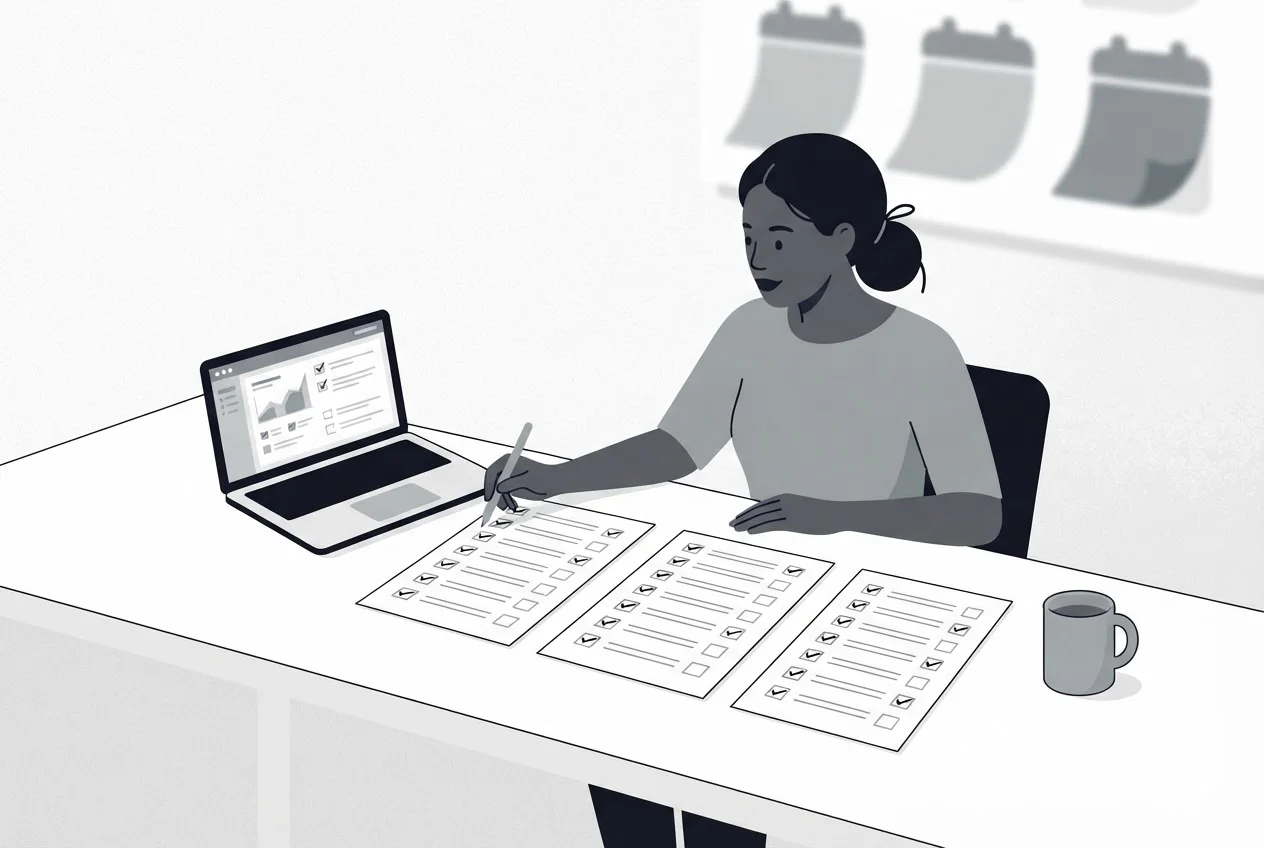
Run 20 buyer questions three times each, on three different days, and log whether Claude names you, cites your URL, and which competitors and domains appear. Your result is a rate out of 60 answers, because a single run cannot separate a stable pattern from a one-off.
Build the 20 prompts from four types, five each:
- Category: "best [category] for [use case]"
- Comparison: "[you] vs [competitor]"
- Alternatives: "alternatives to [competitor]"
- Pricing: "how much does [category] cost"
Write them the way your buyers phrase them; our guide to B2B AI buyer prompt research shows how. Log each answer:
| Prompt | Run date | Claude searched? | You named? | Your URL cited? | Competitors named | Domains cited |
|---|---|---|---|---|---|---|
Then calculate, as our model:
- Name rate = answers that name your brand in the text, whether or not they also link to you ÷ 60
- Citation rate = answers citing a URL on your domain ÷ 60
- Competitor name rate = answers naming that competitor ÷ 60
For illustration only: if Claude names you in 18 of 60 answers, your name rate is 30% (18 ÷ 60). The gap to competitors in the same 60 answers, and the change month to month, matter more than the number itself.
If Claude answers without citations, mark "no search." Anthropic's help center says you can add "Search the web" to a prompt to make sure Claude searches. Rerun those prompts that way and keep the two result sets separate, because a buyer who does not add that phrase gets the first kind of answer.
What is established and what is unproven about getting cited by Claude?
Crawler rules, search triggers and citation format are documented by Anthropic. How Claude chooses between pages is not, so every tactic beyond access is a hypothesis to test against your name rate and citation rate.
The only large citation dataset we know of is one vendor's study, not independently verified. Otterly, which sells AI-search monitoring, logged 379,321 Claude citations across 16,406 domains in June 2026, using SaaS and tech prompts. Brand domains made up 64.0% of citations, news and media 14.9%, and Reddit was cited zero times. Only 13% of cited domains overlapped with ChatGPT's.
Our inference from that one dataset, which may not hold outside SaaS and tech:
- Fix your own product, comparison and pricing pages first.
- A Reddit-first plan for Claude is hard to justify.
- Measure Claude separately from ChatGPT. Our ChatGPT SEO checks follow the same access-first, measure-second sequence.
- Keep structured data accurate, then test whether it moves your rates with our schema markup test for AI search.
When is a manual Claude test not enough, and how do we track Claude?
When you want Claude checked daily alongside other AI engines, the 60-answer log becomes a recurring chore. As of October 2026, Claude is tracked only on our Enterprise and Agency plans. Enterprise is $1,499 a month on our pricing page and runs 200 prompts daily across seven engines: ChatGPT, Claude, Gemini, Perplexity, Grok, Copilot and Google AI Mode.
For each run we record whether your brand is named, which pages are cited instead of yours, how you compare with competitors on share of voice (your share of all brand mentions in the answers), and how the answer describes you. Enterprise also includes 100 content pieces a month to close citation gaps. Our AI citation tracking standard explains how to keep results comparable over time.
A no-cost first step: our free AI visibility audit on pagelens.ai takes any domain and runs buyer prompts across ChatGPT, Claude, Gemini and Perplexity, showing how often you are named, who is named instead, and which sources the answers used. To see Claude tracking on your own prompts, Book a demo.
Track Claude mentions daily across seven AI engines
Frequently asked questions
Sources
- 1.Claude API documentation: Web search tool
- 2.Claude Help Center: Enabling and using web search
- 3.Anthropic Help Center: Does Anthropic crawl data from the web, and how can site owners block the crawler?
- 4.Anthropic bots.json (published crawler IP ranges)
- 5.Anthropic Trust Center: Subprocessors
- 6.Simon Willison: Anthropic's Brave Search subprocessor entry and citation test (March 21, 2025)
- 7.TechCrunch: Anthropic appears to be using Brave to power web searches for its Claude chatbot (March 21, 2025)
- 8.Otterly: Claude AI Citations Study, June 2026 (one vendor's study of SaaS and tech prompts, not independently verified)
- 9.claude-seo plugin on GitHub
- 10.PageLens.ai pricing
- 11.PageLens.ai home page (free AI visibility audit)
- 12.Our own robots.txt check of 50 well-known sites, run October 10, 2026, as described above