
TL;DR
We examine the NSF’s August 13, 2026, $305,000 Phase I award to a Las Vegas startup researching atmospheric water harvesting. We separate verified funding and test objectives from commercial-scale claims, then show marketing and growth teams how to monitor evidence, citations, and new pilot results.
Las Vegas Water Startup News: NSF Funds Air-To-Water Test
Water infrastructure is becoming part of the AI infrastructure conversation. A current Berkeley Lab update estimates that data centers could account for 11.8% of U.S. electricity use by 2030, sharpening attention on the resources needed to cool and operate new capacity.
For Las Vegas water startup news, the confirmed development is this: on August 13, 2026, NSF awarded Las Vegas-based WAVR Technologies $305,000 for a Phase I study of atmospheric water harvesting in dry climates. The work funds tests of energy use, uptime, and potable-water conversion, not proof that the technology has displaced municipal water.
We examine what the award actually covers, why its evidence threshold matters, and what content leaders should monitor as the work moves from research funding toward measurable results.
What Happened and What It Funds
The NSF award supports a Small Business Technology Transfer Phase I project led by WAVR Technologies with the Nevada System of Higher Education as a sub-awardee. The NSF award record lists $305,000 in funding, an August 13, 2026 award date, and a project period running from October 1, 2026 through September 30, 2027.
That distinction is important. Funding validates that a proposal passed scientific and broader-impact review. It does not, by itself, verify commercial water output, operating costs, or long-term reliability in field conditions.
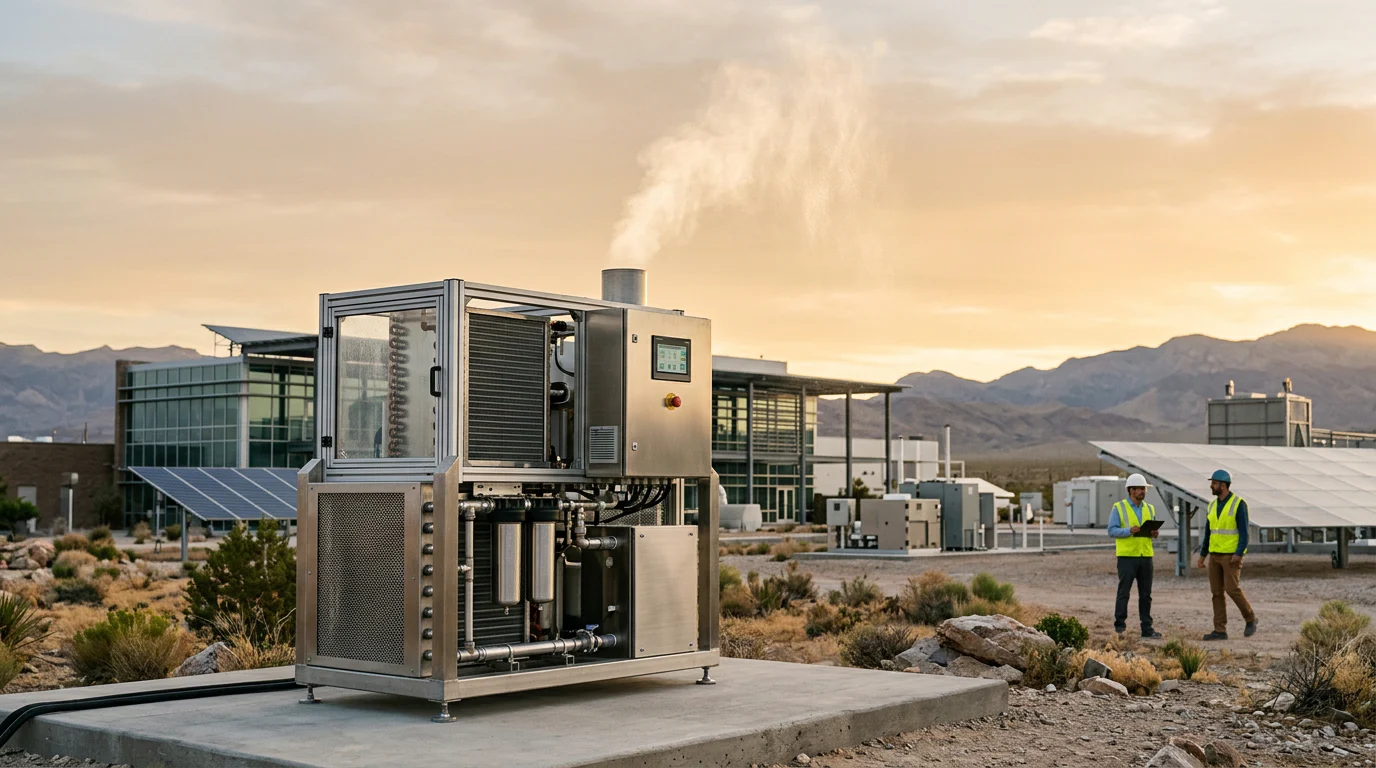
The proposed work focuses on a gel-based moisture-capture device and a system for converting captured water into potable water. Researchers will test heat transfer, desiccant concentrations, energy use, weather-dependent uptime, and process models intended to assess commercial feasibility. Those are the measurements that can turn an appealing climate-tech claim into a decision-ready operating record.
How This Las Vegas Water Startup News Signal Differs from a Commercial Breakthrough
The story is more useful when it separates a genuine research milestone from claims that still need independent operating evidence. That is not a downgrade. It is how technical credibility compounds.
The Research Base Is Real
The company emerged from UNLV atmospheric-water-harvesting research. In 2024, a UNLV research article described the system as designed to operate at relative humidity as low as 10%, an especially demanding condition for water capture in Southern Nevada.
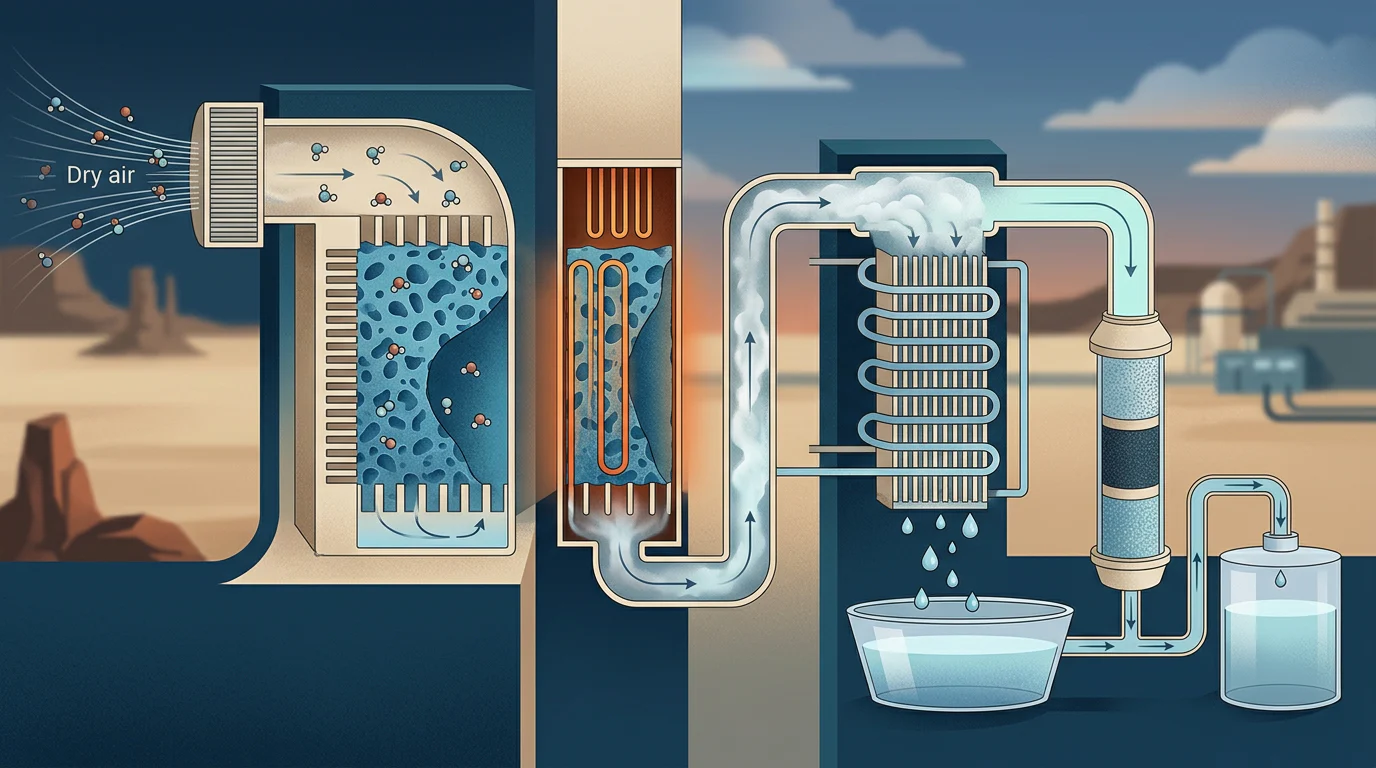
The research approach uses materials that attract water vapor, then relies on thermal processes to release and condense it. That architecture matters because conventional air-to-water systems are often more productive in humid environments, while dry-climate deployment requires proving that the energy and water economics still work.
The Award Is a Test Plan
The most citation-worthy fact is the measurement agenda. The project proposes small unit-cell testing, a flow loop using vacuum boiling and compressors, and models that predict performance across weather conditions.
That means the next meaningful update is not a broader promise about water from air. It is independently documented performance: energy consumed per volume, water quality, uptime, maintenance requirements, and results outside controlled testing.
The Evidence Threshold Matters
Nevada’s 2025 annual report identified a $4 million seed round and a $60,000 campus-pilot effort intended to test irrigation applications. The state annual report described full deployment as expected by summer 2026, so a current update should seek post-deployment findings rather than assume that milestone was completed.
For content teams, this is the line to protect: describe confirmed funding and planned tests as facts. Attribute performance claims to their source, and wait for public operating data before presenting projected scale as achieved capacity.
Why Water Constraints Raise the Stakes for AI Infrastructure
Southern Nevada’s water pressure provides context, not a guarantee that atmospheric harvesting will solve a regional supply problem. The Bureau of Reclamation says Lake Mead and Lake Powell reached record-low elevations in August 2026, while new operating guidelines cover 2027 and 2028 in the Colorado River decision record.
That backdrop makes localized water resilience more commercially relevant for industrial operators, campuses, and facilities evaluating cooling alternatives. It also makes precision essential. An onsite water source could reduce a particular dependency if it meets its performance targets. It cannot be assumed to replace municipal infrastructure or regional conservation.
The AI link is practical. Berkeley Lab projects U.S. data centers could consume between 0.14 and 0.28 billion cubic meters of water in 2028, according to its water-use analysis. As facility demand grows, teams will increasingly evaluate water technologies through measurable reliability, cost, local regulation, and energy tradeoffs.
What Marketing and Growth Teams Should Monitor Next
News coverage of a technical startup can become durable AI-search evidence only when it preserves source quality and timeline. We recommend treating the award as the beginning of a monitored evidence trail, not the finish line.
Track the Dated Primary Record
Record the award number, funding amount, project dates, research objectives, and named technical questions. Keep those fields separate from company targets, investor commentary, and future estimates. This gives writers a clean source of truth when later announcements reinterpret the milestone.
Use a system that can track cited pages, not merely count mentions. A mention without the underlying source can turn a narrow research award into an overstated market claim.
Watch for Measured Pilot Evidence
The next high-value signals are third-party test results, water-quality documentation, pilot completion updates, customer deployments, and data showing specific energy use and uptime. Those details determine whether a company becomes a credible answer-engine citation for industrial water resilience.
Monitor whether AI answers distinguish “funded to test” from “proven at scale.” That language shift is often more meaningful than a temporary spike in startup-news coverage.
Compare Answers Across Engines
Prompt sets should include the company name, atmospheric water harvesting, dry-climate water supply, data-center cooling, and regional water resilience. Capture the exact wording, cited domains, publication dates, and omissions for each result.
We use reproducible checks to monitor across engines, then connect changes in answer language to new primary evidence. That workflow helps teams correct stale claims before buyers and AI systems repeat them as fact.
Track Startup News Evidence with PageLens.ai
Startup news only earns durable AI visibility when the page preserves a claim’s evidence, timing, and limits. At PageLens.ai, we help marketing, growth, and SEO teams move from one-off monitoring to a repeatable record of what AI answers say, which pages they cite, and when language changes. For a development-stage water story, that means tracking the award, test dates, new pilot evidence, and the distinction between measured results and ambitious projections. Your team can use those records to update content before stale claims become the version buyers or AI systems repeat. Book a demo
FAQs on Las Vegas Water Startup News
When Does the NSF Project Begin?
NSF lists the project period as October 1, 2026 through September 30, 2027. That timeline covers Phase I research, rather than a confirmed commercial deployment or customer rollout.
Does the Award Prove Commercial-Scale Water Production?
Not yet. The funding supports tests of capture, conversion, energy use, and uptime. Commercial relevance depends on independently documented performance, water quality, operating costs, and sustained deployment results.
What Should Content Teams Track Next?
Track dated primary sources, cited pages, claim wording, and later pilot evidence across relevant AI prompts. Compare each answer with the source record before treating mentions as durable visibility.