
Keyword Research vs Prompt Research: What Changes When AI Evaluates Products

TL;DR
Keyword research vs prompt research: what changes when people evaluate products in ChatGPT and Perplexity, plus a 4-step workflow for finding real prompts.
Keyword Research vs. Prompt Research: What's the Difference Between Traditional Keyword Research and Discovering the Actual Prompts People Use in ChatGPT or Perplexity to Evaluate Products?
As conversational search rises, understanding keyword research vs prompt research is essential. With AI Overviews now answering nearly 58% of full-question queries according to Ahrefs' AEO course, optimizing for how users prompt AI engines is crucial as traditional search behavior shifts toward direct, cited AI answers.
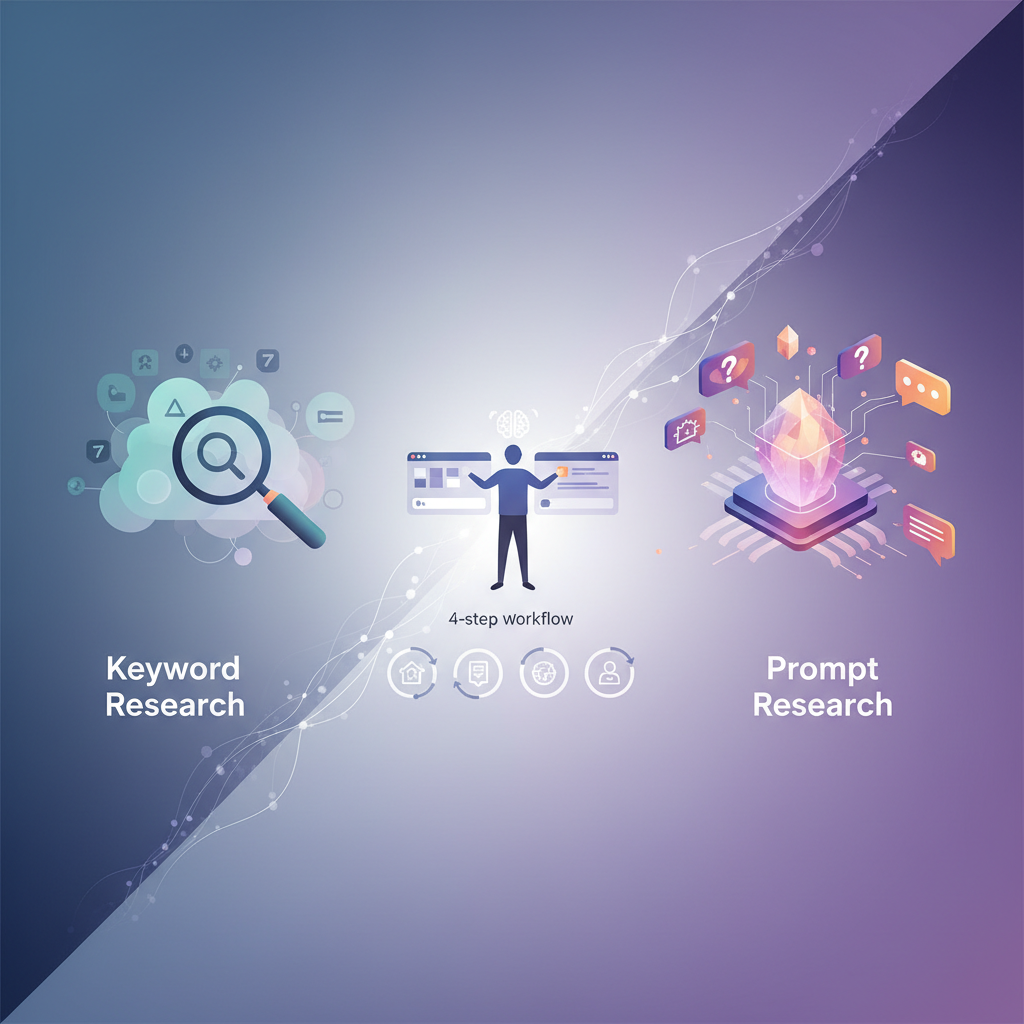
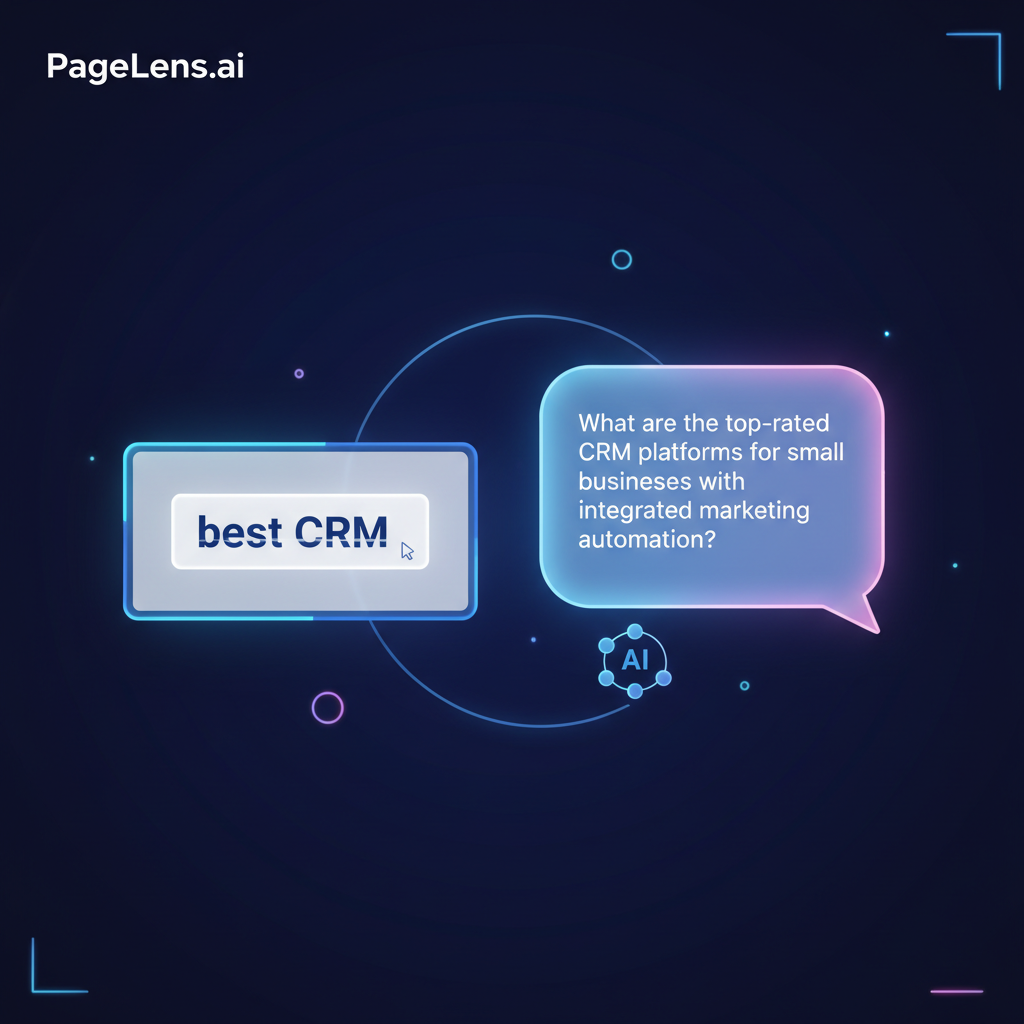
Keyword research and prompt research answer different questions. Keywords are short, fragmented search-bar terms, usually two to five words, matched against indexed pages. Prompts are full, conversational questions, often 10 to 25 or more words. People type these context-rich queries into ChatGPT or Perplexity when actually comparing products. Prompt research mines conversational sources like support tickets, sales calls, and shared chat logs instead of search volume panels.
This piece breaks down what keyword tools still get right. It walks through a four-step workflow for surfacing real prompts, including support ticket mining, sales call transcripts, and LLM autocomplete scraping. It also explains why search volume and prompt frequency aren't the same metric. Finally, it shows how to validate a prompt before you build content around it.
Keyword Research vs Prompt Research: Where the Old Toolkit Stops Working
Developers built keyword research tools for a search box, not a chat window. They're still genuinely useful for understanding raw search demand. However, creators designed them to match short queries to indexed pages. They did not design them for the multi-sentence, evaluative questions people now put in front of an AI model. Here's what they still do well, and exactly where they run out of road.
Ahrefs' own keyword workflow leans on seed terms, Matching Terms, and a filter method called BID to avoid volume traps. They then layer on an AI filter that flags terms AI Overviews already answer in full. Ahrefs' keyword workflow documents this detail well. That filter matters because a keyword can carry solid volume and low difficulty and still be worthless. If the AI resolves the question completely inside the answer box, nobody has a reason to click through.
- What keyword tools show: monthly search volume, keyword difficulty, CPC, related terms, and SERP features.
- What they can't show: the full sentence someone types into ChatGPT. They cannot show whether an AI cites your brand in that answer. They also miss how often people ask multi-part evaluative questions instead of typing two-word fragments.
- The practical limit: search volume tools sample search engine logs. They have no window into usage data for ChatGPT or Perplexity. Thus, a topic can generate thousands of prompts a day inside AI interfaces while showing zero measurable search volume.
The Prompt Discovery Workflow: 4 Steps to Find Real Prompts
There's no Google Search Console for ChatGPT, and OpenAI doesn't publish prompt logs. But once you know where to mine it, you can find the language people actually use with AI in plenty of places. This four-step method moves from raw customer language to a validated, testable prompt list.

1. Mine conversational sources first. Before you open any keyword tool, pull the actual phrasing customers use. Look in support tickets, sales call transcripts, review sites, and community forums. Buyers evaluating products ask full questions. They compare vendors and ask who is more expensive, more credible, or fits their specific use case. This matches the exact pattern Edgar Allan describes in its AEO research. Those sentences are prompts in waiting.
2. Scrape question-mining tools and LLM autocomplete. Feed your seed topics into AnswerThePublic's AI Insights panel, Google's People Also Ask, AlsoAsked, Reddit, and Quora. Several of these tools now surface AI-style prompts directly rather than just keyword clusters. This narrows the gap between what a search box shows you and what you actually type into a chat window.
3. Pull real prompts out of indexed conversations. Google now indexes shared ChatGPT conversations. A search like site:chatgpt.com/share "your topic" surfaces verbatim prompts that real users typed. A LinkedIn breakdown of the technique explains this. Google Search Console's long-tail queries work the same way. The longer and more conversational a query is, the more likely AI Mode generated it or it triggered an AI Overview.
4. Test the shortlist directly in ChatGPT and Perplexity. Take the 30 to 50 candidate prompts you've collected. Run each one across ChatGPT, Perplexity, Gemini, and Claude. Log which sources the AI cites, what's missing, and which prompts return your competitors instead of you. That log becomes your prompt tracking list, the AI-search equivalent of a rank tracker.
| Source | Extraction method | Example prompt |
|---|---|---|
| Support tickets | Pull recurring phrasing from ticket subject lines and first messages | "Which project management tool works for a 10-person startup on a tight budget?" |
| Sales call transcripts | Search recordings or transcripts for comparison language ("vs", "instead of", "better than") | "How does this compare to [Competitor] for enterprise onboarding?" |
| Shared ChatGPT links | Google site:chatgpt.com/share plus a topic term, then test the follow-up questions users asked | "What's the best AI visibility tool for a small ecommerce brand?" |
| GSC long- | ||
| the-tail queries | Filter queries by 5+ words using regex for action verbs or question words | "compare the top CRM tools for remote sales teams" |
| Shared ChatGPT conversations (search operator) | Search site:chatgpt.com/share "keyword" to surface indexed public chats | "I'm evaluating three CRM tools for a remote sales team, which one integrates best with Slack?" |
| AnswerThePublic AI Insights | Enter a seed keyword, then scroll past the standard keyword suggestions to the AI prompt panel | "What's the best AI SEO tool for a solo marketer on a budget?" |
The pattern across every row is the same: none of these sources are keyword tools. People already talk in full sentences in these places. An AI model expects exactly that format when it decides what to cite back.
Why Search Volume Misleads for AEO
The core problem is a metric mismatch. Search volume measures how often a fragment gets typed into a search bar. It says nothing about how often users type the full evaluative version of that question into ChatGPT or Perplexity. This is because keyword tools sample search engine logs, not LLM interfaces. Prompt frequency simply isn't a number those tools can produce.

That gap is bigger than most teams assume. According to a discussion thread on Am I Cited, keyword tools never show an estimated 70% of AI-relevant queries. These specific, contextual, use-case-driven questions only surface in real conversations, not in aggregated search panels.
There's a second, sneakier trap: a keyword can look perfect on paper, high volume, low difficulty, decent CPC, and still be worthless. If the AI can answer the query completely inside its own response, nobody clicks through no matter how attractive the metrics look, a pattern the Ahrefs AEO course calls the AI filter. Meanwhile, prompts have become the dominant discovery mechanism on generative AI platforms like ChatGPT, Gemini, and Perplexity, according to Am I Cited's paradigm breakdown, precisely because they match how those systems are built to interpret intent. As The HOTH puts it, prompts now sit upstream of search keywords: if your content doesn't include the precise phrases and concepts embedded in the prompt, your brand may never surface, regardless of how well you rank for the keyword version of that same topic.
Keyword research still matters. It tells you what people search for. Prompt research tells you how people evaluate, which is a different and, for AI visibility, more decisive question.
How to Validate High-Value Prompts
Collecting prompts is the easy half. Validating which ones are worth building content around takes one more pass:
- Run each candidate prompt across all four major AI platforms, ChatGPT, Perplexity, Gemini, and Claude. A prompt that gets a rich, sourced answer on Perplexity but a generic one on ChatGPT tells you where the citation opportunity actually lives.
- Check who gets cited. If a competitor's page shows up as a source in the answer and yours doesn't, that's a documented gap, not a guess. If nobody gets cited, that's a green-field opportunity.
- Re-run the same prompt weekly or biweekly. AI answers shift as models update and as new content gets indexed, so a single test is a snapshot, not a verdict.
- Track share of voice over time, not just presence or absence. A workflow like the one shown in this AEO prompt tracking walkthrough logs visibility trends across clusters of prompts, which is closer to a rank tracker for AI answers than a one-off spot check.
This is also where a platform like PageLens fits into the workflow: instead of manually re-testing the same 40 prompts across four chat interfaces every week, a dedicated visibility tool automates the citation check and flags exactly where competitors are winning the answer and you're not.
FAQs on keyword research vs prompt research
Can I use keyword tools for prompts? Partially. Some keyword tools, including AnswerThePublic's AI Insights panel, now surface AI-style prompt suggestions alongside standard keyword data, per this walkthrough. But most keyword platforms still report search volume, not prompt frequency, so treat them as one input among several, not the primary source.
How many prompts should I track? Start with a working list in the 30-to-50 range pulled from conversational sources, then test each one across ChatGPT, Perplexity, Gemini, and Claude to see which actually return AI-generated answers with citations. Prioritize tracking the subset where competitors are already cited and you're not, since that's the highest-leverage gap.
Do I still need keyword research if I'm doing prompt research? Yes. Keyword research still identifies raw demand and helps you filter out queries AI already answers completely, per the Ahrefs AEO filter method. Prompt research adds the layer keyword tools can't: the actual conversational language people use when they're deciding between products.
If you're advising multiple client accounts on this shift, the PageLens affiliate program is worth a look for anyone already recommending AI-visibility tooling to marketing teams.