

TL;DR
We see TechCrunch Disrupt 2026 as a useful signal of what startup teams must prove as AI reshapes funding, software expectations, and buyer research. This analysis separates confirmed event details from our interpretation, then gives marketing leaders a practical workflow for publishing credible evidence and measuring visibility before and after the conference.
TechCrunch Disrupt 2026 Raises the AI Scaling Bar
TechCrunch Disrupt 2026 will take place in San Francisco from October 13 to 15, and its official agenda lists more than 200 sessions across six stages.
TechCrunch Disrupt 2026 will put AI agents, enterprise workflows, funding, and startup scaling in the same conversation. For startup marketing leaders, the practical consequence is clear: credible product evidence and visible distribution matter more when AI shapes buyer research, category narratives, and investor attention.
In this startup news analysis, we separate what is confirmed from what it means for teams responsible for growth, content, and AI search visibility.
What TechCrunch Disrupt 2026 Has Confirmed
The event program gives the strongest available signal of its focus. The Builders Stage centers on fundraising, hiring, product-market fit, and scaling, while the AI Stage examines agents, generative AI, enterprise workflows, software pricing, and security. A separate Real World AI stage extends the discussion beyond software demos to robotics, manufacturing, and industrial deployment.
That does not make every session theme a market outcome. It does show where organizers believe founders, investors, and operators need clearer answers. For marketing teams, that distinction matters. A conference program is a useful watchlist for buyer questions, not proof that a positioning claim will resonate.
Startup Battlefield 200 is also part of the event, adding a public lens to how emerging companies explain their market, product, and momentum. We would treat that as a reminder to sharpen the evidence behind a company story, rather than as a reason to imitate event language.
Why AI Scaling Is a Marketing and Capital Issue
The scaling conversation is not limited to product teams. It now reaches pricing, differentiation, sales enablement, and whether a startup can explain why its product belongs in a buyer’s workflow.
Capital Is Concentrated, Not Evenly Available
The latest venture monitor says U.S. startups raised more than $400 billion in the first half of 2026, while investment remained concentrated in AI companies and rounds of $100 million or more. That is a strong market headline, but it does not make attention equally available to every startup.
Our read is that teams should resist generic “AI-powered” positioning. When comparable claims proliferate, a credible narrative needs specifics: the customer problem, the operating constraint, the outcome being measured, and the evidence a skeptical buyer can inspect.
Visibility Is a Business Input
A startup can have a technically strong product and still lose the explanation layer. If buyers ask an AI system for category options, implementation risks, or alternatives, the sources behind its answer influence which companies enter the shortlist.
That is why we recommend an AI Brand Recommendation Audit alongside conventional demand reporting. It reveals whether the language AI systems use about a company matches the claims its marketing team wants to support.
Evidence Has to Travel
The most useful content does not merely announce a point of view. It gives readers, journalists, partners, and AI systems an accessible source they can verify. Product pages, implementation details, technical documentation, and independently supportable customer context should reinforce one another.
That is a more durable response to an AI-heavy event cycle than publishing broad trend commentary that says little a buyer can act on.
How Teams Should Respond Before October
The best preparation is not to produce a conference-themed content burst. It is to build a small, reliable evidence system that can absorb new information without forcing the team to rewrite its positioning every week.
Build a Defensible Fact Base
Start with the claims most likely to appear in a buying conversation: who the product serves, what problem it solves, where it fits in a workflow, what it integrates with, and what results can be supported. Assign an owner and source to each claim.
Then identify the questions buyers are actually likely to ask. Our buyer prompt research framework can help teams turn category language into a documented prompt set rather than relying on a brainstorm.
Publish Answers Buyers Can Check
Create or improve source pages that answer one question well. Keep core evidence in visible text, connect related pages with internal links, and make product claims precise enough that a reader can test their relevance. If a claim depends on a changing market condition, date it and revisit it.
This approach also avoids a common trap: treating event coverage as an excuse to make claims before they are substantiated. Fast publishing is useful only when the page remains accurate after the news cycle moves on.
Set a Baseline Before Attention Spikes
Before the event, record how the brand appears for priority prompts, which pages are cited, what language appears around recommendations, and whether referred visitors take meaningful actions. That baseline makes post-event changes interpretable.
It also separates visibility from performance. A new mention can be valuable, but the business question is whether it improves qualified discovery, trust, and conversion.
What to Monitor During and After the Event
Monitor confirmed announcements, recurring operational themes, and the buyer questions that reputable coverage creates. Do not treat speaker predictions or promotional language as facts. Instead, update the evidence base only when a development is verifiable and useful to the audience you serve.
The measurement environment is improving. Google reports dedicated generative-AI performance views in Search Console, including impressions, pages, countries, devices, and dates. Its related guidance says AI Overviews have more than 2.5 billion monthly active users and AI Mode has more than 1 billion.
For a practical post-event review, compare the baseline with the following:
- Brand and category prompt mentions.
- URLs cited or surfaced in AI-led discovery.
- Qualified visits from relevant content.
- Conversion behavior from those visits.
- The exact language attached to the brand and its category.
Our cross-engine tracking guide explains how to keep those observations comparable across answer engines. The point is not to chase every mention. It is to find repeatable evidence gaps and fix the pages that influence important buyer questions.
Make the Event Signal Measurable with PageLens.ai
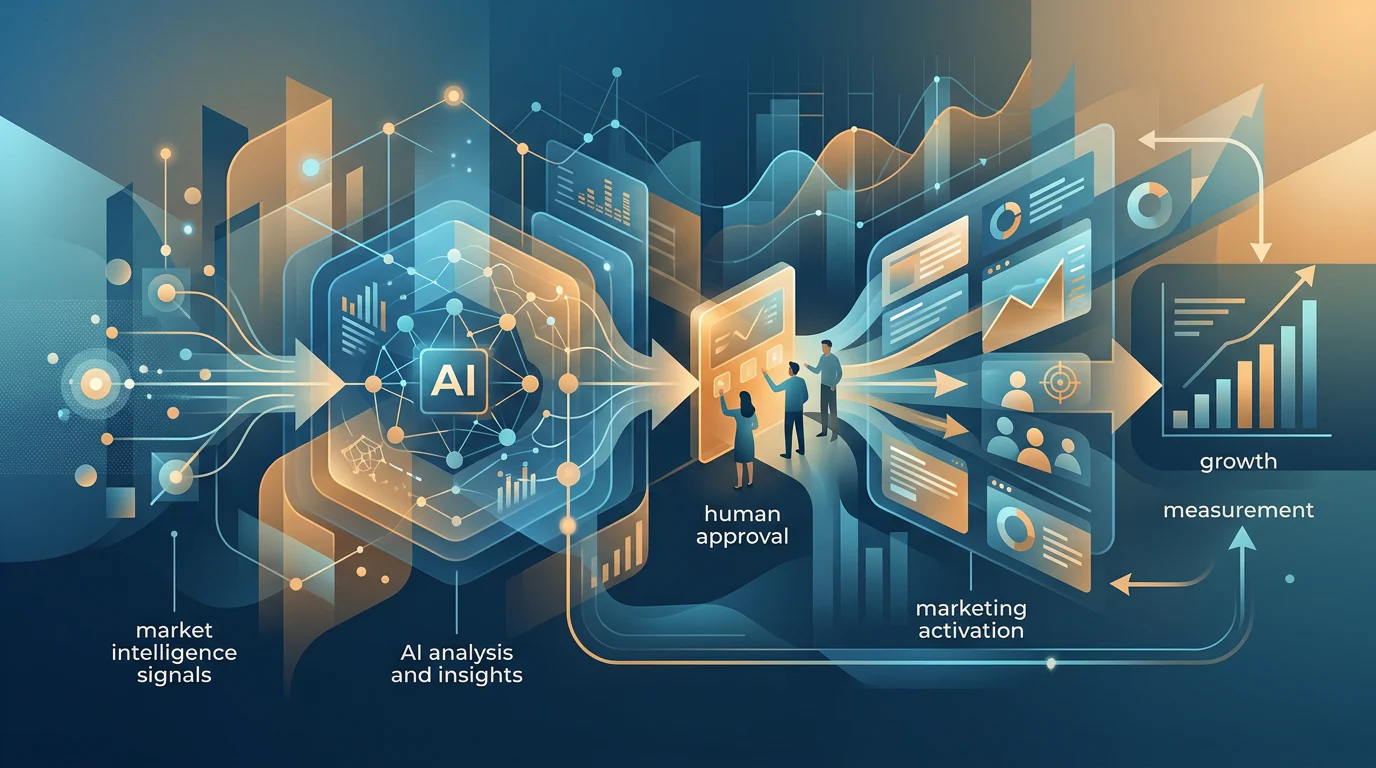
PageLens.ai helps marketing and growth teams turn a fast-moving event into a measurable visibility workflow. We start with the prompts buyers actually use, inspect the language and sources AI systems return, then connect those findings to pages your team can improve. That keeps the response grounded in evidence instead of event noise. For Disrupt 2026, use the baseline before October, log the claims and questions that emerge during the conference, then compare changes in citations, traffic quality, and conversions afterward. If your team needs a repeatable way to coordinate that work, Book a demo.
FAQs on TechCrunch Disrupt 2026
When Is TechCrunch Disrupt 2026?
TechCrunch Disrupt 2026 is scheduled for October 13 to 15 in San Francisco. Check the official agenda before travel or editorial deadlines, because programming may change.
What Should Startup Marketers Do After the Event?
Review confirmed announcements, refresh relevant pages with new evidence, then compare post-event citations, qualified visits, and conversions against the pre-event baseline before changing larger content priorities.