


TL;DR
We examine the Good Good sponsorship fallout after Callaway ended the relationship over a controversial video and the company relinquished a PGA TOUR event sponsorship. We separate confirmed developments from inference, show the practical consequences across partners, retail, and programming, and give marketing teams a measured monitoring workflow for fast-moving narratives.
Good Good Sponsorship Fallout: Callaway Ends Partnership
A funding announcement detailed Good Good’s $45 million round in March 2025, capital intended to expand its media, retail, and live-event businesses. That footprint explains why one campaign became a startup-news story with consequences far beyond a social post.
On Aug. 27, 2026, Callaway ended its Good Good partnership after a promotional video posted on Aug. 20 showed a founder shoving a female colleague to the ground. Good Good then stepped away from its PGA TOUR title sponsorship, while the Austin tournament remains scheduled for Nov. 12 to 15 under new sponsorship plans.
We look at the verified timeline, the consequences that have already materialized, and the practical monitoring steps marketing teams can use when a fast-moving story changes brand narratives.
What Happened and When
The video was posted on Aug. 20 and removed that day, but it continued circulating online. Seven days later, Callaway ended the relationship effective immediately, said it had strengthened its approval procedures, and committed $1 million to organizations working to prevent violence against women, as reported by the Associated Press.
The confirmed issue is not that a campaign failed to land as intended. It is that a published marketing asset depicted conduct many viewers found harmful, then created reputational exposure for both the creator-led company and its commercial partner. Removing an asset can stop further distribution from owned channels, but it cannot erase copies, coverage, or the description of the incident that begins appearing in search results and AI answers.
For marketing leaders, the lesson is immediate: creative approval is also a distribution control. Once a partner campaign reaches a public feed, its consequences can extend to retailers, broadcasters, event owners, customers, and the sources AI systems use to answer future questions about the brand.
Why the Good Good Sponsorship Fallout Reached Beyond One Video
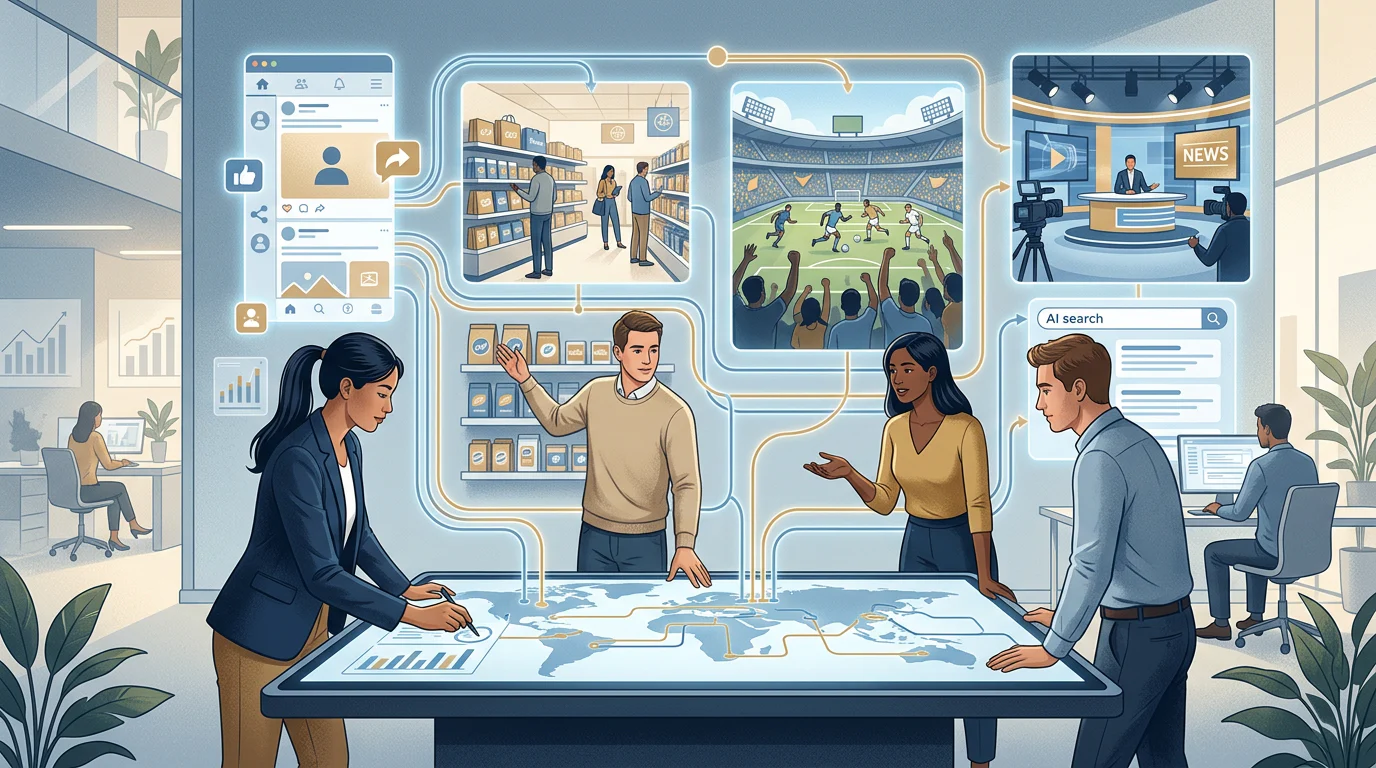
This was not a single-channel creator business. Good Good had described its growth strategy as a combination of digital content, commerce, retail distribution, and live experiences. That structure increases opportunity, but it also means one identity-level incident can affect several commercial relationships at once.
A Wider Commercial Footprint
The relevant context is the company’s own 2025 funding announcement, which positioned the business across media, consumer products, and events. That does not establish the financial size of this incident, and we should not infer a revenue loss that has not been disclosed. It does explain why a partner’s decision can have effects beyond one product campaign.
For teams managing a similar portfolio, the right unit of risk is not an individual post. It is the connected system of partner approvals, retail listings, live programming, executive reputation, and the answers prospective customers receive when they ask AI about the brand. Our track cited sources guide explains how to document which pages are shaping those answers.
An Institutionally Visible Event
Before the withdrawal, the Austin event had been announced as the company’s first professional golf-event sponsorship under a multi-year PGA TOUR agreement. The event was slated to offer 500 FedExCup points and marked the TOUR’s return to Austin after a three-year absence, according to the January schedule.
That context matters because event sponsorship is not merely a logo placement. It connects a brand to broadcasters, venue partners, athletes, fans, and a calendar that cannot simply disappear when a partner relationship changes.
A Narrative That Outlives the Post
The more useful question is not whether people saw the video once. It is whether future search results and AI answers describe the company through the incident, its response, or older brand material. That is a measurable question, not a guessing game.
What Has Changed for Partners, Retailers, and Events
The visible consequences have appeared across partnership, event, retail, and broadcast channels. These are confirmed operational changes, not a complete balance-sheet assessment.
The Partnership Ended
Callaway ended the relationship and publicly acknowledged that its review process had failed. That acknowledgement matters because it assigns the failure to an approval system, not solely to the creator of the asset. For brands, partner approval should leave a clear record of what was reviewed, who approved it, and what escalation path applies when a campaign creates safety concerns.
The Tournament Will Continue
Good Good decided to step away as the Austin event’s sponsor. The PGA TOUR says the tournament will still take place from Nov. 12 to 15, 2026, and that it will share sponsorship plans later in its official statement.
That distinction is important. The event itself remains active, while its commercial identity is in transition. Readers should monitor the TOUR’s event page rather than assuming an earlier tournament name or sponsor status remains current.
Retail and Programming Changed Too
Retailers reportedly removed Good Good apparel, and the planned Big Break season was not completed. Those decisions show why crisis measurement must cover more than social engagement. A marketing team should check the availability of owned products, partner pages, programming listings, and the language used around the incident in high-intent search results.
When we run an AI citation context review, we look beyond whether a brand is mentioned. We also capture the wording, cited source, and query that produced the mention, because those details reveal whether a narrative is factual, stale, or escalating.
What Marketing Teams Should Monitor Next
A credible response should separate confirmed facts from internal analysis. The confirmed facts here are the campaign’s removal, the terminated partnership, the event-sponsorship withdrawal, and the announced event schedule. Inference begins when someone predicts sales, replacement sponsors, or the duration of reputational effects.
Start with a seven-day monitoring window. Select 20 priority prompts that include the brand name, product category, partnership, executive names where appropriate, and questions customers would actually ask. Record the full answer, cited URLs, date, engine, sentiment-bearing phrases, and whether a source is current. Our AI visibility system provides a repeatable way to organize that evidence.
Then assign an owner to each action. One person should verify factual updates, another should review partner and retailer status, and another should decide whether an owned clarification page is needed. Teams should correct false claims with evidence, update stale pages when material facts change, and avoid publishing defensive content that repeats harmful details more widely.
Finally, monitor the next concrete signals: a PGA TOUR sponsorship update, current retailer availability, official programming changes, and whether AI answers distinguish the original incident from subsequent remediation. That is how a team turns an unfolding startup-news event into a controlled measurement workflow.
How PageLens.ai Helps Teams Monitor Fast Moving Stories
At PageLens.ai, we help marketing, growth, SEO, and content leaders turn a fast-moving story into a documented visibility workflow. We track priority prompts across AI search experiences, capture the pages and wording shaping an answer, and make changes easier to assign and verify. For an incident like this, our practical starting point is a baseline taken now, a daily change log, and an owner for every factual update, correction, and response page. That gives teams evidence to distinguish an outdated narrative from a newly surfaced source, then decide whether the right next move is a clarification, content update, or no action. Book a demo
FAQs on Good Good Sponsorship Fallout
Why Did Callaway End Its Good Good Partnership?
Callaway ended the relationship after the video prompted backlash. It said its review process was inadequate, strengthened approval procedures, and committed funding to violence-prevention organizations.
Will the Austin PGA TOUR Tournament Still Take Place?
Yes. The PGA TOUR says Austin remains scheduled for Nov. 12 to 15, 2026. Good Good withdrew as sponsor, and the tour will provide plans later.
What Should Marketing Teams Track After a Brand-Safety Incident?
Track priority prompts, cited pages, answer language, current event and retailer pages, and sentiment changes. Keep dates, sources, and owners so corrections can be verified.