
Best ChatGPT Competitor Trackers for Agencies
Compare ChatGPT competitor trackers for agencies by evidence, reporting, repeat samples, client scale, and verified costs.

Best ChatGPT Competitor Trackers for Agencies
A 2026 audit of 712 real-world queries across four generative search engines found evidence of synthetic sources in about 16% of cited sources. That is why an agency should inspect answers and sources, not accept a visibility score without evidence.
ChatGPT competitor trackers for agencies work best when they preserve complete answers and source URLs, compare results by prompt cohort, identify expected and emerging rivals, and package the evidence into client-ready reporting. Repetitions, locations, historical retention, competitor discovery, exports, alerts, and total answer-capture cost matter more than broad engine counts when ChatGPT is the assignment.
Below, we rank the operating models that fit agency work, show the comparison fields worth demanding, and map a repeatable workflow from onboarding through retesting.
Direct Picks for Agency ChatGPT Competitor Tracking
The best choice depends on the work you need the platform to support after a ChatGPT answer changes. Agencies with several accounts need client separation, prompt governance, and evidence that survives a monthly review. Teams checking one category may value a lower initial commitment, but should still insist on saved answers and source-level detail.
| Pick | Best Fit | What To Require Before Buying | Main Limitation To Test |
|---|---|---|---|
| 1. PageLens.ai | Multi-client teams that need evidence-led reporting and action plans | Prompt cohorts, answer evidence, source context, client reporting | Confirm contracted scope for retention, exports, and access |
| 2. Source-First Tracker | Teams diagnosing why a rival is cited | URL-level history and exportable source changes | May stop at diagnosis |
| 3. Existing SEO Suite Add-On | Agencies already operating inside one SEO stack | ChatGPT-specific evidence, client views, and reporting cost | AI tracking can be a separate add-on |
| 4. Prompt-Index Platform | Teams researching a larger universe of questions | Prompt provenance, freshness, and custom-prompt controls | Indexed questions can differ from buyer language |
| 5. Budget Tracker | Small pilots with a narrow cohort | Full answers, sources, and a clear upgrade path | Low prompt caps can distort the program |
We recommend choosing the workflow first, then comparing software. Our agency tool checklist helps separate a client-reporting system from a dashboard that only records mentions.
Compare ChatGPT Competitor Trackers for Agencies by Evidence
A useful comparison does not begin with a single visibility percentage. It begins with how a platform captures ChatGPT, what it stores, and whether an account lead can explain a movement without reconstructing it from screenshots.
ChatGPT Search can include citations and source panels, while OpenAI also notes that results and citations can be incomplete or outdated. Its search guidance also confirms that approximate and optional precise location can affect results. A credible tracker therefore needs to record the environment of each run.
| Comparison Field | What Agencies Should Filter For | Why It Changes The Decision |
|---|---|---|
| Workspaces | Separate client workspaces and access controls | Prevents prompt, evidence, and report leakage |
| Prompts | Per-client limits, cohort tags, and prompt ownership | Keeps reporting tied to buyer intent |
| Repetitions | Repeat samples and run-level history | Distinguishes movement from answer variability |
| Modes | Search-enabled capture and session settings | Clarifies which ChatGPT experience was tested |
| Competitor Discovery | Expected rivals plus emerging co-occurrences | Finds brands the client did not nominate |
| Source History | Domain and URL changes, gained and lost sources | Shows what changed behind the answer |
| White Labeling | Branded report delivery and sharing controls | Makes the output usable in client reviews |
| Exports And API | CSV, API, or connected reporting tools | Preserves evidence outside the vendor interface |
| Alerts | Prompt, source, and competitor-change alerts | Helps teams investigate meaningful movement |
| Verified Price | Client, prompt, cadence, and credit basis | Prevents false comparisons between plans |
| Limits | Retention, seats, locales, and overages | Exposes constraints before the portfolio grows |
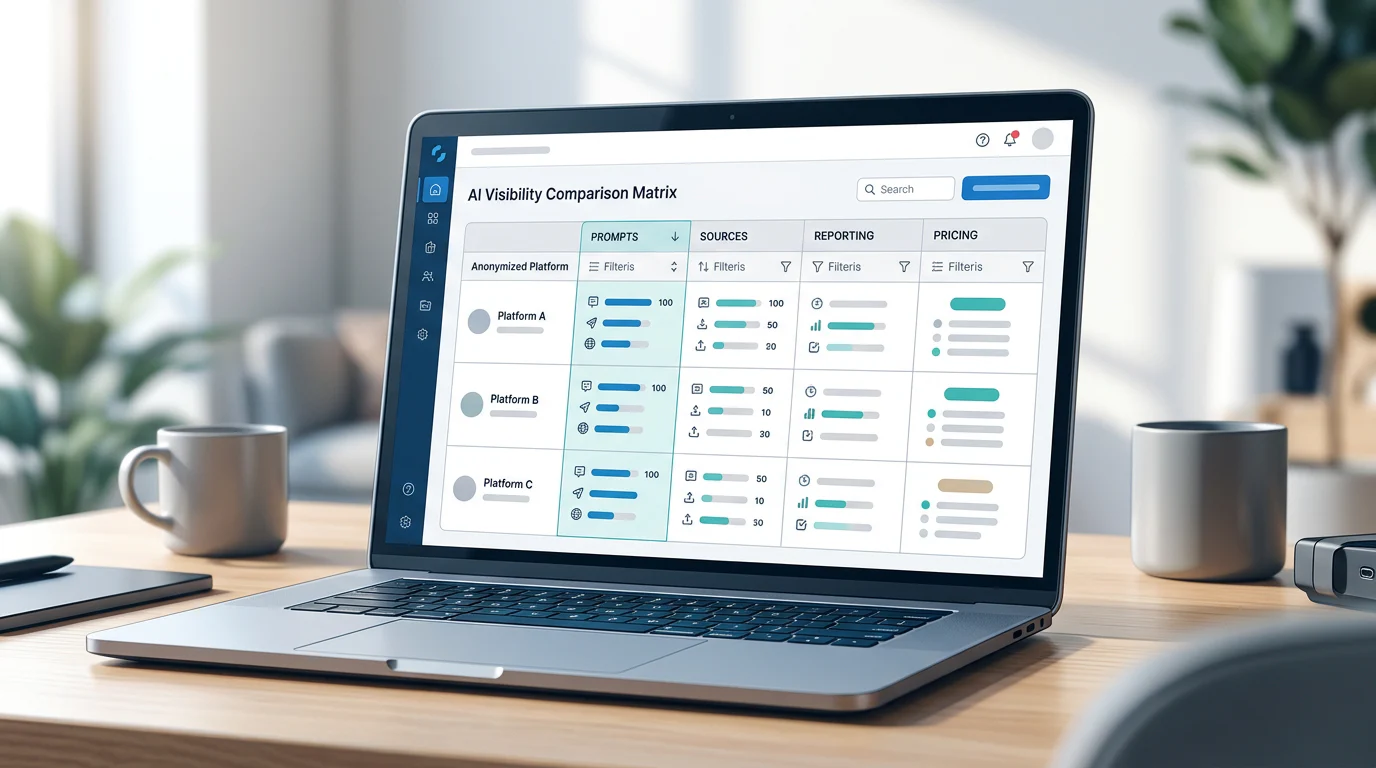
Capture the Whole Answer
A tracker should save the full response, not only a parsed mention. The answer can reveal recommendation position, qualifying language, named alternatives, and whether citations actually support the claim being reported.
Separate Mentions from Recommendations
A client may be mentioned as an example, excluded from a recommendation, or cited without being named. We treat these as different events because they lead to different content and authority actions.
Preserve Source Changes
Source overlap often matters more than a headline share-of-voice chart. Compare recurring third-party domains, competitor-owned sources, new citations, and lost citations at both domain and URL level.
For a practical baseline, use our ChatGPT tracking method to lock prompts, capture evidence, and compare like with like.
Run a Repeatable Competitor Audit
An agency competitor audit is a controlled measurement program. It should start with the buyer questions a client actually cares about, then preserve a stable baseline before anyone tries to interpret a rising or falling score.
Build a Prompt Cohort
Create a tagged cohort across category, comparison, use-case, problem-aware, and branded questions. Record persona, market, language, funnel stage, expected rivals, and business priority for each prompt. A buyer-prompt research framework is useful for turning sales, support, and search evidence into a governed prompt set.
Control the ChatGPT Run
Record the date, search state, declared location, language, session condition, and prompt wording. Run a representative subset more than once before presenting a trend as a client insight, especially for recommendation and comparison prompts.
Diagnose the Competitor Win
Review named rivals, co-occurrence, recommendation position, sentiment or claim language, cited domains, cited URLs, and source overlap. The important question is not merely who appeared. It is whether the rival won through its own site, a recurring publisher, a comparison page, or a source that never names the client.
Deliver and Retest
Deliver a monthly report with cohort visibility, source changes, annotated evidence, and an action list. Then choose one controlled content or authority action and retest the same cohort rather than changing prompts and pages simultaneously. Use our buyer-prompt research framework to keep future cohort additions tied to real buyer language.

Cost ChatGPT Competitor Tracking at Agency Scale
The monthly sticker price is rarely the real cost. Model the work as answer captures: clients multiplied by prompts, locations, repetitions, and tracking days. That calculation exposes whether a plan can support the reporting promise you make to a client.
Our published single-site plans start at $49 monthly for 50 daily ChatGPT prompts, while broader one-site coverage starts at $199 for 100 prompts. Review our current pricing before scoping a portfolio, because agency coverage is configured by client requirements rather than by multiplying an entry plan.
| Program | Monthly Capture Formula | Monthly ChatGPT Answer Captures | Commercial Question |
|---|---|---|---|
| Pilot | 3 clients × 30 prompts × 1 locale × 1 run × 30 days | 2,700 | Can the team review evidence before expanding? |
| Core Agency Program | 8 clients × 50 prompts × 1 locale × 1 run × 30 days | 12,000 | Does the plan include workspaces, reporting, and history? |
| Evidence-Heavy Program | 8 clients × 50 prompts × 2 locales × 3 runs × 30 days | 72,000 | Are repeats, locations, and overages priced transparently? |
See our current pricing when modeling prompt volume, client access, and reporting requirements.
Ask every provider whether credits are pooled across clients, whether search-enabled runs consume extra capacity, and whether historical answer evidence remains available after the reporting period. A lower price without those answers is not a verified cost comparison.
Turn Competitor Evidence into Client Reporting
Clients do not need a dashboard tour. They need a clear account of where ChatGPT changed, which sources or rivals appeared, what the agency believes caused the shift, and what will be tested next. Use recommendation monitoring to distinguish a brief mention from a meaningful category recommendation.
We structure the report around prompt clusters, not isolated wins. Start with category and recommendation cohorts, show the raw-answer evidence behind material changes, then separate observed facts from proposed actions. This protects the client relationship when a model response changes without an obvious site-side cause.
OpenAI says ChatGPT Search ranking uses multiple factors and does not guarantee placement, so reporting should describe observed samples rather than promise rankings. Its publisher guidance also confirms that allowing OAI-SearchBot can matter for inclusion, without guaranteeing visibility.
Use a source-history review when a competitor appears unexpectedly. It helps the team distinguish a lost client citation from a new third-party source, a changed answer structure, or an expanded competitor set.
Why PageLens.ai Fits Agency Evidence Workflows
At PageLens.ai, we built our agency workflow for teams that need to explain what ChatGPT said, why it changed, and what to do next. We keep prompt cohorts, answer evidence, citation history, and competitor context together so account teams can move from a dashboard question to a client-ready decision. Start by defining the client roster, markets, required cadence, and reporting owner, then confirm the agreed scope before rollout. When a report shows a competitor ahead, we turn the finding into a scoped content or authority task, then retest the same cohort. We help teams model the workload, agree the evidence standard, and set reporting expectations before asking a client to rely on a trend line. Our agency reporting approach keeps the executive view concise while retaining prompt-level proof for analysts. Book a demo with our team
FAQs on ChatGPT Competitor Trackers for Agencies
These answers address the practical questions agencies ask when moving from manual checks to a governed competitor-monitoring program.
How Do I Track Competitors’ Visibility in ChatGPT?
Build a fixed, tagged prompt cohort, run it in controlled ChatGPT settings, save every answer and source, then compare mentions, recommendations, citations, and recurring rivals over time.
What Must an Agency Preserve from Every ChatGPT Run?
Preserve the full answer, prompt, date, search state, location, citations, source URLs, competing brands, and run history. A score without evidence cannot support client recommendations.
How Many Prompts Should an Agency Track per Client?
Start with a cohort covering category, comparison, use-case, problem-aware, and branded questions. Expand only after the agency can review evidence and explain changes consistently each month.
Which ChatGPT Trackers Provide Client Reporting?
Client-ready reporting requires isolated workspaces, declared prompts and markets, preserved answer evidence, readable source changes, annotations, scheduled delivery, and an export path for client records.
How Should Agencies Measure ChatGPT Recommendations?
Measure recommendation presence, relative position, qualifying language, cited sources, and recurring rivals. Compare the same prompt cohort over time, rather than treating one answer as a ranking.