

TL;DR
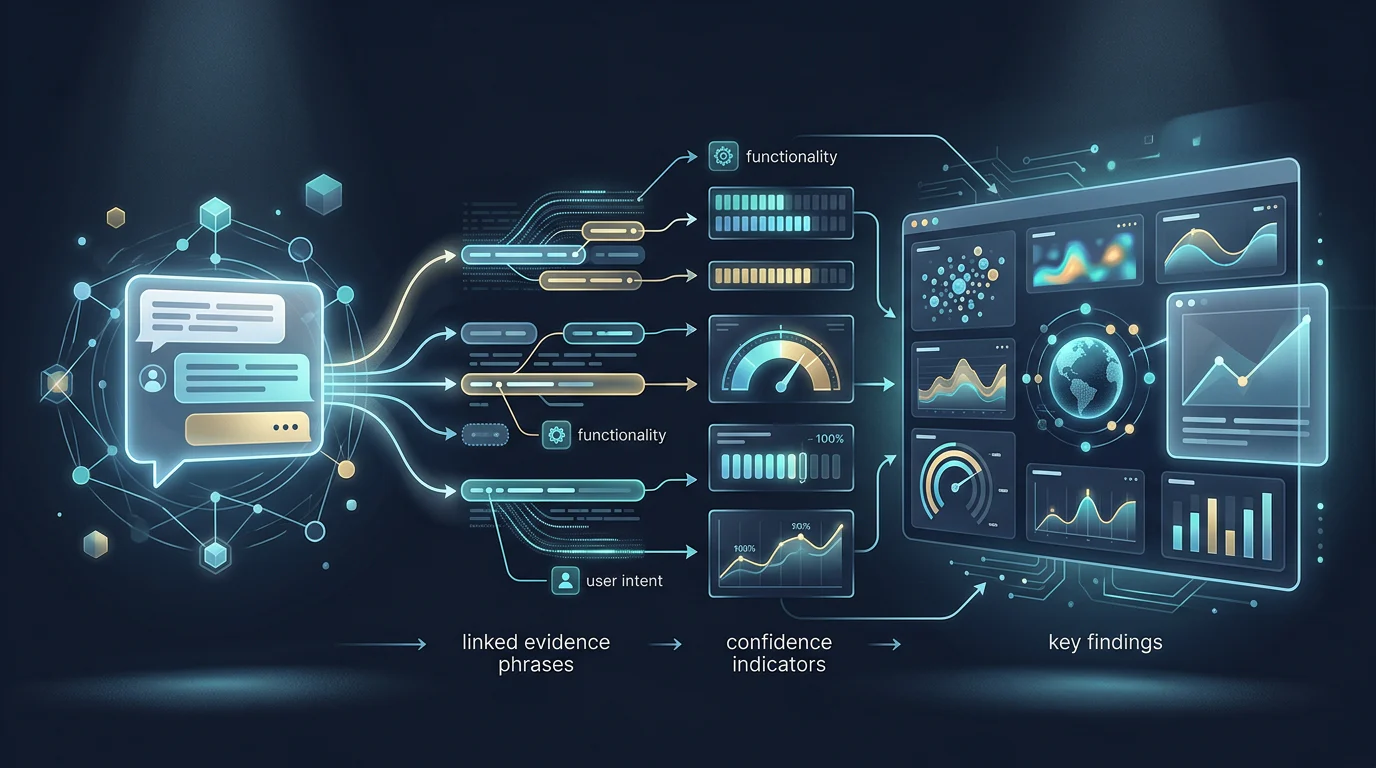
We see a 51-company fintech benchmark as a warning against treating domain authority as a proxy for AI visibility. SEO authority still matters, but marketing teams should separately measure brand mentions, recommendations, citations, prompt coverage, and qualified outcomes across AI engines before deciding what to fix.
Fintech AI Visibility Benchmark Exposes Domain Authority Gap
AI answers now influence vendor discovery before many buyers reach a conventional results page. A 2026 buyer survey found that 51% of B2B software buyers start research with an AI chatbot more often than Google.
On August 31, 2026, a 51-company fintech benchmark found that domain authority did not reliably predict whether brands appeared in AI-generated answers. The practical consequence: SEO authority remains valuable, but marketers need a separate AI-visibility baseline across engines, buyer-style prompts, cited sources, and downstream conversion.
We unpack what that result means, where its limits are, and how a fintech team can turn it into a repeatable measurement workflow.
What the Fintech AI Visibility Benchmark Establishes
The benchmark tested 51 fintech and payments companies against 16 unbranded category prompts across four AI engines. Its central result was deliberately narrow: a domain-level authority metric explained little of the variation in whether a company appeared in answers. The reported correlation was 0.24, with roughly 5% of observed variation explained.
That is a useful correction to an easy assumption, not a reason to abandon SEO. A company can be highly visible in traditional search and still fail to surface when a buyer asks an AI system for category options. Conversely, a lower-authority domain can appear in a tightly framed recommendation answer. For a practical baseline, we recommend treating AI visibility as a separate observable outcome, rather than trying to infer it from rankings or backlinks.
The same benchmark also found that visibility changed with query wording and engine coverage. One placement reportedly moved 39 points when category wording better matched its positioning. That reinforces a simple point: a single branded prompt is a recall test, not a demand-generation test.
Google’s own documentation helps explain why. Its AI experiences may use query fan-out, which expands one question into related searches across subtopics and sources, and its AI features can return different links from classic results. Google explains that AI Mode and AI Overviews can use different models and techniques.
Why Authority and AI Answers Can Diverge
Domain authority is a third-party estimate of a domain’s link profile. It can be useful for competitive SEO analysis, but it is not a disclosed AI-answer ranking system. Treating it as one creates a measurement error before any content work begins.
Discoverability Is Not Citation
A page can be indexed and eligible to appear in Search without becoming a supporting link in an AI answer. Google says there are no separate technical requirements or special schema required for its AI features, and eligibility does not guarantee that a page will be crawled, indexed, or served.
That means technical hygiene is still essential: crawl access, clear internal links, visible text, accurate structured data, and pages that answer real questions. But these are prerequisites, not evidence that a brand is being recommended.
Citation Is Not Answer Influence
A cited URL is valuable, but it is not always the page doing the explanatory work in an answer. A 2026 research dataset examined 602 controlled prompts and 21,143 search-layer citations, distinguishing citation selection from the influence a source has on generated language.
For marketers, that distinction matters. Count citations, but also record the exact language around them. A source may be present while the answer still omits the category, proof point, or positioning your buyers need.
One Engine Is Not a Market
The benchmark’s cross-engine finding is more actionable than its authority correlation. A company mentioned in only one environment has a fragile form of visibility. Buyers use different tools, and those tools can retrieve, cite, and phrase recommendations differently.
We would not score a brand as broadly visible because it appears once. We would measure coverage across the engines relevant to its audience, then separate consistent mentions from one-off appearances.
The Commercial Risk Is Shortlist Exclusion
This is not a debate about a vanity dashboard. It is about whether a buyer receives your name when they ask an AI system to narrow a category. The same 2026 research found that 69% of surveyed software buyers said chatbot information led them to choose a different vendor than expected. That does not prove an AI mention creates revenue, but it makes exclusion from relevant answers a commercial risk worth measuring.
The right response is not to replace SEO with a new acronym. It is to build a second measurement layer. SEO can improve qualified discovery, technical accessibility, and content quality. AI-answer measurement shows whether those investments appear in the buyer conversations that increasingly form early shortlists.
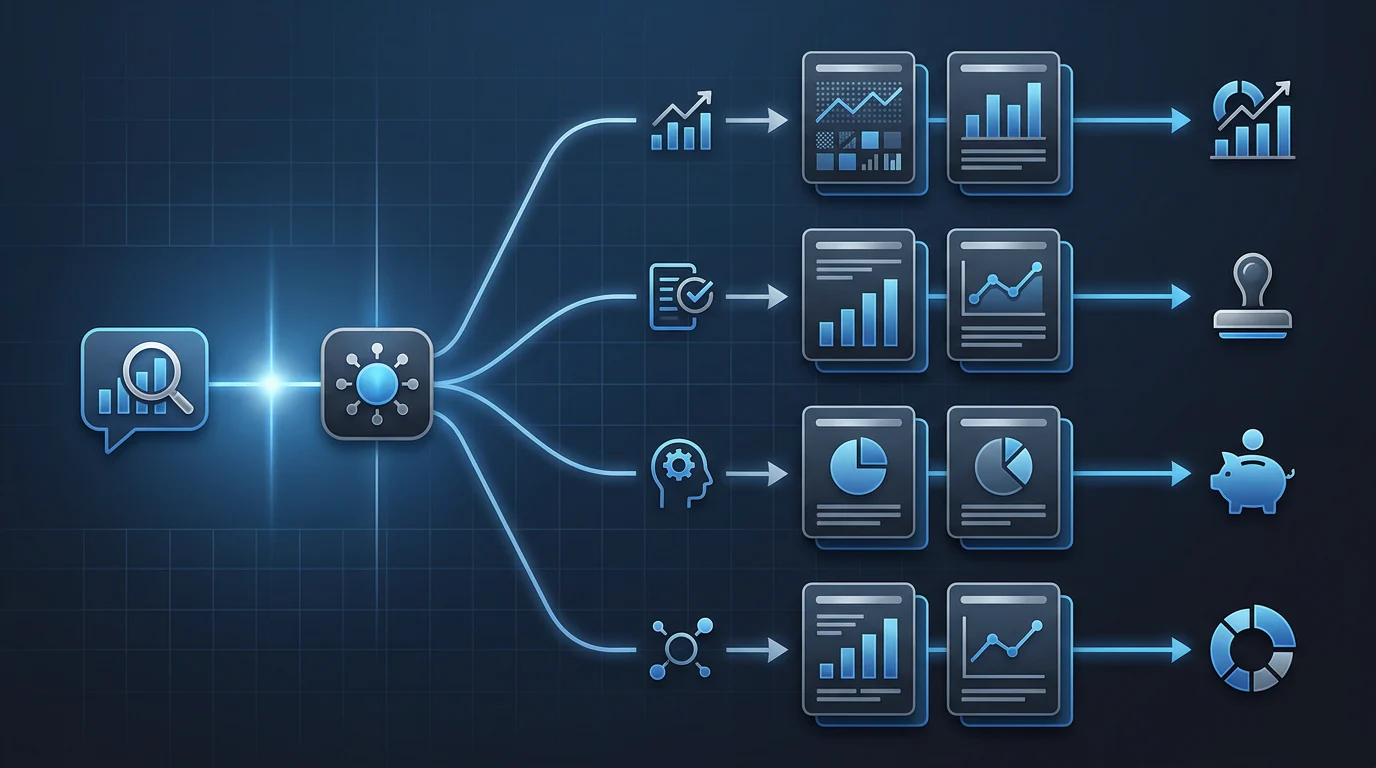
Start with cross-engine tracking for the questions buyers actually ask. Then document source-level citations to identify which first-party and third-party pages are supporting the answer. This gives content teams an evidence trail instead of a vague instruction to “improve authority.”
Google has also made this distinction more measurable. Its June 2026 new report introduced dedicated views for generative-AI impressions, pages, countries, devices, and time periods for a subset of Search Console properties.
What to Measure After the Benchmark
A useful fintech AI visibility program starts with a prompt set, not a domain score. Build it from sales-call language, product categories, use cases, implementation questions, compliance concerns, and comparison criteria. Use unbranded prompts for discovery, then retain branded prompts for message accuracy and reputation monitoring.
Track four signals on every scheduled run:
- Mention rate: How often the brand appears in relevant answers.
- Recommendation rate: How often the answer places the brand in a shortlist or fit-for-use-case recommendation.
- Citation rate: How often an answer cites a first-party page.
- Source gap: Which external sources appear when the brand is absent, incomplete, or inaccurately described.
Log the prompt, date, locale, engine, answer language, cited URLs, and any recommendation qualifier. That makes changes auditable. It also lets teams see whether a content update improved a useful outcome or merely changed a single answer on a single day.
Distinguish a neutral mention from a genuine endorsement, then compare the AI-answer record with engaged sessions, qualified demos, and pipeline, rather than presenting a visibility score as business impact by itself.
What to Watch Next
The important follow-up is replication. This benchmark is a dated snapshot in one sector, using a finite prompt set. Its result should hold attention because it challenges a common planning shortcut, but teams should test whether it persists across more prompts, multiple dates, and the buyer intents that matter to their own category.
Watch for three changes: the engines that mention your brand, the sources they cite, and the words they use to explain your fit. Our AI citation tracking workflow helps separate a useful first-party citation from a source that merely appears beside an inaccurate answer. If an answer names you but attaches the wrong use case, that is not a win. If it cites a useful first-party page but excludes the brand from a shortlist, that is a different problem requiring a different fix.
Our view is straightforward: keep investing in sound SEO, but stop using a domain score as the verdict on fintech AI visibility. The more reliable question is whether buyers can find, understand, and select your brand in the answers they actually receive.
Measure Fintech AI Visibility with PageLens.ai
At PageLens.ai, we help marketing, growth, SEO, and content leaders replace assumptions with a repeatable view of AI-answer performance. We can help your team define buyer-led prompt sets, inspect which answers mention or recommend your brand, identify the pages and external sources cited, and separate isolated appearances from durable cross-engine coverage. That is especially useful after a benchmark like this one, because a domain metric cannot show whether your message survives in real category conversations. Bring us the markets, products, and questions that matter most, and we will help turn observed gaps into a prioritized measurement and content workflow. Book a demo
FAQs on Fintech AI Visibility
Does Domain Authority Still Matter for AI Visibility?
Yes. It supports traditional search performance and useful crawlable pages, yet it cannot replace repeated checks of mentions, recommendations, citations, and qualified conversion outcomes across engines.
Which Measurements Should Teams Start With?
Start with buyer-style prompts, brand mentions, recommendation language, cited sources, engine coverage, and first-party citation rate. Add engagement and pipeline measures once the baseline is stable.
How Often Should We Rerun AI Visibility Checks?
Run them on a consistent schedule and after material content, positioning, or product changes. Keep prompt wording, location, and engine settings documented for comparison over time.