
Citation Tracking for Claude and Gemini: The Three Visibility Layers Most Teams Miss

TL;DR
Learn the three AI citation visibility layers and what controlled API workflows can reveal before, during, and after an answer.
Citation Tracking for Claude and Gemini: The Three Visibility Layers Most Teams Miss
Citation tracking is becoming more operational as AI answers become a regular research surface. For context, one provider currently prices web search at $10 per 1,000 searches, before standard token costs.
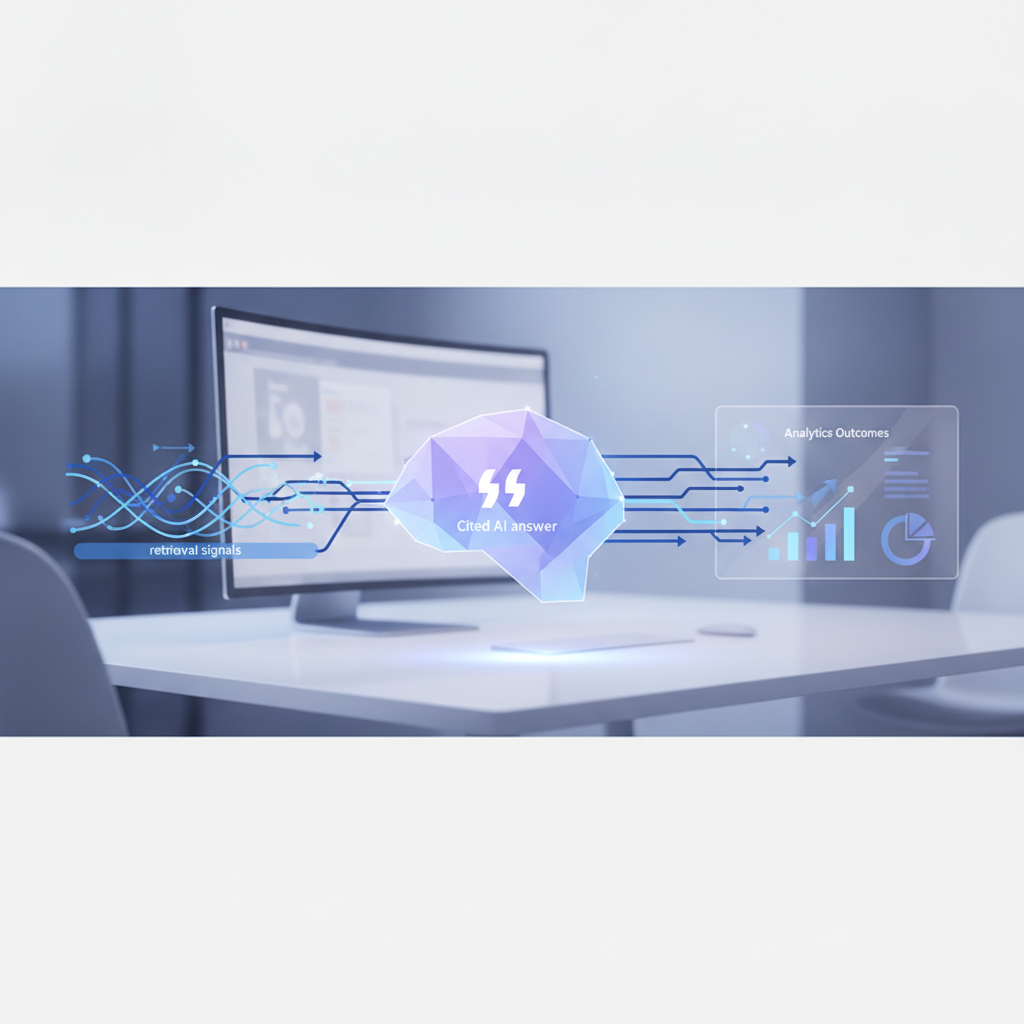
Direct answer: Citation tracking Claude Gemini has three visibility layers: pre-answer retrieval evidence, in-answer claim citations, and post-answer engagement. Teams can inspect varying traces only in controlled API workflows, verify citations in the response, and measure downstream behavior only where they own the interface or destination.
This guide explains how citation tracking Claude Gemini works across each layer, what it proves, what it cannot prove, and how to turn the process into a repeatable visibility audit.
The Three Visibility Layers
Citation tracking Claude Gemini becomes more useful when teams stop treating every source URL as the same signal. A cited link is evidence of answer-level attribution, while a retrieved URL, a search query, and a subsequent referral session all describe different moments in the answer journey.
Start by defining the evidence before trying to score it.
Pre-Answer Visibility
Pre-answer visibility is the search query, candidate result, retrieval trace, or tool activity available before the final answer reaches the user. In a citation tracking Claude Gemini workflow, this layer is usually visible only in an API workflow your team runs and logs.
It can reveal whether an AI system searched, what it searched for, and sometimes which candidate sources were returned. It does not provide a universal window into the private retrieval process behind public chat sessions.
In-Answer Visibility
In-answer visibility is the citation, URL annotation, or source reference attached to a claim in the generated response. This is the layer most marketers mean when they ask whether a page was cited.
It is valuable because it connects a visible answer to a source. It is incomplete because cited sources are not necessarily every source retrieved, considered, or ranked during generation.
Post-Answer Visibility
Post-answer visibility is the observable behavior after a response appears, such as a source-link click, referral session, engaged visit, signup, or demo request. It belongs to analytics, not retrieval.
For content teams, this layer is where citation tracking Claude Gemini becomes a business workflow. It connects prompt-level visibility to owned-site outcomes and should sit beside prompt research, not replace it.
Pre-Answer Visibility: What the Model Looked Up
Pre-answer visibility is the most misunderstood layer in citation tracking Claude Gemini. It is not a promise that a team can watch a model browse in real time. It is a record of selected artifacts that an API may return alongside a completed request, depending on the model, tool, and configuration used.
The practical question is not “Can we see everything?” It is “What evidence can we reliably retain from citation tracking Claude Gemini runs we control?”
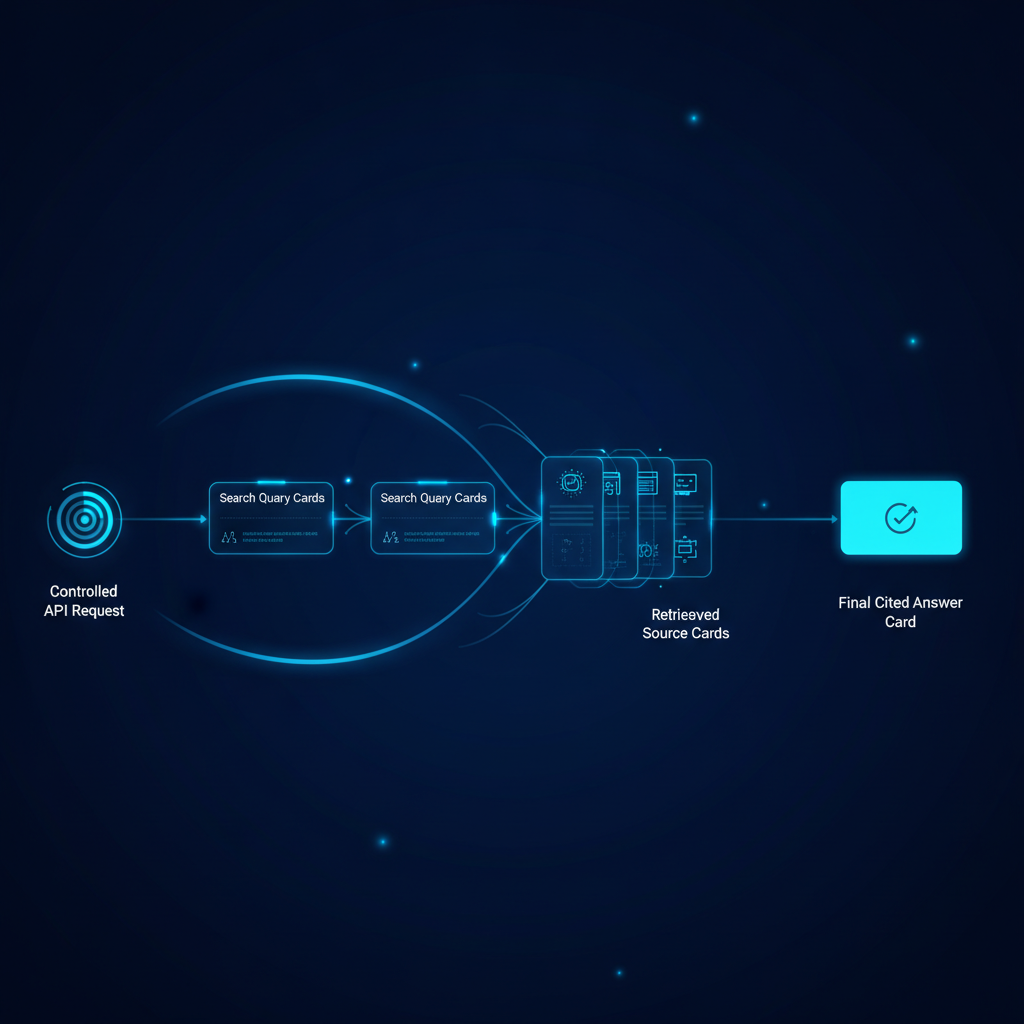
For one current web-search implementation, the response can contain a search query, result blocks, source URLs, titles, page-age fields, and the final cited answer. The provider describes this as a returned response structure, which means a citation tracking Claude Gemini audit should log it as an execution artifact rather than treat it as a prediction of future citations.
Another current grounding workflow returns search-call steps with the generated queries, then response annotations that connect answer text to source URLs. Its documented grounding workflow makes clear that search, processing, and citing are handled automatically, so a citation tracking Claude Gemini test should not mistake query visibility for full access to ranking logic.
What You Can and Cannot See
| What You Can See | What You Cannot Reliably See |
|---|---|
| Search queries generated in a controlled API run | A guaranteed preview of every source before answer generation |
| Returned result or source artifacts, where documented | Internal rankings, embeddings, and hidden selection logic |
| Whether a search tool was called | Retrieval activity from another user’s public chat session |
| Model, prompt, timestamp, and tool configuration | A complete provider-wide retrieval history |
How to Audit This Layer
- Save run context: Record the prompt, model version, location settings, tool settings, timestamp, and response identifier together.
- Separate source states: Label URLs as retrieved, consulted, cited, or merely mentioned. These labels answer different questions.
- Use a citation tracking Claude Gemini baseline: Keep a stable prompt set built from buyer prompt discovery, then add only deliberate test variations.
- Retain raw artifacts: Keep the original response object where policy permits, not only a spreadsheet of extracted domains.
- Flag missing traces: Treat a no-search or no-source response as a meaningful result, not as a blank row to ignore.
In-Answer Visibility: What the Response Explicitly Cites
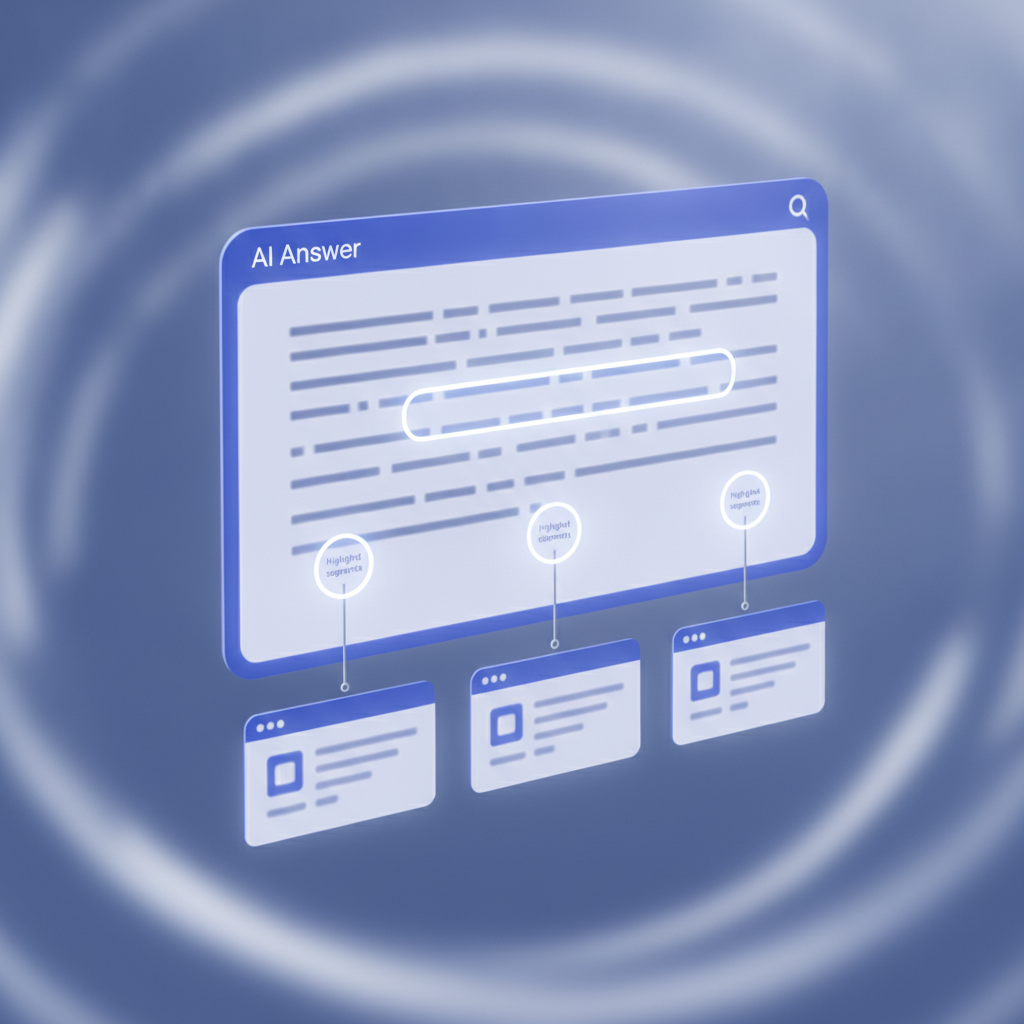
In-answer visibility is the most accessible form of citation tracking Claude Gemini because it appears in the response itself. It lets teams identify the pages attributed to individual claims, compare citation recurrence across prompts, and see whether their own content appears in answers that matter to buyers.
Use it as claim-level evidence, not as a complete reconstruction of the model’s research process.
For citation tracking Claude Gemini, a strong audit parses the answer text and its citations together. That preserves the relationship between the claim, the cited page, the source domain, and the prompt that produced it.
One provider’s citation feature can return passage-level support from supplied documents, including character, page, or content-block locations. Its citation documentation also explains that source text can be chunked into smaller units, which is why citation tracking Claude Gemini should capture the cited claim, not only the destination URL.
What You Can and Cannot See
| What You Can See | What You Cannot Reliably See |
|---|---|
| Source URLs attached to visible answer claims | Every source considered during generation |
| Citation frequency by prompt, page, and domain | The source’s internal retrieval rank |
| Claim-to-source mappings when annotations support them | Whether uncited text came from private knowledge or a source |
| Broken, irrelevant, or recurring citations | Whether a citation alone caused a downstream conversion |
How to Audit This Layer
- Capture the claim span: Save the exact sentence or passage associated with each citation.
- Check source quality: Confirm that cited URLs resolve, match the topic, and support the surrounding claim.
- Group prompts by intent: Compare recommendations, alternatives, definitions, and troubleshooting prompts separately.
- Track recurrence: Repeated citations across prompts matter more than a single isolated appearance.
- Review citation tracking Claude Gemini visibility: Pair source findings with multi-engine tracking signals so a citation is assessed alongside answer inclusion and sentiment.
Post-Answer Visibility: What Happens After Exposure
Post-answer visibility is where citation tracking Claude Gemini connects to growth outcomes, but it also has the sharpest measurement limits. A publisher may observe referral traffic and conversions on its own site. An AI interface owner may observe source-link clicks. Neither perspective exposes every action happening inside a third-party answer experience.
Measure observable outcomes carefully, then state the blind spots plainly.
A citation tracking Claude Gemini program can measure owned-site outcomes without claiming access to private interface activity. Analytics platforms can measure outbound click events when a visitor leaves a site, with fields such as link destination and outbound status. That GA4 guidance supports measuring behavior on an owned interface, not claiming visibility into another company’s public chat interface.
What You Can and Cannot See
| What You Can See | What You Cannot Reliably See |
|---|---|
| Referral sessions reaching owned pages | Users who saw a citation but did not click |
| Conversions and engagement after identifiable visits | Source-link clicks inside an interface you do not operate |
| Clicks from links in an AI product your team built | Provider-wide engagement or private user behavior |
| Changes over time after content updates | A causal attribution claim from one citation alone |
How to Audit This Layer
- Define outcome events: Choose owned outcomes such as engaged session, signup, qualified lead, or demo request.
- Preserve attribution limits: Label referral data as observed traffic, not proof of every citation impression.
- Segment landing pages: Compare outcomes by cited page, content type, and prompt cluster where identifiable.
- Join reporting carefully: Combine citation tracking Claude Gemini records and outcomes through consistent dates and URLs.
- Review narrative signals: Use AI sentiment architecture to distinguish a positive mention from a visible citation and a measurable visit.
Model Comparison Table
A citation tracking Claude Gemini comparison should score transparency, not answer quality. Citation tracking Claude Gemini can be highly auditable in controlled API environments while remaining opaque in public-chat contexts. The same distinction applies to other answer engines that return source artifacts only after a request has completed.
Use a simple scale so stakeholders understand what the score represents.
The scores below reflect documented API-level auditability: zero means no documented layer access, one means limited trace evidence, two means query plus partial source trace, and three means a detailed source or citation record.
| Model Workflow | Pre-Answer Trace | In-Answer Citations | Post-Answer Provider Data | Transparency Score |
|---|---|---|---|---|
| Claude With Web Search | Query and returned result blocks | URL, title, and cited-text support | Not documented for outside observers | 5 / 9 |
| Gemini With Search Grounding | Executed query steps and limited result artifacts | Text-span annotations with source URLs | Not documented for outside observers | 4 / 9 |
| ChatGPT With Web Search | Search-call record and complete consulted-source list | Inline URL citations and annotations | Not documented for outside observers | 6 / 9 |
For the third workflow, the API documents a complete consulted-source list that can be larger than the visible citation set. That source list is useful for a controlled citation tracking Claude Gemini test, but it still does not reveal engagement within public user sessions.
This comparison is a transparency score, not a recommendation score. Teams evaluating citation tracking Claude Gemini should also consider prompt relevance, source quality, answer consistency, and the content opportunity identified by AEO vs semantic SEO.
Build a Repeatable Citation Visibility Audit
A repeatable audit prevents teams from confusing a memorable screenshot with a durable visibility signal. Citation tracking Claude Gemini works best when the same prompts, source rules, and review fields are used over time. That creates a baseline for detecting changes in citations, answer structure, and downstream engagement.
Build the process around evidence your team can reproduce.
A citation tracking Claude Gemini process starts with a prompt library that reflects real research behavior. Then capture the complete response evidence, classify each visibility layer, and report only what the recorded data supports.
- Create a prompt baseline: Keep a stable set of buyer, category, comparison, and implementation prompts.
- Log each citation tracking Claude Gemini run: Store prompt, date, model, answer text, citations, retrieval artifacts, and visible source URLs.
- Classify every URL: Mark whether a URL was retrieved, cited, mentioned, or visited after exposure.
- Review by page: Use a single-site workflow to identify which owned pages repeatedly earn visibility.
- Escalate meaningful change: Investigate recurring citation losses, new source patterns, and answers that cite competitors without citing your strongest relevant page.
- Keep conclusions narrow: Report observed citation and traffic patterns, while avoiding claims about private retrieval systems you cannot inspect.

PageLens.ai for Citation Visibility Workflows
PageLens.ai gives growth and content leaders a practical way to turn recurring citation tracking Claude Gemini checks into a regular visibility workflow. Rather than treating a screenshot or isolated answer as proof, teams can organize prompt sets, compare answers across engines, review cited pages, and connect reporting to the pages and questions that matter.
Use it to make every visibility decision reproducible.
Start with the prompts that represent buyer research, then preserve the answer, cited URLs, and evidence each engine makes available. This makes gaps clearer: a missing citation differs from an inaccessible retrieval trace, and neither should be mistaken for post-answer engagement. The PageLens Platform supports a shared program for reviewing citation tracking Claude Gemini patterns, prioritizing content improvements, and discussing results without inventing provider telemetry. Bring a focused prompt set, a few priority pages, and the questions your stakeholders keep asking. Then use the evidence to align editorial, technical, and growth teams. Book a demo
FAQs on Citation Tracking Claude Gemini
Citation tracking Claude Gemini raises practical questions because visible answers are only part of the evidence trail. These FAQs separate controlled workflow evidence from private interface behavior.
Use these limits when setting stakeholder expectations.
Do Any Models Expose Retrieval Logs?
Controlled citation tracking Claude Gemini APIs can return queries, calls, or source lists after execution. Public chat sessions offer no dependable universal retrieval-log view to outside observers.
Can I Request Citation Data from Model Providers?
Use documented citation tracking Claude Gemini response fields and support channels for your own API traffic. Providers do not promise private telemetry, rankings, or cross-user citation data.
Can a Publisher Measure Citation Clicks?
Publishers can measure citation tracking Claude Gemini referral sessions and on-site conversions when available. Citation clicks inside an AI interface remain observable only to its operator.
References
These primary documentation and analytics references support the operational claims in this article. They describe API response behavior, citation fields, search-grounding workflows, pricing context, and measurable website interactions. Model behavior and product interfaces can change, so teams should recheck the documentation when updating citation tracking Claude Gemini processes.
Use these sources as the baseline for controlled testing.