.png)

TL;DR
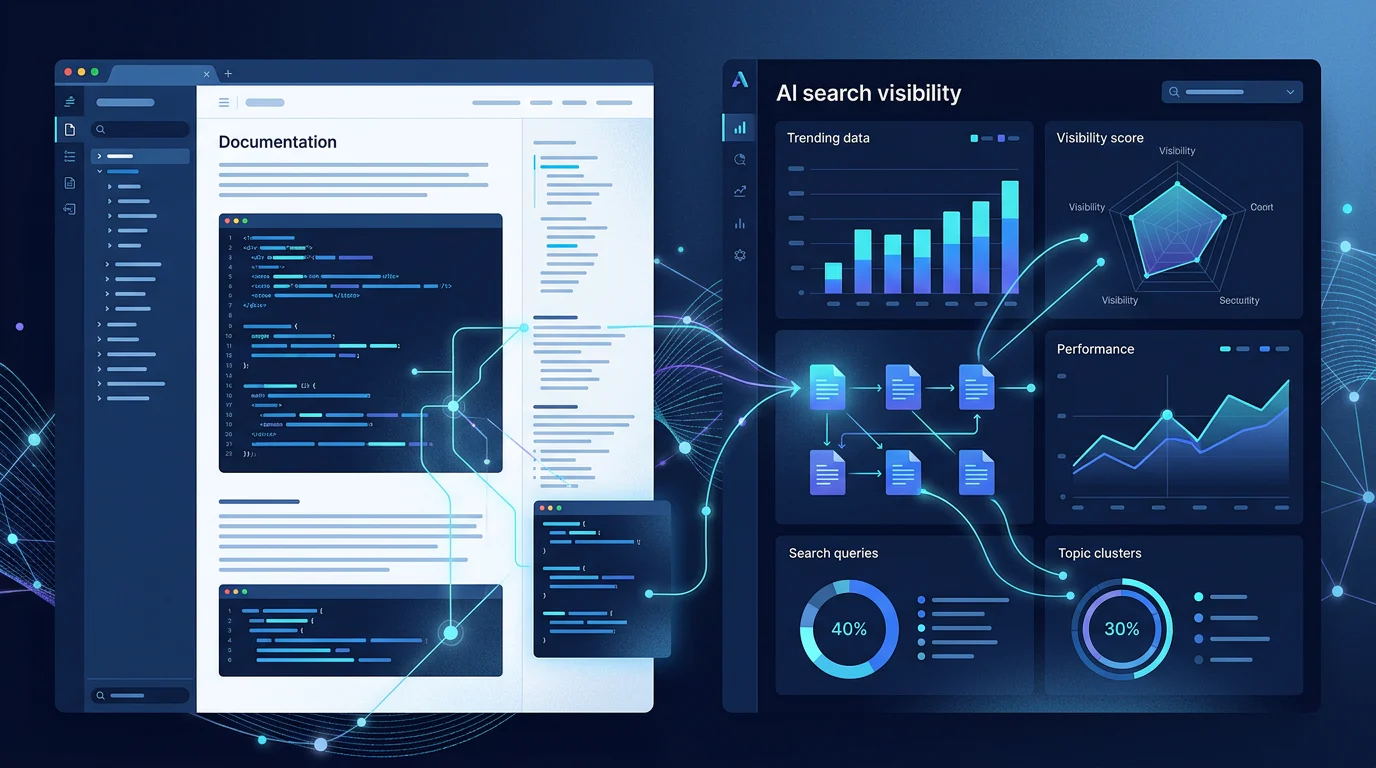
We use Google’s new generative-AI Search Console reporting to make a developer-tool AEO checklist measurable: verify crawl access, document verifiable product facts, and track citations alongside qualified visits and conversions. We also separate supported SEO practices from shortcuts such as special AI files, then set out a 30-day measurement loop for teams publishing technical documentation.
Google’s New Reports Upgrade the Dev-Tool AEO Checklist
Google began rolling out dedicated generative-AI reports in Search Console on June 3, 2026. The urgency is clear: 68.01% of U.S. Google searches ended without a click in early 2026, according to a clickstream study.
Google’s new reporting gives developer-tool teams a better AEO starting point: track the pages Google surfaces in AI Overviews and AI Mode, verify that product documentation can be crawled and indexed, and connect observed citations to qualified traffic and conversions. A developer-tool AEO checklist should prioritize that evidence over schema or file-format shortcuts.
We use the rollout as a practical reset for marketing, growth, SEO, and content leaders. The goal is not to make documentation sound machine-written. It is to make product information accurate, accessible, measurable, and useful when buyers ask technical questions.
Google Reports Make AI Visibility Measurable
Google’s official rollout introduced dedicated views for AI Overviews and AI Mode, although access is initially limited to a subset of sites. The reports show impressions, surfaced pages, countries, devices, and trends over time. That is meaningful because it turns one part of AI visibility from anecdote into first-party search data.
This does not create a new guaranteed position to chase. An AI answer can change with the question, the follow-up context, location, and available sources. Instead, we recommend treating visibility as a set of observable signals: whether a relevant page appears, whether it earns attention from the right audience, and whether that audience takes a meaningful next step.
A strong AEO system therefore starts with measurement, not a rewrite sprint. Teams should retain a record of the query, page, date, market, and business outcome before deciding that a content change worked.
A Dev-Tool AEO Checklist Needs Crawl Access
Technical accessibility comes before stylistic optimization. A useful answer cannot reliably draw on documentation that is blocked, unavailable, rendered without readable core content, or excluded from indexing. Google’s AI search guidance says pages must satisfy standard Search requirements, while foundational SEO practices remain relevant to AI features.
Let Search Bots in Deliberately
Search access is not the same as permission for model training. OpenAI, for example, distinguishes OAI-SearchBot, used to surface content in search, from GPTBot, which is associated with potential training collection in its crawler documentation. We recommend documenting each access decision with an owner, rationale, and review date.
Check robots.txt, CDN and WAF rules, HTTP status codes, canonical tags, and the rendered HTML of high-intent pages. Prioritize pricing, integrations, migration guides, implementation docs, API references, and troubleshooting pages because these are where buyer questions most often require specific evidence.
Separate Search from Training
A blanket decision to block or allow every crawler is rarely a marketing decision alone. It can affect security, legal, product, and documentation teams. Bring those stakeholders into the review, then validate the live configuration after changes deploy.
For Google Search, the practical requirement is simpler: allow crawlable, indexable pages that qualify for Search snippets. The work is less about adding an “AI setting” and more about ensuring that the product facts buyers need are actually available to search systems and people.
Publish Facts That Hold Up
Do not treat llms.txt, forced content chunking, or a special schema type as a citation shortcut. Google says these are not required for its generative Search features. Schema still has value when it accurately represents visible content and supports applicable standard Search features, but it cannot compensate for vague, stale, or inaccessible documentation.
Write concrete, maintainable answers: supported environments, version requirements, implementation steps, limits, security details, dated changelog entries, and clearly scoped pricing. The more precise the claim, the easier it is for a reviewer, buyer, or answer engine to check.
Build a Repeatable Evidence Loop
A developer-tool AEO checklist is strongest when it behaves like a measurement program. Academic research presented at KDD in 2024 evaluated 10,000 queries and found that visibility improvements varied by domain, with gains of up to 40% in its benchmark. The GEO study supports disciplined testing, not a universal content formula.
Start with Buyer Prompts
Build a fixed panel of 12 prompts across category discovery, implementation, comparison, migration, pricing, and troubleshooting. Use the language buyers use, not the internal labels your team prefers.
-
Category Prompts: Test whether your product is named for the jobs it is designed to solve.
-
Evaluation Prompts: Test comparisons, constraints, pricing questions, and migration tradeoffs.
-
Implementation Prompts: Test setup, integrations, supported versions, and common failure modes.
Run the same panel regularly across relevant answer engines. Record the full answer, your mention status, citations, cited domains, recommendation language, and any material changes from the prior sample.
Keep Signals Separate
A mention is not a citation. A citation is not a qualified visit. A visit is not a conversion. Combining those signals into a single score hides the practical work that needs doing.
We use cross-engine tracking alongside first-party Search Console data and analytics. When an answer cites a page but engagement is weak, improve the destination. When a useful page earns no visibility, inspect crawlability, search eligibility, prompt fit, factual completeness, and outside descriptions of the product.
Test One Change at a Time
Update a limited set of pages, annotate the date and nature of each change, then re-run the prompt panel. This makes it possible to distinguish a useful documentation improvement from normal answer variation.
Original research, transparent methodology, and product evidence deserve priority over volume. A generic page can summarize a category, but a well-maintained technical page can answer the detailed question that a buyer actually needs resolved.
Decide Where the Checklist Earns Its Keep
Not every team needs the same level of effort. If buyers are not asking answer engines about your category, or if your product information is still too incomplete to support clear answers, a large AEO program should wait. First confirm demand and fix the underlying documentation.
For teams with evident buyer questions, use the next 30 days to establish a reliable baseline:
-
Week One: Audit crawl access and indexability for high-intent documentation.
-
Week Two: Capture the prompt panel, Search Console data, citations, and referral outcomes.
-
Weeks Three And Four: Improve the highest-value gaps, log each change, and remeasure the same evidence.
When visibility falls, avoid guessing from a single response. Start with a citation loss audit, identify the changed pages or sources, and confirm whether the problem is technical access, stale facts, missing evidence, or a shift in buyer intent.
See the Workflow with PageLens.ai
At PageLens.ai, we help marketing, growth, SEO, and content leaders turn this developer-tool AEO checklist into an operating rhythm. We start with the prompts buyers actually ask, capture how major answer engines describe and cite your site, and identify the pages, facts, and technical barriers behind gaps. Our team then turns findings into prioritized website fixes, rather than a generic score or an untestable promise. You keep a clear record of what changed, where visibility moved, and which actions deserve another measurement cycle. If you need a practical baseline before your next documentation release, Book a demo
FAQs on Developer-tool AEO Checklist
Can We Measure Google AI Visibility?
Yes. Where available, Google’s report shows impressions and surfaced pages from AI Overviews and AI Mode. We combine it with prompt sampling and conversion data.
Does Llms.txt Improve Google AI Visibility?
No. Google says llms.txt does not improve visibility or rankings in its AI search features. Keep it only when another service uses it for a useful purpose.
Does Crawling Permission Mean Model Training Permission?
No. Search and training crawlers can have separate controls. Check each provider’s current documentation, then record the access decision, owner, rationale, and review date internally.