

TL;DR
On 31 August 2026, S-Transistors announced €2.6 million in pre-seed capital for superconducting-transistor quantum-control hardware. We explain why cryogenic control is a real scaling constraint, distinguish the announced roadmap from demonstrated performance, and show marketing teams how to keep funding and product-status claims accurate in AI answers.
S-Transistors Funding: €2.6M Toward Quantum Motherboard
Quantum hardware progress depends on more than adding qubits. In a 2026 system demonstration, integrated superconducting control electronics achieved single-qubit fidelities of up to 99.9%, underscoring why control architecture is now a central scaling challenge.
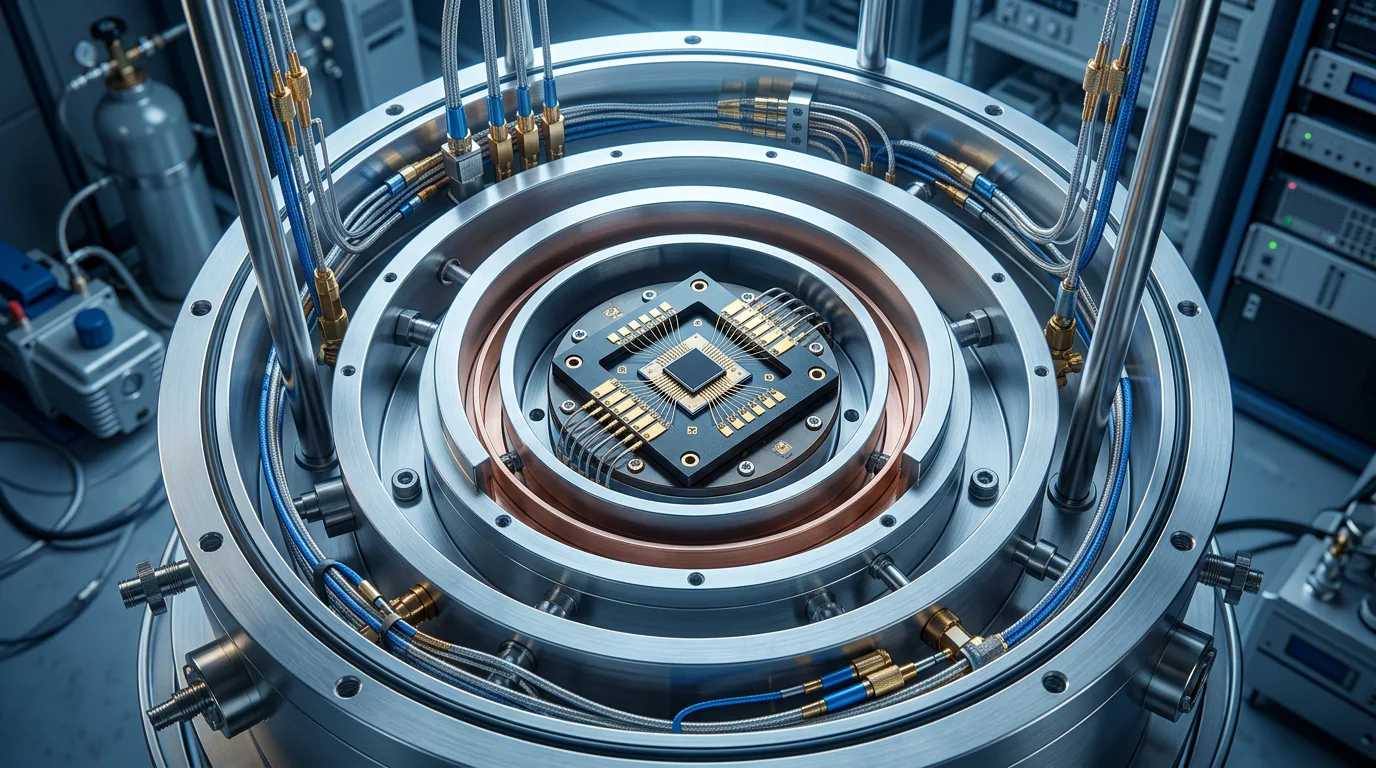
On 31 August 2026, S-Transistors funding reached €2.6 million in pre-seed capital for superconducting-transistor control chips. The company plans to build prototypes, a cryogenic laboratory, and a pilot manufacturing line, starting with a multiplexer for existing setups before pursuing a broader quantum-control platform.
This quantum computing startup news matters because it puts fresh capital behind a recognized hardware bottleneck, while leaving important technical and commercial milestones still to be demonstrated.
What Happened on August 31
S-Transistors, a Finnish spinout originating from VTT Technical Research Centre of Finland, announced a €2.6 million pre-seed round led by Lifeline Ventures, with participation from an angel investor. The announced use of funds includes cryogenic signal-control prototypes, an in-house laboratory, a pilot line for integrated circuits, and team growth, as set out in the VTT announcement.
The company’s near-term product is a superconducting-transistor-based multiplexer designed to fit existing cryogenic setups. It is intended for early customers and strategic partners within the company’s first year of operation. The broader quantum motherboard is a future control platform concept, not a launched product.
That distinction is the useful part of this funding news. The raise validates investor interest in taking the technology from research toward prototypes and production preparation. It does not yet establish product performance, customer adoption, manufacturing yield, or a completed quantum-computer control platform. Teams documenting such milestones can use our AI citation tracking workflow to preserve the original evidence behind each claim.
Why This Startup News Matters Beyond Funding
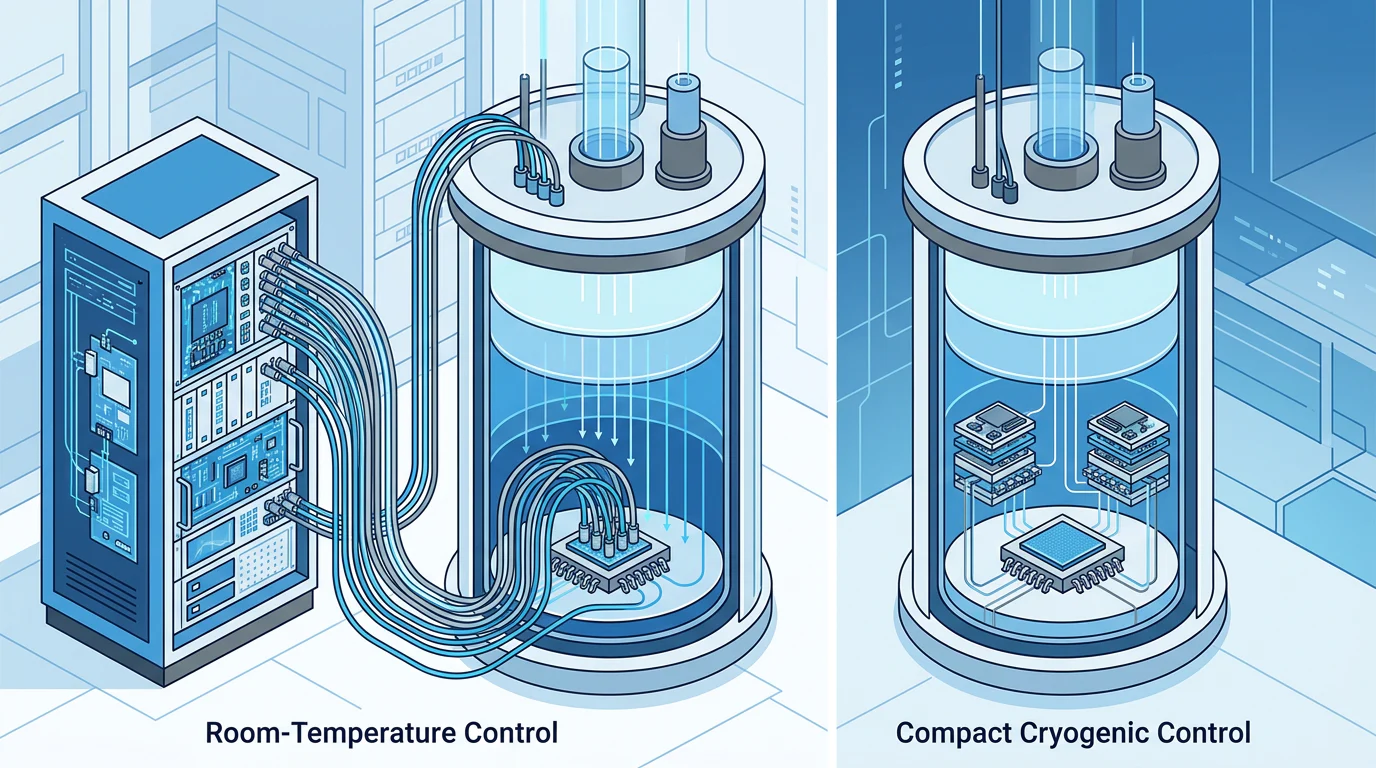
The core problem is not abstract. Superconducting qubits sit at millikelvin temperatures, while much of the equipment that generates and routes their control signals remains at room temperature. Cables, heat load, physical space, and the cost of conventional electronics all become harder to manage as qubit counts rise.
Wiring and Heat Are Scaling Constraints
A 2024 control-hardware study describes how coaxial cabling and room-temperature electronics create substantial overhead for superconducting processors. Moving control functions closer to the quantum processor could reduce footprint and passive heat load, but only if the electronics remain compatible with an exceptionally cold environment.
Multiplexing Is a Practical First Test
A multiplexer is a more concrete milestone than a full platform claim. It should show whether a control layer can route signals efficiently while preserving the accuracy and stability qubits require. For S-Transistors, early samples, test conditions, and independently measured results will matter more than broad architecture language.
The Category Has Multiple Technical Paths
Researchers are investigating several ways to reduce the control bottleneck, including cryogenic CMOS, superconducting digital electronics, photonic links, and multiplexed signal routing. That means the relevant question is not whether integrated cryogenic control matters. It is whether a particular approach can meet power, thermal, fidelity, packaging, and manufacturing requirements together.
What S-Transistors Funding Does and Does Not Prove
The funding announcement is independently consistent with funding coverage describing the same pre-seed amount, company origin, and control-chip focus. It gives readers a clear event to cite, but the technical roadmap needs a more disciplined reading.
| Item | Confirmed Now | Evidence To Monitor Next |
|---|---|---|
| Pre-seed financing | €2.6 million announced on 31 August 2026 | Future rounds, grant support, and disclosed manufacturing partners |
| Near-term product | A superconducting-transistor multiplexer is planned | Sample shipment dates, named users, and operating data |
| Quantum motherboard | A longer-term platform objective | Integrated prototype, measured system performance, and customer deployment |
Product Readiness Remains a Separate Question
A planned first-year shipment is a useful clock for the story, but it is not equivalent to a release. The next meaningful update would identify what the multiplexer does in a live cryogenic environment, how it affects signal quality, and whether it works with quantum hardware beyond a controlled prototype.
Performance Claims Need Comparable Measurements
The relevant measures are specific: power dissipation at operating temperature, thermal effect on the system, control and readout fidelity, multiplexing ratio, reliability, and reproducibility. Those details allow customers, investors, and AI answer engines to distinguish a promising hardware direction from a proven control product.
Finland Has a Wider Commercialization Push
This raise also sits within an active national effort to turn quantum research into industrial systems. A 2026 Business Finland program includes work on signal technology intended to help scale quantum computers toward one million qubits, with commercialization targeted in the 2030s. A recurring brand recommendation audit can show whether AI systems retain that evidence-based context.
What Growth and Content Teams Should Monitor
For deep-tech marketing teams, precision is part of distribution. Funding coverage can rapidly establish a company’s public narrative, but a vague page can cause AI answers to collapse a prototype, a roadmap, and a commercial product into one misleading claim.
Start with four prompt groups: the company name, the financing event, the underlying technology, and the current product status. Track the exact funding amount, round stage, lead investor, product maturity, and what source each answer cites. Then publish a durable factual record that answers what happened, what has shipped, what is planned next, and what evidence supports each claim.
For teams comparing responses across tools, cross-engine tracking makes narrative drift easier to spot. It turns follow-up content into a measurable response to inaccurate or incomplete answers, rather than a guess about what readers or AI systems may have seen.
PageLens.ai Can Keep the Story Accurate
Deep-tech news creates an unusual accuracy problem for marketing teams. A funding announcement can travel faster than its evidence, leaving AI answers to conflate a future platform with a released product. At PageLens.ai, we help teams monitor the exact prompts buyers, journalists, and partners ask, preserve the source-backed language behind important claims, and identify pages that need a clearer factual record. For a quantum, hardware, or enterprise technology story, we would begin with funding, product-stage, and proof-point queries, then track whether answers change after new coverage appears. That makes follow-up content a measurable response, not a guess. Book a demo
FAQs on S-Transistors Funding
Did S-Transistors Launch a Quantum Motherboard?
No. The near-term product is a superconducting-transistor multiplexer for existing cryogenic setups. The broader platform remains a development objective, not a released commercial system today.
Why Is Cryogenic Control Important to Quantum Computing?
Superconducting qubits operate at extremely low temperatures while conventional control electronics remain warmer. Routing signals between them adds cables, heat, cost, and engineering complexity as systems scale.
What Should Marketers Monitor After a Hardware Funding Announcement?
Monitor whether AI answers preserve the funding amount, round stage, product status, evidence limits, and next milestone. Correct vague source pages before speculation becomes the default narrative.