.png)
Visby Earns a 76 Proof of Usefulness Score for Tracking Brand Visibility Across AI Search: What It Means for AI Visibility


TL;DR
We explain what HackerNoon’s August 16, 2026 report of a 76 Proof of Usefulness score establishes, what it does not establish, and how marketing teams should respond. Our analysis separates a utility-program assessment from measurable AI visibility, then maps a repeatable way to track engine presence, referrals, and business outcomes.
Visby Earns a 76 Proof of Usefulness Score for Tracking Brand Visibility Across AI Search: What It Means for AI Visibility
On August 16, 2026, HackerNoon reported a 76 score for an AI-search visibility product. The announcement matters because more marketing teams now need a credible way to distinguish an encouraging industry signal from measurable business performance.
The announcement confirms a project received a 76 score in a public usefulness program, but it does not independently prove stronger brand discovery, referral traffic, or revenue in AI search. Marketing leaders should treat the score as a signal, then validate AI visibility with reproducible prompts, first-party analytics, and conversion data. We explain the limits and workflow.
What Happened and What the Evidence Establishes
HackerNoon reported the score as part of its Proof of Usefulness coverage. That establishes the event and the stated score, but it should not be read as an audited result for traffic, customer acquisition, or commercial performance.
The program’s public scoring method says its overall scale runs from negative 100 to 1,000. A score of 76 falls in its 0 to 100 launch-level band, while the framework weighs utility and traction most heavily, followed by reach, technical innovation, market timing, and functional completeness.
That distinction is useful for growth leaders. A published assessment can show that a product entered a defined evaluation process, yet it cannot replace a measurement system for individual brands. We apply that same distinction in our methodology: observed AI-answer presence is evidence, while referral and conversion outcomes establish business value.
Why AI Visibility Needs More Than a Score
AI visibility is not one universal number because AI answers can change by prompt, engine, market, and date. A single score can be a useful starting point, but it cannot reveal whether a brand was cited for high-intent questions, how the answer described it, or whether a user eventually became a customer.
| Evidence Type | What It Can Show | What It Cannot Establish |
|---|---|---|
| Public usefulness score | Participation in a defined assessment | Brand-level AI-search outcomes |
| Prompt observation | Whether a brand appears or is cited | Referral quality or conversion value |
| First-party analytics | Sessions, engagement, leads, and revenue | Why an engine selected a source |
| Combined measurement | Visibility trends and commercial outcomes | A guarantee of future inclusion |
Google’s AI feature guidance makes the same practical point from another direction: AI Overviews and AI Mode rely on existing Search systems, and a page that meets eligibility requirements is not guaranteed to appear. Teams therefore need to compare results across engines and prompts rather than rely on one headline metric. Our single-score comparison explains why that distinction affects reporting quality.
How to Measure AI Visibility After the Announcement
The right response to a news signal is not to chase a new dashboard number. It is to create a baseline that another person on your team can reproduce, inspect, and connect to real outcomes. That makes the work useful to SEO, content, growth, and leadership teams at the same time.
Before a team begins measuring, it should agree on what will count as evidence. A useful baseline treats AI answers as sampled observations: capture the exact prompt, engine, language, location, response date, cited sources, and resulting site activity. That record gives content and growth teams enough context to explain a change rather than simply report it.
Build a Controlled Prompt Set
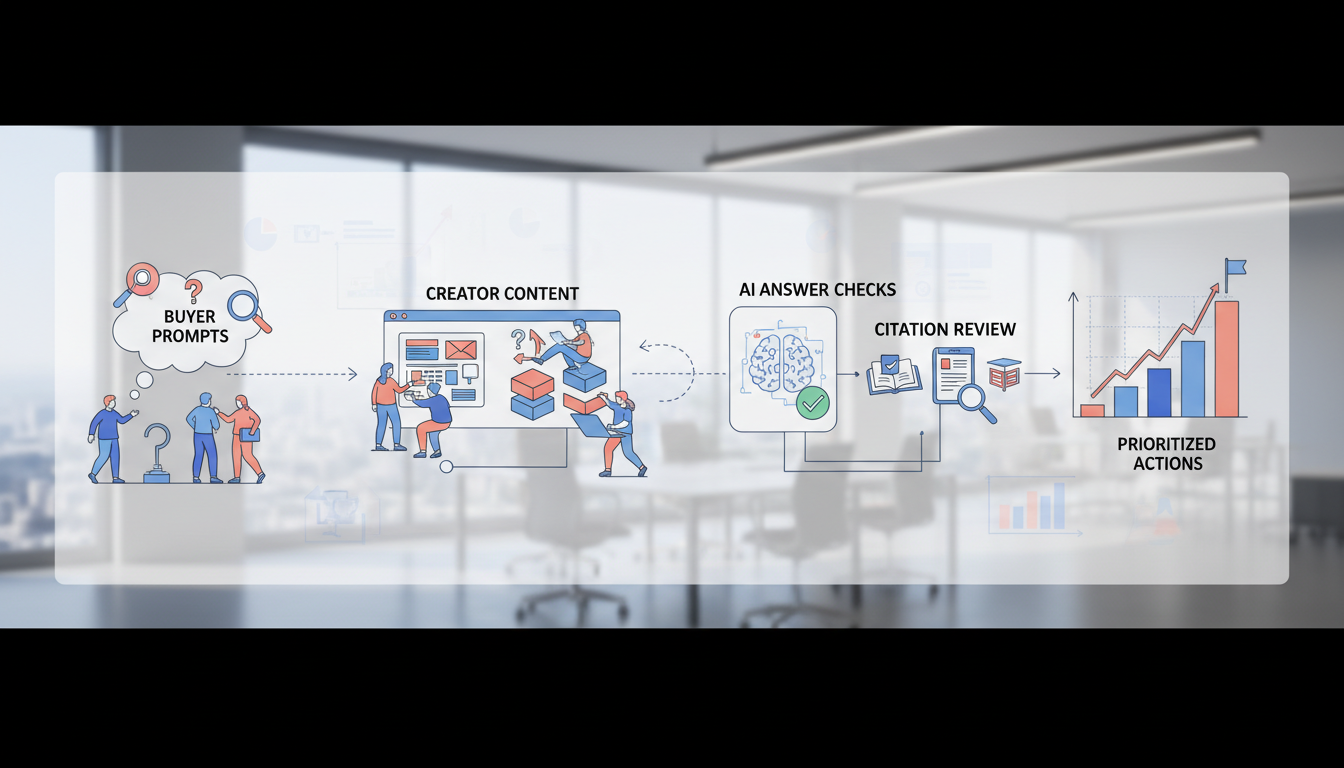
Start with buyer questions that reflect discovery, evaluation, and purchase intent. Record the complete prompt, its intended audience, language, target market, engine, and date. A disciplined buyer prompt dataset gives teams a stable unit of analysis instead of a shifting list of keyword-like phrases.
Record What Each Engine Says
For every response, capture whether the brand appears, whether it is cited or recommended, the landing page linked, and the words surrounding the mention. This prevents a positive mention from being confused with a qualified recommendation.
| Field | Record It As | Why It Matters |
|---|---|---|
| Prompt | Exact wording | Supports repeatable testing |
| Engine | Individual product and version when available | Prevents blended results |
| Mention | Present or absent | Establishes basic exposure |
| Citation | Linked source and URL | Shows source selection |
| Context | Exact surrounding language | Reveals recommendation quality |
| Outcome | Session, lead, or purchase | Connects exposure to value |
A signal set prevents one answer or one engine from carrying more weight than the evidence supports. It also helps teams identify whether a visibility change is broad, market-specific, or isolated to a single answer surface.
Separate Presence from Business Value
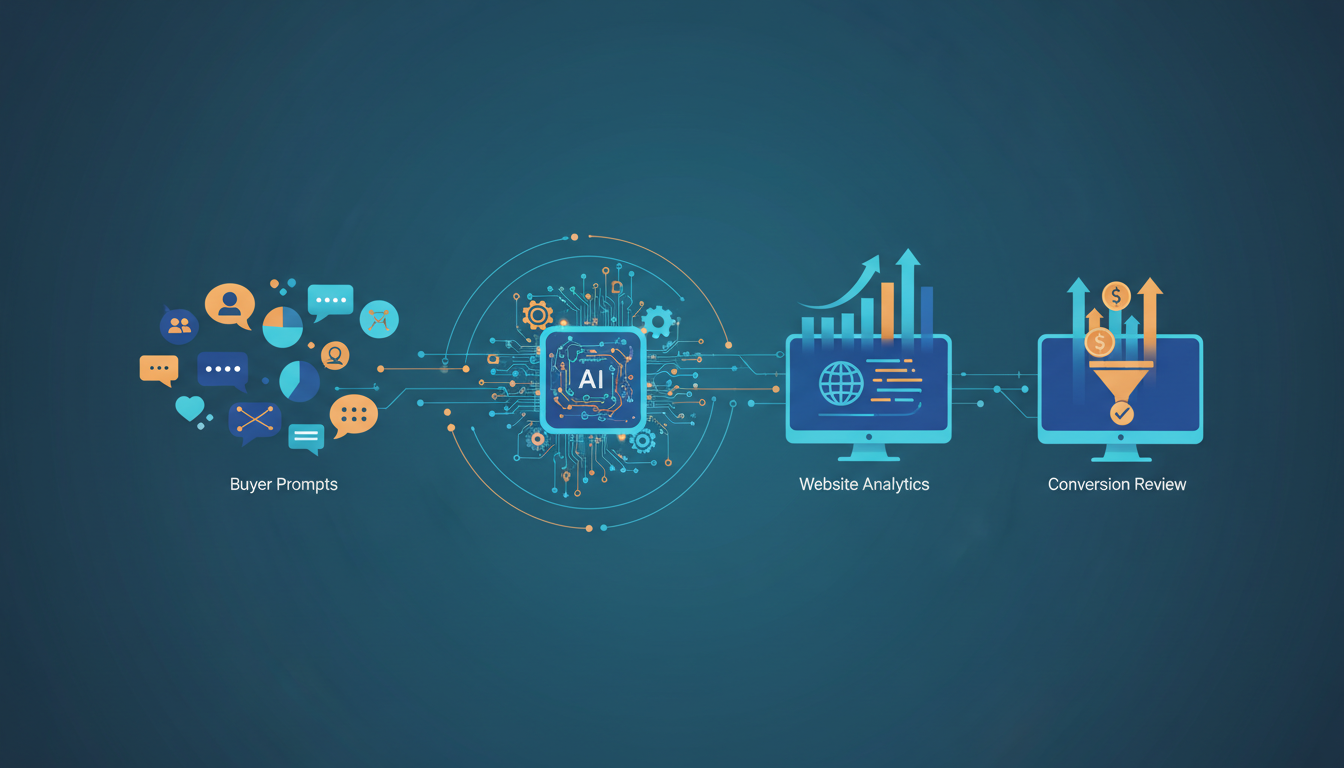
A brand mention can be informative without producing a visit, while a small number of referrals can produce valuable pipeline. OpenAI says its publisher referrals include utm_source=chatgpt.com, which allows teams to identify and analyze ChatGPT referrals in analytics instead of inferring impact from a screenshot.
Retest Without Moving Goalposts
Use the same prompt set and compare matched observations over time. If content changes, document the changed page and retest after a reasonable interval. A multi-engine signal set makes fluctuations visible while preserving the evidence needed to explain whether a change is meaningful.
How to Validate It with First-Party Data
First-party data should decide what happens after an external announcement. Google’s June 2026 rollout introduced generative-AI performance reporting for a subset of websites, including views for impressions, pages, countries, devices, and dates. The new reports give site owners more evidence for assessing Google’s AI features, but they still need analytics to understand what visitors do next.
Confirm Discovery Eligibility
Check that important content is indexable, accessible, and available in text. For ChatGPT search, OpenAI identifies OAI-SearchBot as the crawler used to surface sites and says search access can be managed separately from training access in robots.txt. Its crawler guidance also notes that robots.txt changes can take roughly 24 hours to affect its systems.
Connect Referrals to Outcomes
Measure sessions, engagement, form submissions, qualified leads, and revenue from identified referral sources. Keep these metrics separate from answer-level observations. A cross-engine method helps teams compare the same prompt across answer surfaces without blending their individual signals.
Review Exact Responses
A visibility report should preserve the answer itself, not only a mention count. Teams need to know whether the answer describes the brand accurately, recommends it conditionally, or cites it as a source without naming it. Response context also helps teams determine whether a change reflects improved positioning or only a different answer format.
Decide What to Change
Prioritize fixes where the evidence identifies a clear mismatch: a high-intent prompt with no appearance, an outdated cited page, or language that misstates an offer. Before changing content, review the exact-language audit so the next action improves what the model actually said, not what a summary score implies.
How PageLens.ai Helps Teams Measure AI Visibility
At PageLens.ai, we built our workflow for marketing, growth, SEO, and content leaders who need evidence they can act on. We help teams organize buyer prompts, track exact brand mentions and cited sources across AI answers, review the language surrounding those mentions, and prioritize the pages that deserve work first. Our goal is not to turn changing responses into a vanity score. It is to give your team a repeatable record of what appeared, where it appeared, why it matters, and whether the next change improved a measurable outcome. Explore automated monitoring if you want a practical operating model. When you are ready to turn AI visibility into accountable reporting with ownership across content, technical, and analytics teams, so leaders can explain results in business terms, Book a demo.
FAQs on AI Visibility
What Is AI Visibility?
AI visibility measures how often and in what context a brand is mentioned, cited, or recommended in AI-generated answers for a consistent prompt set over time.
Does a Usefulness Score Prove AI-Search Performance?
No. A usefulness score summarizes an assessment program, but it cannot independently prove engine-level discovery, attributable visits, qualified leads, or revenue for your business over time.
How Should Teams Measure AI Visibility?
Use a fixed prompt set, hold language and location constant, record mentions and citations by engine, then compare matched observations with tagged referral and conversion data.
Does Traditional SEO Still Matter for AI Features?
Yes. Google’s AI features rely on existing Search systems, so indexed, helpful, accessible pages remain essential. OpenAI separately requires suitable crawler access for search inclusion.