

TL;DR
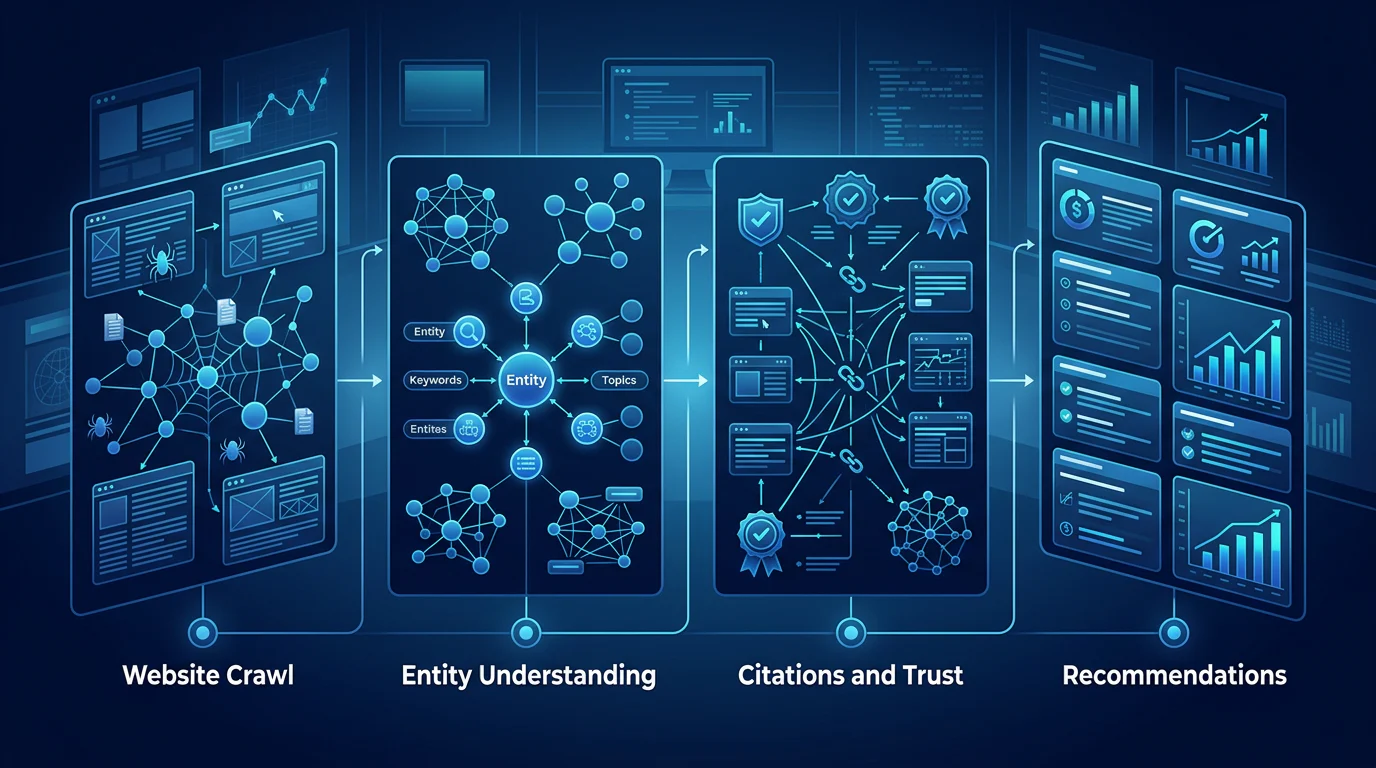
At PageLens.ai, we improve AI search citations by treating them as a chain of access, retrieval, extractability, evidence, and corroboration. This guide shows marketing, SEO, and content leaders how to diagnose each layer, design citable passages, use schema accurately, and test the same prompts across major AI search surfaces.
How Do You Get AI Search Citations?
A KDD study benchmarked 10,000 queries and found that some tested generative-engine optimization methods improved visibility by up to 40 percent. That is useful evidence that presentation matters, but it is not a promise that any one edit will earn a citation.
To improve your chance of earning AI search citations, publish crawlable pages that answer a specific question directly, support factual claims with current evidence, and make key passages understandable on their own. Keep your entity details consistent, earn genuine independent corroboration, then test the same prompts across search-enabled engines and inspect the sources they select.
We cover the difference between being cited and merely mentioned, the technical checks that make a page eligible, the passage patterns that make information easy to use, and a repeatable way to diagnose losses.
What Counts as an AI Search Citation?
A citation is a visible source link or source card that supports an answer claim. A mention is simply your brand name appearing in an answer. The difference matters because a brand can be mentioned from third-party information, while a citation identifies a page the engine selected as evidence.
Recommendation language is another separate outcome. An engine may name a business as an option without citing its site, or cite a page without recommending the underlying business. Traditional rankings are also related but distinct: they affect discoverability, yet AI search systems can retrieve and cite pages in formats that do not mirror a conventional results list.
| Outcome | What The Reader Sees | What We Measure | What It Does Not Prove |
|---|---|---|---|
| Citation | A linked source supports an answer claim | Cited URL, source context, citation rate | A recommendation or conversion |
| Mention | A brand name appears without a source link | Mention rate, wording, placement | That your page was retrieved |
| Recommendation | A brand is suggested for a use case | Inclusion and qualifying language | That the brand supplied evidence |
| Organic Ranking | A URL appears in search results | Impressions, clicks, position | Selection in an AI answer |
We recommend keeping a record of the cited URL and the precise claim it supports, not only the domain name. Our citation source tracking guide helps teams separate those signals before they optimize the wrong page.
Can AI Search Systems Reach Your Page?
Before improving copy, make sure the page can be crawled, rendered, indexed, and shown with an eligible snippet. Google says a supporting link in AI Overviews or AI Mode must come from an indexed page eligible to show a snippet, though meeting those conditions still does not guarantee selection. Google's guidance
Verify Access and Index Eligibility
Check the canonical URL, not a preview, parameter variant, or redirected copy. It should return a meaningful 200 status, carry no accidental noindex directive, point to the intended canonical, and appear in your XML sitemap and internal navigation.
- Response: Confirm the canonical page returns a real 200 response, not a soft error or login screen.
- Robots Controls: Review
robots.txt, page-level meta robots, andX-Robots-Tagheaders. - Snippet Eligibility: Check for
nosnippet,max-snippet:0, or other restrictions that undermine citation eligibility. - Index Status: Use search platform inspection tools to confirm the canonical page is indexed.
- Discovery: Link to the page from relevant hub and supporting pages, then include only canonical URLs in sitemaps.
For ChatGPT search, public content intended for summaries and snippets should not block OAI-SearchBot. OpenAI also notes that a crawler must be able to access a page before it can read a noindex directive. OpenAI's publisher FAQ
Check Rendering and Page Delivery
The important answer must exist as accessible page content, not only inside an image, delayed client-side component, or interaction that a crawler may not complete. Test the rendered page and the initial HTML, especially on JavaScript-heavy WordPress builds where cache plugins, page builders, and CDN rules can produce different outputs for visitors and bots.
Speed is not a citation switch, but slow or incomplete rendering can hide the content you expect an engine to retrieve. Our AI visibility audit workflow starts with this distinction because revising a blocked or blank page cannot solve a technical access failure.
Separate Search Access from Training Choices
Do not treat every AI user agent as the same policy choice. Google Search features use Googlebot, while Google-Extended is a separate control for certain Google AI training and grounding uses. For Perplexity search visibility, the provider recommends allowing PerplexityBot and its published IP ranges where that access fits your policy. Perplexity's crawler guide
Record the policy decision for Googlebot, Bingbot, OAI-SearchBot, PerplexityBot, and any user-request agents your security team permits. Verify claimed bots through provider guidance and server logs before allowing them through a firewall.
How Do You Design a Citable Passage?
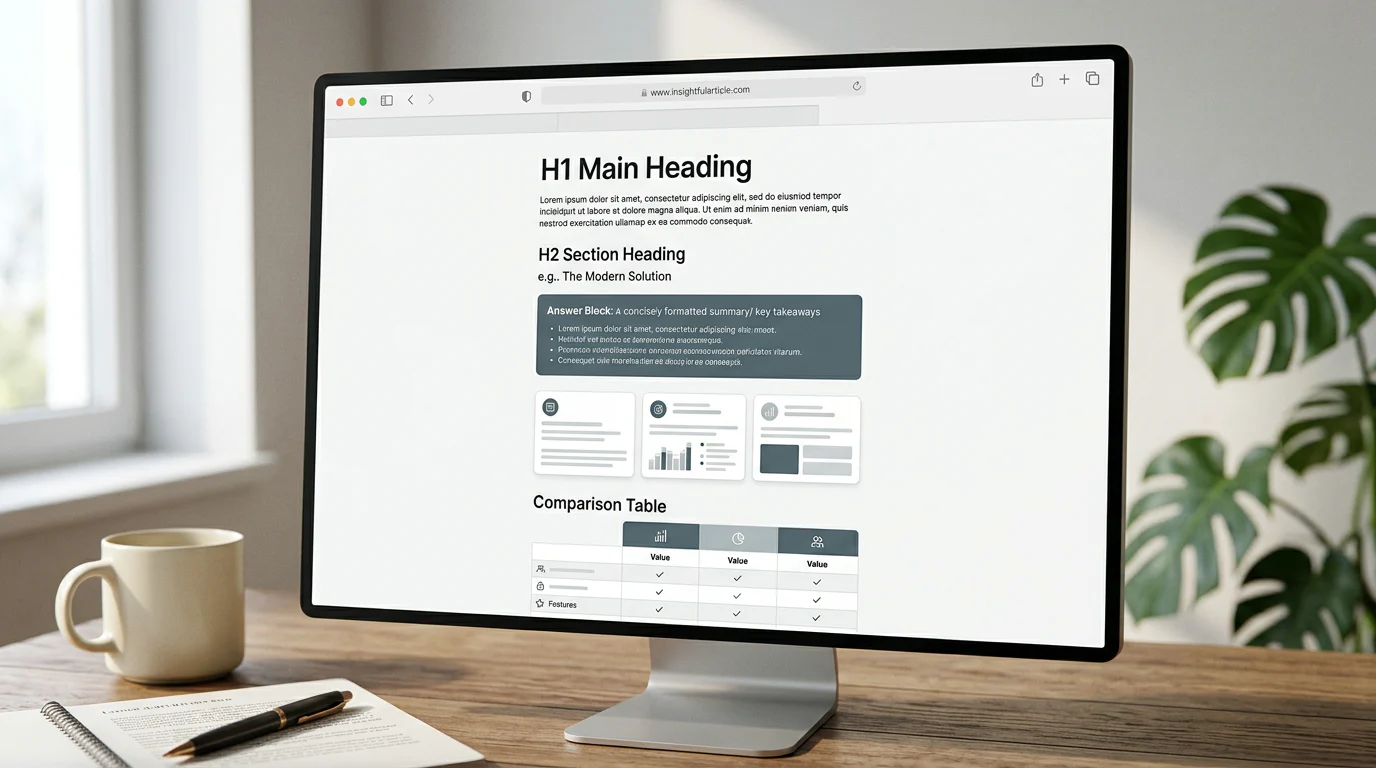
A citable passage answers the question before it explains the background. It names the subject, states the condition or limitation, and places evidence beside the claim. That gives a reader and an answer engine enough context to use the passage without borrowing meaning from several earlier paragraphs.
Answer the Exact Question First
Map each buyer prompt to one owner page. The opening should answer the primary question in plain language, then expand into conditions, steps, evidence, and alternatives. Use buyer prompt research to identify questions that matter before creating thin pages for every wording variation.
Make Every Important Claim Self-Contained
Prefer headings that say what the section resolves. Define acronyms on first use, repeat the relevant entity when a passage could stand alone, and use comparison tables when readers need to see a decision clearly. A strong passage is precise without becoming clipped or unnatural.
| Weak Passage | Citable Revision |
|---|---|
| “This works because AI likes authority.” | “AI search citations are more likely when a public, indexable page directly answers the query and supports factual claims with current, attributable evidence.” |
| “Schema helps AI understand your business.” | “Accurate schema can clarify visible page facts, but it cannot force retrieval or citation.” |
Put Evidence Beside the Claim
Avoid a long source list at the bottom of a page. Link the authoritative source in the sentence that relies on it, explain the methodology behind original data, and date facts that can change. Google says there is no special writing style or fixed page length required for generative AI features, so write for comprehension rather than artificial chunking. Google's AI guide
What Makes a Source Worth Citing?
Strong source material gives an engine and a reader a reason to trust the page. That means original reporting or analysis where possible, named authorship, transparent methodology, accurate product facts, visible publication and update dates, and a way to correct errors when they are found.
Google's people-first guidance emphasizes original information, clear sourcing, demonstrated expertise, and bylines that help readers understand who created the work. Google's content guidance We apply that standard to every claim that could influence a buyer decision, especially data, product descriptions, comparisons, and recommendations.
Entity consistency matters too. Your homepage, author pages, service pages, product pages, directory profiles, and earned references should describe the organization in compatible terms. Accurate Organization, Person, Article, Product, Service, and Breadcrumb relationships can make those details easier to interpret, but the visible page must support every property.
| Target Prompt | Current Source Pattern | Missing Evidence | Best Owner Page | Corroboration Path |
|---|---|---|---|---|
| Category Question | Industry publications and reference pages | Clear category definition | Category explainer | Expert references and directories |
| Product Evaluation | Product pages and reviews | Current specifications and limits | Product or service page | Genuine reviews and partners |
| Comparison Prompt | Editorial comparisons | Verifiable trade-offs | Comparison page | Independent coverage |
| Problem Question | Guides and practical examples | Specific process or data | How-to article | Community and practitioner references |
Use the worksheet to identify a source gap, not to manufacture consensus. Our citation tracking guide helps preserve the answer wording and source context, while a citation-loss review can separate an evidence gap from a technical regression.
How Do You Implement and Test AI Search Citations?
Implementation is most useful when it connects a technical check to an editorial decision. A valid schema deployment cannot rescue an inaccessible page, and a well-written paragraph cannot overcome outdated evidence or a source preference gap. Test the chain in order, then fix the first confirmed failure.
Use Schema to Describe Visible Facts
Use Organization markup for accurate organization details, Article markup for genuine articles with visible authorship and dates, and BreadcrumbList markup for visible navigation. Use Product or Service markup only when the page contains the corresponding facts. Use HowTo and FAQPage markup only when the visible page contains the actual steps and questions.
LLMS.txt is optional, not a citation guarantee. Google says it does not use llms.txt or special AI markup to improve visibility in Google Search, including its generative features. Google's llms.txt policy We use schema as a truth-maintenance tool, not as a shortcut around useful content.
Log Prompts and Diagnose Losses
Run the same prompts in ChatGPT search, Perplexity, Gemini, and Google AI surfaces. Record date, location, account state, full answer, cited URLs, brand mentions, recommendation language, and the claim associated with each source. Google now provides generative AI performance reporting for AI Overviews and AI Mode, which adds a useful first-party signal alongside direct answer testing. Google's performance report
| Symptom | Likely Layer | First Check | Best Next Action |
|---|---|---|---|
| No Crawl | Access | Robots, firewall, logs | Restore intended crawler access |
| No Retrieval | Discovery | Index status, canonical, internal links | Fix the owner URL and discovery path |
| Rival Preferred | Evidence | Cited source facts and scope | Create differentiated, supportable evidence |
| Weak Extraction | Passage Design | Opening answer and heading context | Make the passage stand-alone and clear |
| Citation Loss After Update | Regression | Page diff, rendering, canonical | Restore lost substance or correct deployment |
A citation loss audit provides a disciplined way to compare the prior page, current page, source set, and answer wording before treating a temporary result change as a content failure.
Follow an Eight-Step Implementation Checklist
- Baseline the target prompts across relevant AI search surfaces.
- Assign each prompt cluster to one canonical owner page.
- Check crawl access, indexing, canonicalization, rendering, and snippet eligibility.
- Publish a direct opening answer and strengthen the most valuable supporting passages.
- Add current sources, methodology, dates, authorship, and correction ownership.
- Align visible entity information and accurate schema.
- Pursue legitimate third-party corroboration where a source gap exists.
- Retest, save answer evidence, and prioritize the largest verified gap.
After each cycle, retain the full evidence set, including the answer, cited URLs, and the relevant page version. We use multi-engine tracking to help teams see whether a change improved citations, mentions, or neither.
How PageLens.ai Turns Evidence into Action
At PageLens.ai, we help marketing, growth, SEO, and content leaders turn AI visibility from a vague concern into a documented workflow. Our work starts with the prompts buyers actually ask, then connects each answer to the pages, citations, descriptions, and source gaps that shape visibility. We do not treat a mention as proof that a page was selected, or a schema deployment as proof that an engine understands your business. Instead, we help teams isolate the failure layer, prioritize the highest value fixes, and retain a log that makes progress reviewable across engines. That can mean a technical access repair, a tighter passage, a better evidence asset, or an external corroboration opportunity, with responsible implementation and clear review ownership for every change. Explore our methodology to see how we connect tracking with practical website improvements, then Book a demo
FAQs on AI Search Citations
Answers Follow Our Tested Workflow.
How Do I Get My Website Cited by AI Search Engines?
Keep the relevant page public, indexable, and easy to extract. Answer the prompt directly, support claims with current evidence, then test whether engines select its URL.
How Do I Improve My Brand's AI Visibility?
Use a repeatable prompt set to find where your brand is absent, then repair the technical, editorial, evidence, or corroboration gap shown by cited sources.
Does LLMS.txt Make AI Engines Cite a Website?
LLMS.txt does not guarantee a citation. Google says it neither helps nor harms Google Search visibility, so prioritize public content, crawl access, evidence, and testing.
Does Schema Markup Guarantee AI Search Citations?
Schema can clarify visible, accurate page details and support eligible search features, but it cannot force retrieval or citation. Use it to describe reality, never invent it.