
PageLens.ai: 8 AI Visibility Tools with Content Recommendations


TL;DR
Compare eight AI visibility tools with content recommendations, including monitoring depth, workflow fit, pricing signals, and recommendation quality.
PageLens.ai: 8 AI Visibility Tools with Content Recommendations
AI search is no longer a niche channel. AI Overviews alone reached 1.5 billion monthly users across 200 countries and territories, making answer visibility a practical content-distribution problem for marketing teams.
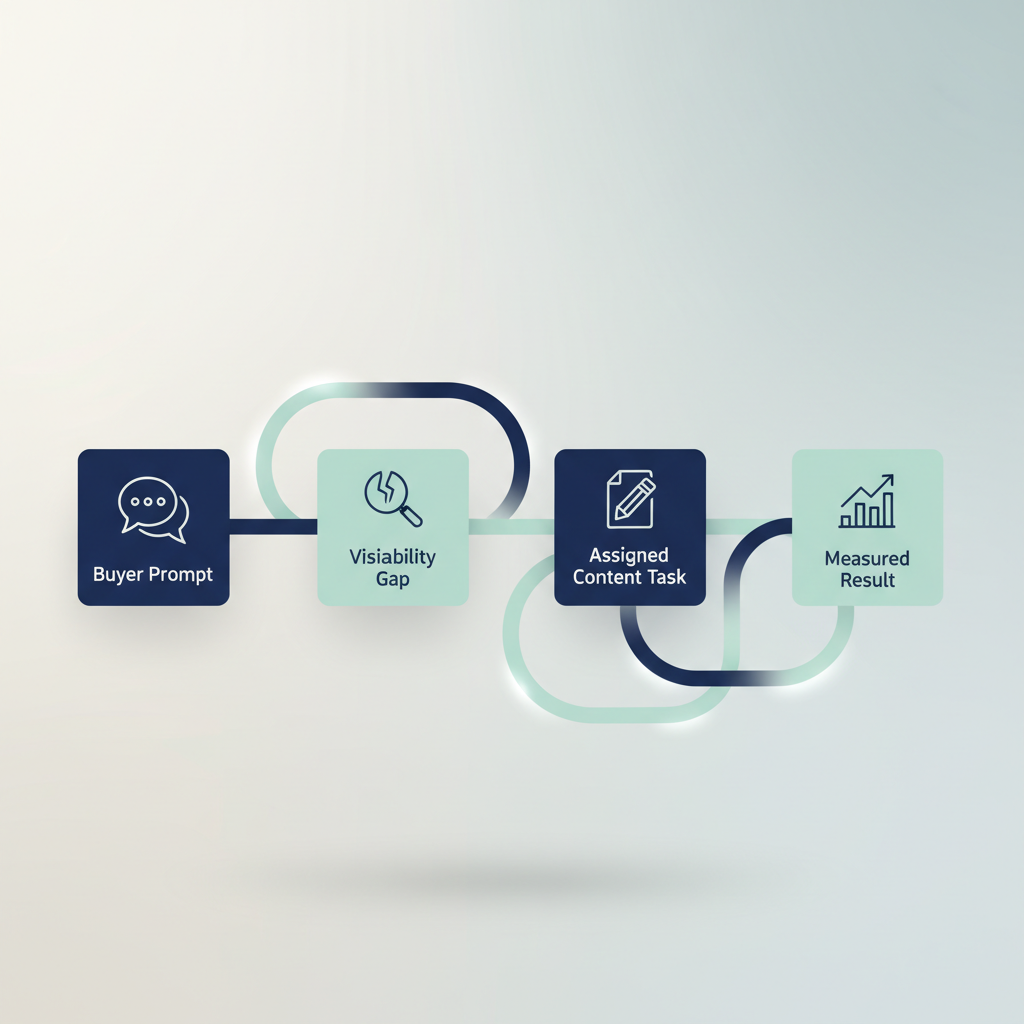
The best AI Visibility Tools With Content Recommendations do more than report mentions or citations. They identify the buyer prompt, source gap, affected page, and next content or technical action, then help a team assign, create, publish, and measure the work. This guide compares eight platform types by that execution standard.
Why Monitoring Alone Is Not Enough
Most AI Visibility Tools With Content Recommendations begin with a useful signal: a brand appears less often than expected, a competitor source is cited, or a target prompt produces a weak description. That signal is only the beginning. A content team still needs to decide whether to refresh an existing page, build a comparison page, correct a product fact, strengthen internal linking, or publish original evidence.
Monitoring tells you what appeared. Diagnosis tells you why an opportunity exists. Optimization tells you what work to do next, who should do it, and how to measure whether the change improved visibility. AI Visibility Tools With Content Recommendations are valuable only when they connect all three jobs. Our Beyond Monitoring framework helps teams keep those jobs separate instead of mistaking a dashboard for a strategy.
That distinction matters because foundational SEO still applies in generative search. Current official guidance emphasizes crawlable pages, useful original content, clear technical structure, and measurement, not special AI-only files or artificial signals.
How We Score AI Visibility Tools with Content Recommendations
A useful recommendation should reduce a real decision, not add another chart to review. We score AI Visibility Tools With Content Recommendations against the work a content, SEO, or growth lead must complete after discovering a visibility gap.
Our Recommendation Quality Score uses four dimensions. Specificity measures whether the platform points to a prompt, page, source, or topic. Actionability measures whether it proposes a meaningful change. Workflow fit measures whether the recommendation reaches the editor, CMS, task system, or technical team. Closed-loop measurement measures whether the team can inspect the result after publishing. This is how AI Visibility Tools With Content Recommendations become an operating system for content decisions.
| Score Dimension | Points | What Good Looks Like |
|---|---|---|
| Specificity | 0 to 3 | Identifies the prompt, source, page, or topical gap |
| Actionability | 0 to 3 | Recommends a concrete content, authority, or technical action |
| Workflow Fit | 0 to 2 | Moves insight into writing, publishing, or implementation |
| Closed-Loop Measurement | 0 to 2 | Lets teams evaluate visibility after the change |
| Total Recommendation Quality Score | 0 to 10 | Makes the path from signal to accountable work clear |
A score is not a promise of a citation or ranking. It is a way to test whether AI Visibility Tools With Content Recommendations help a team move from observation to a credible, measurable workflow. For a clean baseline, pair platform data with AI visibility tracking so the team knows which metrics belong to answer engines and which still belong to conventional search.
Feature-By-Feature Comparison
The practical choice is rarely between “good” and “bad” software. It is between a platform that matches your operating model and one that creates handoffs your team cannot sustain. AI Visibility Tools With Content Recommendations should be judged by the quality of the next action, not the number of dashboards available.
| Platform Type | Monitoring Depth | Optimization Features | Integration Options | Pricing Tier | Recommendation Quality Score | Best For |
|---|---|---|---|---|---|---|
| PageLens.ai | Daily buyer-prompt, citation, sentiment, and recommendation tracking | Content gaps, content creation, managed publishing, technical fixes on selected plans | Content published on your domain | $49, $199, $599 monthly plans, plus custom enterprise | 9/10 | Lean growth teams that need monitor-to-publish execution |
| Enterprise Workflow Suite | Multi-engine visibility, citations, share of voice, audience intent | Prioritized content gaps and connected content workflows | API, analytics, enterprise workflow connections | Custom or usage-based | 8/10 | Complex enterprise content operations |
| SEO Suite With AI Module | Prompt tracking, brand analysis, readiness auditing | Prompt research and audit-led priorities | Existing SEO reporting ecosystem | Published add-on pricing | 6/10 | Teams extending an established SEO stack |
| Governed Enterprise Platform | AI search reporting, page performance, competitive gaps | Page-level recommendations, structural gaps, governance | Enterprise reporting and workflow systems | Custom | 7/10 | Regulated or distributed organizations |
| Semantic Content And Prompt Tracker | Prompt and brand tracking across selected answer engines | Intent guidance, semantic coverage, drafts | Editorial sharing and exports | Published monthly plans | 7/10 | Editorial teams focused on content quality |
| Editor-Led AI Tracker | Prompt, source, and visibility tracking | Editor handoff, refresh guidance, internal-link suggestions | Content editor and collaboration features | Published monthly plans | 7/10 | Writers refreshing existing content |
| Technical Discovery Platform | AI visibility, crawl behavior, discoverability | Technical actions, deployment automation, content briefs | Enterprise technical stack | Custom | 7/10 | Large sites with technical bottlenecks |
| Content Planning Platform | Content inventory and topic performance | Topic clusters, update plans, optimization briefs | Editorial planning workflows | Published or custom plans | 5/10 | Teams pairing planning with separate AI monitoring |
The table is deliberately tougher than a feature checklist. A platform can offer prompt tracking and still leave the hardest work unresolved. Within AI Visibility Tools With Content Recommendations, the strongest product is the one that makes the next task clear. Before buying, use Prompt research to define the buyer questions that matter, then ask each vendor to demonstrate the exact path from one missed prompt to one completed content action.
Eight Platform Profiles for Content Teams
These profiles explain where each workflow type earns its score. The goal is not to crown a universal winner. It is to identify the AI Visibility Tools With Content Recommendations that fit the people, processes, and publishing capacity you already have.
PageLens.ai: Best for Monitor-To-Publish Execution
Optimization Features Deep Dive: We track the prompts buyers ask, show where recommendations, citations, and sentiment differ, then surface specific moves for improving the next answer. Our Monitor plan starts at $49 per month for focused daily tracking. Our Optimize plan starts at $199 per month, while our Growth plan adds managed content production and technical audit support at $599 per month. This is how we turn AI Visibility Tools With Content Recommendations into daily work for lean teams.
Who This Is For: Teams that want one workflow from missed recommendation to reviewed, published content on their own domain. Start with buyer prompt discovery when your prompt list is still unclear.
Enterprise Workflow Suite: Best for Complex Content Operations
Optimization Features Deep Dive: This category earns a high score when visibility insights create prioritized content opportunities tied to business audiences, intent, and performance. The strongest implementations also connect recommendations to editorial workflows rather than leaving teams to export data manually. Mature AI Visibility Tools With Content Recommendations make that handoff visible and auditable.
Who This Is For: Large organizations with multiple sites, mature content operations, and people available to own ongoing optimization work.
SEO Suite with AI Module: Best for Existing SEO Programs
Optimization Features Deep Dive: These AI Visibility Tools With Content Recommendations usually combine prompt tracking, brand analysis, and AI-readiness audits with conventional keyword, site, and competitive data. Their weakness appears when the AI module identifies an issue but the recommendation remains too broad for a writer to execute confidently.
Who This Is For: SEO teams that already rely on a broad platform and want AI-search visibility without changing their reporting foundation.
Governed Enterprise Platform: Best for Controlled Publishing Environments
Optimization Features Deep Dive: This workflow emphasizes page-level prioritization, content gaps, structural recommendations, and governance. It can be powerful when legal review, localization, accessibility, and multiple stakeholders make fast publishing difficult. In that setting, AI Visibility Tools With Content Recommendations must create decisions that survive review.
Who This Is For: Enterprises where every recommendation must be documented, approved, and routed through established operating controls.
Semantic Content and Prompt Tracker: Best for Editorial Completeness
Optimization Features Deep Dive: This platform type combines prompt tracking with language analysis, topic coverage, drafting, and search-intent recommendations. It is especially useful when writers need clearer guidance on what a page should explain, not merely a higher visibility score. The best AI Visibility Tools With Content Recommendations also preserve the prompt evidence behind a brief.
Who This Is For: Editorial leaders who publish regularly and need AI Visibility Tools With Content Recommendations that make briefs and revisions more specific.
Editor-Led AI Tracker: Best for Updating Existing Pages
Optimization Features Deep Dive: This approach connects source and citation monitoring to a content editor, often with refresh prompts, content scoring, and internal-link suggestions. It reduces context switching, though teams should verify that the editor’s recommendations are tied to real audience needs.
Who This Is For: Content teams with a substantial library of existing pages and a disciplined refresh process. Our guide to multi-engine signals can help prioritize which changes deserve attention first.
Technical Discovery Platform: Best for Large, Complex Sites
Optimization Features Deep Dive: Technical platforms focus on crawl behavior, page discovery, rendering, deployable fixes, and large-scale implementation. They may generate content briefs, but their clearest value is finding the technical reason important pages are inaccessible or underrepresented. AI Visibility Tools With Content Recommendations in this category should make technical ownership obvious.
Who This Is For: Organizations where engineering constraints, indexation, or template issues prevent useful content from being discovered consistently.
Content Planning Platform: Best as a Planning Layer
Optimization Features Deep Dive: Content planning tools excel at topic clusters, inventory analysis, content decay, update roadmaps, and optimization briefs. They generally need a separate answer-visibility layer when a team wants direct evidence of recommendations and citations.
Who This Is For: Teams that have strong editorial planning but need to pair it with an answer-visibility layer before claiming they have a complete AI-search workflow.

How to Choose the Right Workflow
Start with the bottleneck, not the category label. If your team already knows what to write but cannot see which prompts or sources influence recommendations, prioritize deeper monitoring. If you have plenty of visibility data but writers ask, “What should I change?”, prioritize recommendation specificity and editorial handoff. AI Visibility Tools With Content Recommendations should make those choices easier, not create more reporting work.
The second question is ownership. AI Visibility Tools With Content Recommendations work only when one person or team owns the next step. A content lead can own a rewrite recommendation. An SEO lead can own a topical gap. A developer can own crawlability or structured-data remediation. Without a named owner, even a precise recommendation becomes another unworked alert. Use citation tracking to connect visibility evidence to the pages and sources your team can act on.
Structured data can help clarify page meaning when it accurately represents visible content, but it does not guarantee a rich result or answer-engine inclusion. The structured-data rules specifically say valid markup does not guarantee display. Use it as part of a useful, accessible page, not as a shortcut.
For most content teams, a practical evaluation has three steps:
- Bring ten buyer prompts: Use real questions from sales calls, site search, support, and category research.
- Ask for one page-level action: Require the platform to show the prompt, the evidence, the recommended change, and the owner.
- Measure after publishing: Recheck the answer, citation pattern, page performance, and referral behavior over time.
That process makes AI Visibility Tools With Content Recommendations easier to compare fairly. It also keeps teams focused on content quality and technical eligibility, where durable gains are more likely to come from. Compare AEO and semantic SEO before choosing a workflow.
What a Strong Recommendation Looks Like
A useful recommendation is specific enough that a writer or developer can begin without another meeting. “Improve AI visibility” is not a recommendation. “Refresh this comparison page to answer the missing implementation question, add original product evidence, and link it from the integration hub” is.
The best AI Visibility Tools With Content Recommendations preserve the evidence behind that instruction. They show the buyer prompt, the cited or missing source, the page to update, the expected action, and the measurement window. This improves editorial judgment because a team can challenge weak recommendations before spending production time.
Our PageLens Platform is built around that loop. We want teams to see what answer engines say, understand why the answer looks that way, publish useful content on their own domain, and evaluate the result without pretending any platform controls an answer engine.
Book a Demo with PageLens.ai
Choosing an AI visibility platform should not mean accepting a dashboard that leaves your writers guessing. With PageLens.ai, we track the buyer prompts that matter, inspect the language and sources behind recommendations, surface the content gaps worth fixing, and help turn approved ideas into content on your own domain. Our plans begin with focused daily monitoring and scale to multi-engine tracking, managed content production, technical audits, and implementation support. We do not promise a particular ranking or citation because answer systems change and every category has different evidence requirements. Instead, we give your team a repeatable loop: measure the recommendation, understand the gap, publish a useful response, then measure the change. If your next priority is replacing passive reporting with a practical content workflow, bring your current prompts and pages. We will show you the fastest credible next steps. Book a demo.
FAQs on AI Visibility Tools with Content Recommendations
Do I Need Monitoring and Optimization from the Same Tool?
No. Pair tools when monitoring identifies credible opportunities and your editor turns them into accountable work. Use one platform when handoffs delay publishing or measurement.
Can I Trial AI Visibility Tools with Content Recommendations?
Trial availability differs by plan and can change. Test real prompts, pages, workflow, integrations, and reporting requirements before you commit to a paid subscription annually.
Do Recommendations Guarantee Citations?
No. Recommendations improve decisions, not answer-engine control. Outcomes depend on crawlability, useful evidence, competing sources, model changes, location, and each buyer prompt at the time.