


TL;DR
Is AEO just semantic SEO? Use this 10-page workflow for a 50-page product site: semantic foundations, answer-ready content, and measurement.
How Does Answer Engine Optimization Actually Work for a Single Product Site with Maybe 50 Pages: Is It Just Semantic SEO Repackaged or Something Different?
AI search has changed the shape of a buyer question. Google reports that average AI Mode searches are three times longer than traditional queries, which matters when a product site has only 50 pages to carry category, comparison, and purchase intent.
Answer engine optimization is not a replacement for semantic SEO. For a 50-page product site, keep the semantic foundation: accurate entities, crawlable product data, and clear topical relationships. Then make the 10 highest-intent pages easy to use with direct evidence-backed answers, decision tables, and consolidated FAQs. This improves answer usability, but cannot guarantee an AI citation outcome.
This AEO vs Semantic SEO Small Site guide explains what stays the same, what changes, which pages deserve attention first, and how we would measure progress without chasing unsupported AI search hacks. For an AEO vs Semantic SEO Small Site, the goal is not more pages. It is more useful decision content on the pages buyers already need.
Semantic SEO Is the Baseline
The AEO vs Semantic SEO Small Site question starts with a useful correction: semantic SEO is not old work that AI search replaced. It is the foundation that lets search systems identify your product, understand page relationships, and retrieve useful information when a buyer asks a detailed question. An AEO vs Semantic SEO Small Site baseline still requires accurate, crawlable, original information.
Google’s official guide says its generative search features remain rooted in core ranking and quality systems. A page must be indexed and eligible for a search snippet before it can be eligible to appear in those generative experiences. That means a small site still needs clear technical fundamentals, canonical URLs, useful internal links, and original product information.
| Dimension | Semantic SEO Baseline | Answer-Ready AEO Workflow | Small-Site Implication |
|---|---|---|---|
| Primary Goal | Make products, entities, and topics understandable | Make priority pages useful for detailed buyer questions | Keep the foundation, then focus effort |
| Content Structure | Clear hierarchy and topical relationships | Direct answers, decision criteria, and evidence modules | Improve existing pages before expanding inventory |
| Technical Work | Indexability, canonicalization, internal links | Preserve technical eligibility while updating content | Fix blockers before rewriting copy |
| Measurement | Rankings, clicks, conversions | Visibility across answer experiences and buyer prompts | Track a fixed prompt set over time |
For AEO vs Semantic SEO Small Site planning, we separate the foundation from the operating model. Semantic SEO tells systems what a page is about. The AEO layer asks whether that page gives a buyer enough clear, well-supported information to use in an answer, comparison, or recommendation journey. Every AEO vs Semantic SEO Small Site plan should preserve that distinction.
That distinction also changes research. Keyword volume still matters, but we need to understand the full question, decision context, and follow-up concerns behind the phrase. Our guide to prompt research shows why buyer prompts reveal information that a keyword list often hides.
The AEO Layer Is a Prioritization System
For a compact catalog, AEO vs Semantic SEO Small Site work should not mean producing dozens of new articles for every wording variation. It means choosing the pages where a direct, evidence-led answer can help a buyer evaluate the product and help search systems surface relevant information. A practical AEO vs Semantic SEO Small Site program begins with a limited, intentional scope.
We use six practical tactics. None is a guaranteed citation lever. Together, they make important pages easier for buyers to scan, easier for teams to maintain, and more useful when search systems retrieve them.
| Tactic | What We Add to a Priority Page | Effort | Likely Citation Usefulness |
|---|---|---|---|
| Conversational H2s | Buyer questions that describe the section below | Low | Medium |
| Direct Answer Blocks | A concise, evidence-led response before detail | Low | High |
| Comparison Tables | Clear trade-offs, use cases, limits, and fit | Medium | High |
| FAQ Consolidation | One authoritative home for recurring questions | Medium | Medium |
| First-Party Evidence | Product documentation, methodology, screenshots, and dated facts | Medium | High |
| Product Completeness | Accurate specifications, links, and visible product details | Medium | High |
The AEO vs Semantic SEO Small Site workflow is therefore an editorial discipline, not a separate algorithm. Google explicitly warns that special AI markup, artificial “chunking,” and rewriting solely for AI systems are not required. Useful structure matters because it improves the page for people, not because formatting alone forces an answer engine to cite it. The AEO vs Semantic SEO Small Site advantage comes from focus and maintenance.
For a deeper implementation view, see our 50-page content model, which maps foundational content, decision content, and evidence content into a manageable small-site system.
Choose the Ten Pages That Carry Buyer Intent
A 50-page site does not need a 50-page rewrite. The AEO vs Semantic SEO Small Site constraint is valuable because it forces a team to decide where visibility could create the most commercial and educational value.
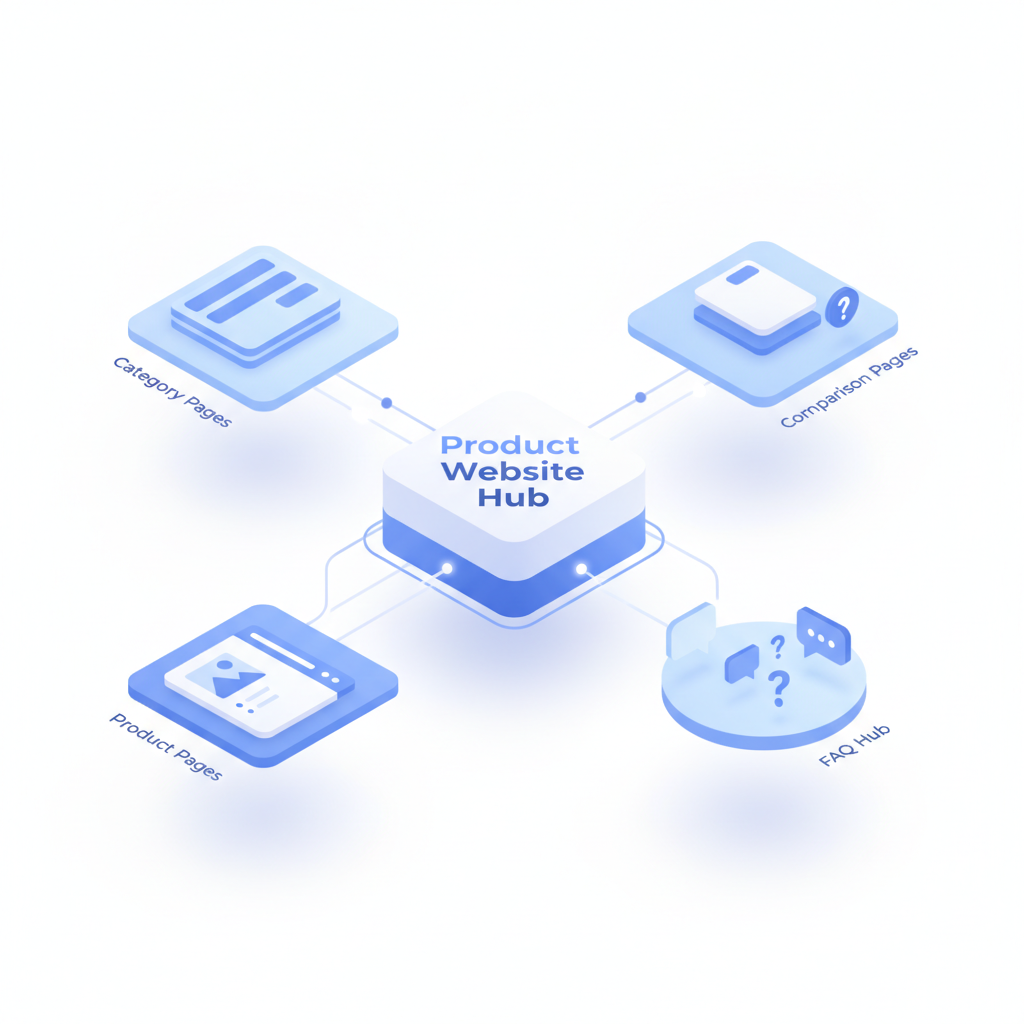
Start by scoring every URL against buyer intent, conversion relevance, existing evidence, duplication risk, and technical eligibility. Then select the first 10 pages across category, comparison, product, and use-case intent. This creates enough variety to learn from without making the project too broad to finish. Every AEO vs Semantic SEO Small Site roadmap needs this kind of prioritization rule.
| Page Type | Prioritize When | Answer Module to Add | Deprioritize When |
|---|---|---|---|
| Category Page | Buyers need help choosing an approach | Selection criteria and comparison table | The category is too broad to answer clearly |
| Comparison Page | Buyers evaluate options or approaches | Direct verdict, criteria, and limits | The comparison has no factual basis |
| Product Page | The product has recurring buyer questions | Specs, use cases, proof, and FAQs | The page duplicates another product page |
| Use-Case Page | A distinct audience has a distinct problem | Scenario, process, and outcomes | The use case is only a keyword variation |
| FAQ Hub | The same questions recur across sales and support | Consolidated, maintained answers | Answers belong naturally on product pages |
The AEO vs Semantic SEO Small Site approach favors pages that resolve a decision. A thin page built around a minor phrase variation rarely helps a buyer, and it gives the team another URL to maintain. Google says generative systems can understand relevant pages even when there is not an exact query-to-page wording match.
Buyer prompt research helps make this selection more accurate. A user may begin with a short phrase, then ask a system to compare options, explain limitations, or recommend a fit for a specific team. Keyword research still informs demand, but prompt research shows what the buyer needs before acting.

Build Answer-Ready Modules Without Writing for Robots
The AEO vs Semantic SEO Small Site model works best when we improve a page’s usefulness rather than bolt an AI section onto it. We want the buyer to find a clear answer quickly, then see the context, proof, and caveats that make the answer trustworthy. For AEO vs Semantic SEO Small Site execution, each module must earn its place on the page.
Lead with the Decision
A strong priority page answers its central question near the top. The answer should be specific enough to help a buyer, while leaving room for the conditions that affect the decision. Instead of declaring that a product is always the best fit, explain who it suits, what it solves, and when another approach may be more appropriate.
This is where semantic SEO and answer readiness overlap. Clear terminology, accurate entities, and descriptive headings help establish the topic. A direct answer and explicit criteria help a reader apply that topic to a real choice. Our optimization stack explains how page structure, evidence, and ongoing review fit together.
Use Tables for Real Trade-Offs
Comparison tables belong where the reader must weigh options, not where a page needs visual decoration. A good table names the decision criteria a buyer would use, such as implementation effort, ideal use case, data requirements, or constraints. It should support the page’s explanation, not replace it. A well-run AEO vs Semantic SEO Small Site process uses tables to clarify, not decorate.
For AEO vs Semantic SEO Small Site work, tables are especially efficient because one well-maintained comparison can answer several related questions without creating several weak pages. We recommend writing the interpretation below the table, including the limitations and decision rules that a buyer needs to act responsibly.
Consolidate FAQs Around Ownership
FAQs are valuable when the questions are real, repeated, and maintained by a clear owner. Product, sales, and support teams often answer the same questions in different wording. Consolidating those answers reduces contradictions and gives the editorial team one place to update when product details change.
The AEO vs Semantic SEO Small Site goal is not to add an FAQ block to every URL. It is to place recurring questions where they offer the most help. If a question is specific to one product, answer it there. If it applies across the catalog, a central FAQ or category page may be the better home. Teams can use citation tracking to inspect the source page, claim, prompt, and context before deciding what to update.
Implement the First Ten Pages in Five Steps
A small site can move quickly when the sequence is simple. We would begin with a short inventory, select the first 10 pages, and then create a repeatable page pattern instead of designing each rewrite from scratch.
- Inventory the site: Record intent, conversions, existing evidence, duplication risk, technical status, and the buyer questions each URL can genuinely answer.
- Select the first ten pages: Balance category, comparison, product, and use-case pages so the team learns which content type responds best.
- Upgrade the page modules: Add direct answers, useful H2s, evidence, decision tables, and consolidated FAQs where they serve the reader.
- Run technical QA: Check crawling, rendering, canonicalization, internal links, visible product facts, and duplicate content before publishing.
- Create an update cadence: Revisit pages when product capabilities, supporting evidence, pricing logic, or buyer questions materially change.
The AEO vs Semantic SEO Small Site workflow should also include schema restraint. Use structured data when it accurately represents visible page content and supports relevant search features. Do not use it as a proxy for proof, and do not create special markup just because an AI-search checklist recommends it. A disciplined AEO vs Semantic SEO Small Site review keeps technical work tied to the page’s actual purpose.
Google limited FAQ rich results for most commercial sites and deprecated HowTo rich results. That does not make clear FAQs or genuine instructions useless, but it does mean we should build them for readers first and treat markup as accurate supporting metadata, not a citation strategy. We use multi-engine signals to identify which priority pages need another review.
Measure Visibility, Not Promises
AEO vs Semantic SEO Small Site success should be measured through observable discovery and business outcomes, not claims that a page has been “optimized for citations.” No team can guarantee that a given answer engine will cite a given URL, because retrieval, query wording, freshness, and quality systems all change. A practical AEO vs Semantic SEO Small Site measurement plan makes uncertainty visible rather than hiding it.
We track a fixed set of buyer prompts, the pages that surface, answer-engine mentions or citations where visible, generative-feature impressions, qualified visits, and conversion signals. The goal is to see whether better pages are creating more qualified discovery, not to manufacture a vanity score. Our overview of AI visibility metrics helps teams separate useful indicators from noise.
Google introduced dedicated generative AI performance reports in Search Console for a subset of sites in 2026. The reports can show impressions, pages, countries, devices, and date trends for generative features. We pair available platform data with a stable prompt set so changes can be investigated instead of guessed at.

We also separate visibility from sentiment and recommendation quality. A mention can be incomplete, outdated, or framed around the wrong use case. The AEO vs Semantic SEO Small Site workflow requires checking the cited claim and surrounding answer before deciding whether the page, proof, or positioning needs work.
Work with PageLens.ai
If your team owns a compact product site, the fastest way to improve the AEO vs Semantic SEO Small Site workflow is to stop treating every URL as equally urgent. We help marketers map buyer prompts to the pages that can genuinely answer them, audit the evidence already available, and create a repeatable review cycle for content, technical eligibility, and AI visibility. Our approach keeps ownership with your SEO, product marketing, and content teams. You decide which claims need proof, which comparison pages deserve a rebuild, and which questions belong in one authoritative FAQ rather than six thin pages. We then give the team a shared way to prioritize work and see change over time. We can tailor the first review to your catalog, audience, and reporting cadence. If you want a practical starting point, book a conversation with PageLens.ai.
FAQs on AEO vs Semantic SEO Small Site
These answers are brief.
Do I Need Schema on Every Page?
No. Use schema when it accurately describes visible content and supports relevant features. Google’s guidance says no special schema is required for generative search visibility.
How Long Before I See Citations?
No fixed timeline exists. Confirm crawling and index eligibility, establish a prompt baseline, then review visibility after substantive updates on priority pages.
Is AEO Different from Semantic SEO?
Not as a separate Google ranking system. The AEO vs Semantic SEO Small Site workflow uses semantic foundations, then prioritizes buyer questions, evidence, formats, and measurement.
Which Pages Should We Optimize First?
Start with category, comparison, and high-intent product pages that answer recurring buyer questions. Defer duplicate, low-value, or thin pages until evidence and demand justify expansion.