
How AI Engines Describe and Cite Your Brand: An AI Brand Language and Citation Audit


TL;DR
We use an AI brand language and citation audit to capture exact answer wording, classify whether it is a summary, warning, comparison, or recommendation, and map cited URLs. This guide shows marketing leaders how to build a repeatable prompt panel, track sentiment and source changes, and turn evidence into corrections and content priorities.
A 10,000-query benchmark for generative-engine visibility shows why one search result or one mention cannot explain how a brand is represented in AI answers.
To learn how AI engines describe your brand, run an AI brand language and citation audit across branded, category, comparison, and recommendation prompts. Preserve the exact wording and URLs, then separate neutral descriptions from endorsements, warnings, and purchase guidance. Mentions show presence. Phrasing and citations show the frame.
We cover the prompt panel, coding rubric, source map, trend view, and remediation workflow needed to turn those records into content decisions. The method also helps distinguish a homepage summary from independent recommendation behavior.
How Do You Run an AI Brand Language and Citation Audit?
Start with an answer record, not a dashboard score. Save the full response, prompt, engine, mode, date, location, cited URLs, and the exact phrase used about your product. That gives your team evidence to review when language changes or an unsupported claim starts recurring.
A mention is simply the brand appearing. A summary describes what the product does. A recommendation gives fit or purchase guidance. A warning emphasizes a limit, and a citation is a visible linked source. In ChatGPT, readers can inspect inline citations or open the source panel when it is available.
| Signal | What To Code | What It Means |
|---|---|---|
| Mention | Brand name appears | Presence in the answer |
| Neutral Description | Factual explanation without judgment | Likely summary behavior |
| Comparison | Relative fit, alternatives, or tradeoffs | Positioning against options |
| Warning | Risk, limitation, or exclusion | Negative qualification |
| Recommendation | Shortlist, fit, or choice guidance | Purchase influence |
| Citation | Linked source beside the answer | Inspectable source evidence |
A branded prompt that repeats product-page language and cites only first-party pages is usually a summary signal. A product that appears in unbranded category and purchase prompts with clear fit language has stronger evidence of independent recommendation behavior. For a deeper decision framework, use our recommendation audit.
Which Prompts Reveal Whether AI Is Summarizing or Recommending Your Product?
A useful panel asks the engine to perform different jobs. If every prompt names your company, you can learn how it summarizes your homepage, but not whether it would surface the product when a buyer asks for help.
Keep the panel fixed long enough to see patterns. ChatGPT can use query rewrites and location information when searching, so log country, language, signed-in state, engine mode, and date alongside every response.
Use a Branded Summary Prompt
Ask: “What does [Brand] do, who is it for, and what are its limitations?” This creates a baseline for product language, positioning, and recurring qualifiers.
Use a Category Choice Prompt
Ask: “What are the best [category] options for [audience] that need [outcome]?” Do not name your product. This is the prompt that tests discoverability and category fit.
Use a Comparison and Objection Prompt
Ask: “How does [Brand] compare with other options for [use case]?” Then ask what risks, limitations, or reasons might make it unsuitable. The pair captures both favorable framing and cautions.
Use a Purchase Recommendation Prompt
Ask: “Would you recommend [Brand] to a [specific audience] that needs [outcome]? Why or why not?” Preserve any conditional language, because “good for” and “best for” are not interchangeable.
Build prompts from buyer needs, not just keyword lists. Our buyer prompt research method helps teams turn actual decision questions into a stable test panel.

How Should You Code Model Language?
Coding makes subjective impressions reviewable. Without it, one person calls “solid option” a recommendation while another calls it a neutral mention, and the trend report becomes hard to trust.
Use a five-level recommendation score alongside intent, sentiment, confidence, qualifiers, and attributed claims. The goal is not to force every answer into a positive or negative bucket. It is to preserve the language buyers actually see.
Apply a Five-Level Recommendation Rubric
| Score | Label | Coding Rule |
|---|---|---|
| 1 | Absent Or Excluded | The brand is missing or ruled out |
| 2 | Cautioned | Warnings or limitations dominate |
| 3 | Neutral | The answer describes capabilities without fit guidance |
| 4 | Conditional Fit | The answer recommends the product for a stated use case |
| 5 | Direct Recommendation | The answer advises selection or places the product on a shortlist |
Preserve Verbatim Phrases
Capture the full phrase, not a paraphrase. Record the prompt, answer date, engine, mode, model if displayed, cited URLs, screenshot or export, and reviewer. That record lets your team explain why a sentiment score changed.
Code Qualifiers and Confidence
Mark terms such as “best for,” “only if,” “however,” “may not,” and “ideal when.” Also label the claim as hedged, qualified, or assertive. A positive sentence followed by a material caveat should not be coded as an unqualified endorsement.
Keep the Audit Table Small and Usable
| Answer Date | Prompt Type | Verbatim Phrase | Sentiment | Qualifier | Recommendation Score | Supporting URL |
|---|---|---|---|---|---|---|
| Audit Record | Category Choice | Exact saved language | Mixed | “Best for…” | 4 | Captured citation URL |
For teams that need a more granular review of recurring wording, our phrase-level sentiment analysis guide extends this coding model.
How Do You Map Phrases to the Sources Behind Them?
Citations should be treated as evidence to inspect, not an automatic explanation of causality. A linked URL may support one sentence, provide background for another, or simply be one of several sources available to the answer.
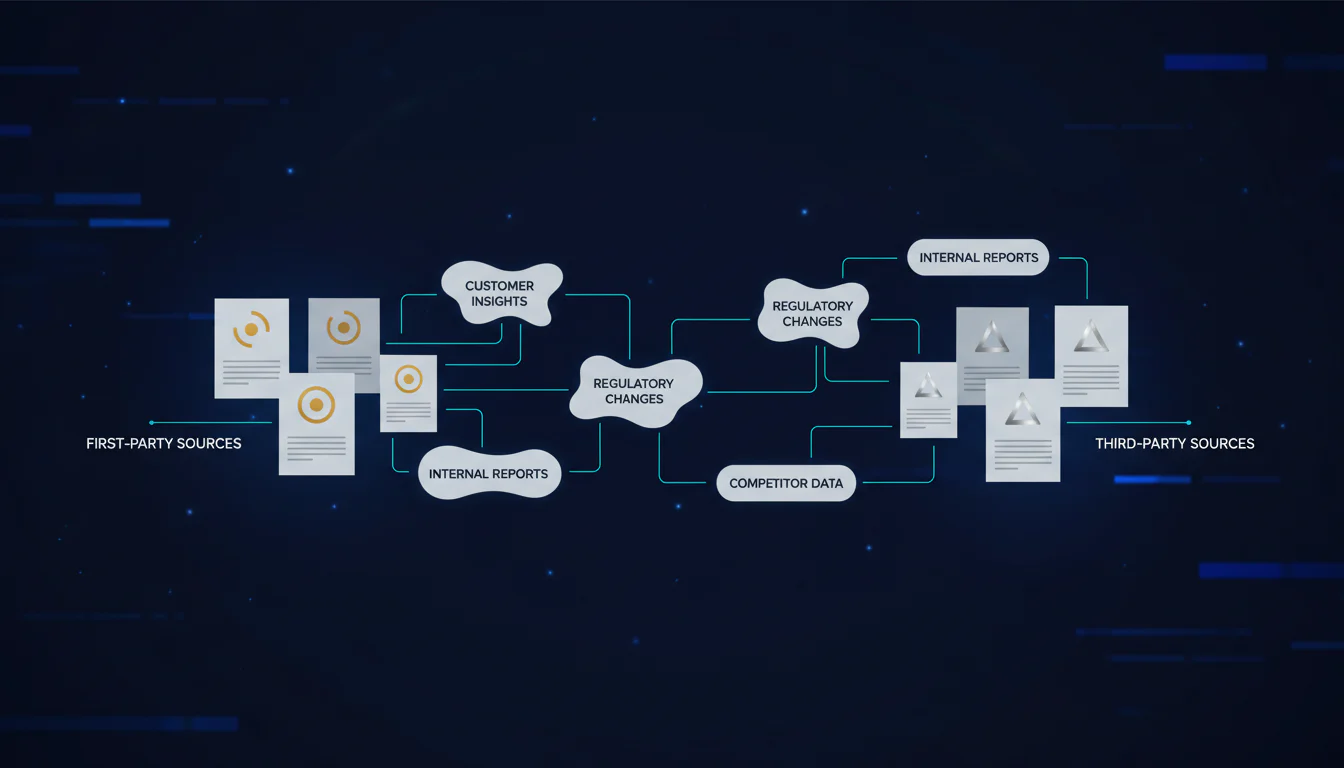
Create a source-attribution matrix that groups recurring claims and phrases before grouping domains. This reveals whether a description is repeatedly supported by your homepage, independent coverage, documentation, reference material, or an unclear source mix.
| Recurring Phrase Or Claim | Prompt Type | Engine | Cited URL | Source Type | Citation Placement | Repeat Pattern | Next Action |
|---|---|---|---|---|---|---|---|
| Product Category Description | Branded Summary | Recorded Engine | Saved URL | First-Party | Inline Or Sources Panel | Recurring | Check Accuracy |
| Buyer-Fit Claim | Category Choice | Recorded Engine | Saved URL | Third-Party | Inline Or Sources Panel | Recurring | Strengthen Evidence |
| Limitation Or Warning | Objection | Recorded Engine | Saved URL | Any Type | Inline Or Sources Panel | New Or Growing | Investigate Claim |
Perplexity states that its answers provide citations to original sources, which makes source transparency practical to audit. Still, do not say a source “caused” a phrase unless you have evidence beyond a visible citation.
A homepage-summary pattern usually has three traits: branded prompts, repeated first-party wording, and no recommendation score above 3 in category or purchase prompts. Independent recommendation behavior looks different: the product appears without being named first, receives a score of 4 or 5, and is supported by relevant sources beyond the homepage. Use our guide to track citation context to keep that evidence connected.
How Do You Measure and Improve Changes over Time?
Measure patterns on a fixed panel, not one-off answers. Compare the same prompts, engines, settings, and coding rules each period, then report sample size with every trend. Google notes that its AI features can use different models and techniques, so answers and links may vary through Google documentation.
Track five practical measures:
- Mention Rate: Answers that mention the brand divided by total tracked answers.
- Recommendation Rate: Brand mentions with a score of 4 or 5 divided by total brand mentions.
- Sentiment Distribution: The share of negative, mixed, neutral, and positive language, shown beside representative phrases.
- Citation Mix: The balance of first-party and third-party URLs, plus recurring source types.
- Competitor Framing: Co-mentions, relative comparisons, and warnings attached to your product versus alternatives.
Use our sentiment tracking architecture to keep collection, coding, source mapping, and reporting connected across every review cycle.
When a metric moves, read the phrases first. A falling recommendation rate may come from new qualifiers rather than fewer mentions. A citation drop may reflect a different source mix, a changed prompt response, or a page that now gives weaker support for a claim.
Then act on the evidence. Correct inaccurate first-party statements, investigate recurring third-party claims, refresh pages that no longer clearly answer the buyer question, and retest identical prompts. Google’s site guidance still emphasizes accessible text, helpful content, crawlability, and normal indexing rather than special AI-only markup.
Use our sentiment validation process before reporting a change as meaningful.
Put the Audit to Work with PageLens.ai
An audit earns its keep when it changes the next decision. At PageLens.ai, we help marketing, growth, SEO, and content leaders turn scattered AI answers into a reviewable record: prompts, exact language, recommendation scores, cited pages, and changes over time. That record makes the next conversation more useful. Content teams can see which pages need evidence or clarity. SEO leads can separate a lost citation from a changed prompt or source mix. Product and communications teams can review an unsupported claim before it becomes a familiar description. We start with language buyers actually encounter, then connect it to the pages and sources that help explain it. For a practical, evidence-led review of the workflow before your next planning cycle, see our how PageLens.ai works, then bring a recent answer, priority category, and important prompts with our team to Book a demo
FAQs on AI Brand Language and Citation Audit
Can a Brand Mention Count as a Recommendation?
No. A mention only records presence. Code it as a recommendation only when the answer gives positive fit guidance, shortlists the product, or advises choosing it.
How Often Should We Run This Audit?
Run the fixed panel weekly for active categories, then review a four-week trend. Recheck after material product changes, major coverage, or a documented model change.
Can Cited Sources Prove Where Every Phrase Came From?
No. Citations show sources made available beside an answer, not a trace of every generated token. Treat phrase-to-source associations as auditable evidence, not causal proof.
What Should We Do When a Harmful Claim Recurs?
Preserve the answer, source URLs, and test conditions first. Correct authoritative pages, investigate supporting sources, then rerun identical prompts before reporting any improvement to leadership.