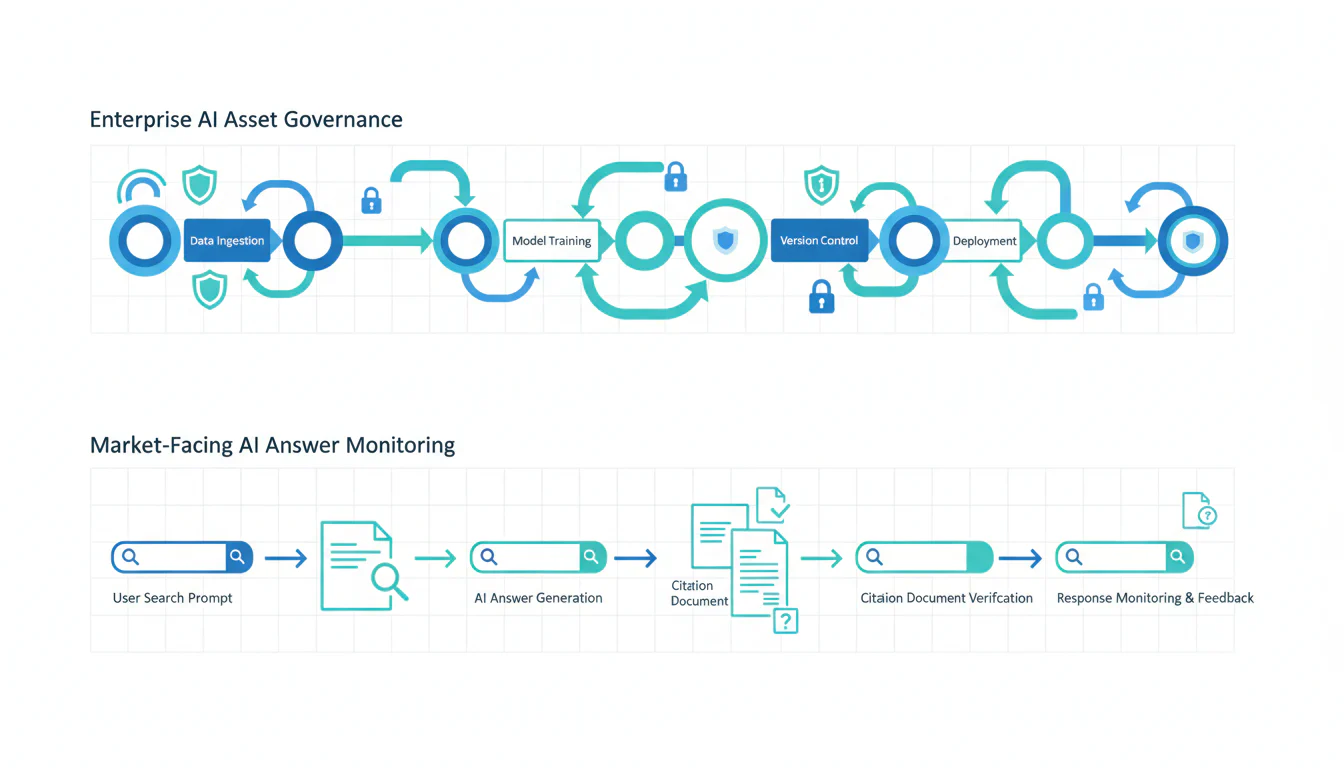
.png)
Forrester Case Study: How Adobe Adapted to AI-Driven Buying and What It Means for AI Visibility


TL;DR
We found that Forrester’s Adobe case study is less about a single AI tactic and more about building an operating system for AI visibility. It shows why marketing teams should monitor buyer prompts, cited sources, and answer language continuously, then use verified gaps to improve content, evidence, and cross-functional decisions.
Forrester Case Study: How Adobe Adapted to AI-Driven Buying and What It Means for AI Visibility
Forrester reported that 94% of business buyers use AI during their buying process, making early discovery harder to see through traditional traffic reports alone.
On July 31, 2026, Forrester published a case study describing Adobe’s response to AI-mediated B2B discovery: centralized ownership, ongoing reviews, broader measurement, and human oversight. For marketing leaders, AI visibility is no longer a one-time content project. It requires a repeatable system for testing buyer prompts, documenting citations, and acting on verified gaps.
We examine what the case study actually reports, what broader research confirms, and how marketing, growth, SEO, and content leaders can build a measurable response.
What Happened in the Forrester Case Study
The timing deserves precision. The supplied news listing was surfaced on August 18, 2026, but the underlying public analysis was published on July 31. Forrester framed the event as a Customer Zero case study, examining how Adobe adapted when AI answer engines became a more important intermediary between B2B buyers and vendors.
The public analysis says Adobe established ownership for AI-mediated visibility, created a continuous review cadence, expanded measurement, added human oversight to AI-assisted workflows, and fed lessons from its own web presence back into product development. The reported change was organizational, not a claim that one tool or page template solved the problem.
| Reported Element | What It Means | What It Does Not Prove |
|---|---|---|
| Clear ownership | A team is accountable for monitoring changing buyer discovery | That one department can solve every visibility issue alone |
| Continuous review | Teams revisit answers and signals as conditions change | That every answer change reflects a meaningful business shift |
| Broader measurement | Visibility extends beyond sessions and rankings | That a single score can represent every engine or buyer |
| Human oversight | People validate claims and decide on action | That automation should be avoided |
The case study is useful because it makes the operating model visible. It should not be read as audited proof of a universal traffic, conversion, or revenue lift. We would use it as a prompt to establish a measurable baseline, then evaluate change against our own market and buyer questions with visibility measurement.
Why AI-Driven Buying Raises the Stakes
The broader evidence supports the case study’s premise. Forrester’s 2026 research says a typical business buying decision includes 13 internal stakeholders and nine external influencers, while more than 60% of buyers use trials to reduce risk. That means the information a buyer receives early must withstand scrutiny from people with different priorities, not merely generate a click. Read the buyer research as a warning against treating discovery as a single-person funnel.
Discovery Shifts Before a Visit
A buyer can ask for category definitions, implementation constraints, alternatives, or buying criteria before they ever reach a vendor site. Our response should start with the real questions buyers use, not a list of internal keywords. That distinction prevents a monitoring program from congratulating itself for branded demand while missing the category questions that introduce a buyer to the market. It also makes ownership clear: the team needs a documented rationale for every prompt in the set. A disciplined buyer prompt method helps separate high-intent discovery questions from branded navigation queries that arrive after awareness already exists.
Buying Groups Need Reusable Proof
Different members of a buying group need different forms of confidence. A technical evaluator may need integration detail, a finance stakeholder may need scope and limits, and a champion may need language to explain the choice internally. Strong pages make those facts easy to locate, current, and consistent across related assets. They do not rely on vague claims that force buyers to infer the evidence themselves.
Trusted Claims Need Context
Forrester also cautions that AI search can produce incomplete or unreliable information, so buyers seek validation from trusted sources. That makes the surrounding language as important as being named at all. We should inspect whether an answer presents our brand as a recommendation, a neutral example, or a risky fit, then use an AI recommendation audit to identify where the evidence or messaging needs work.
How to Measure AI Visibility After the Case Study
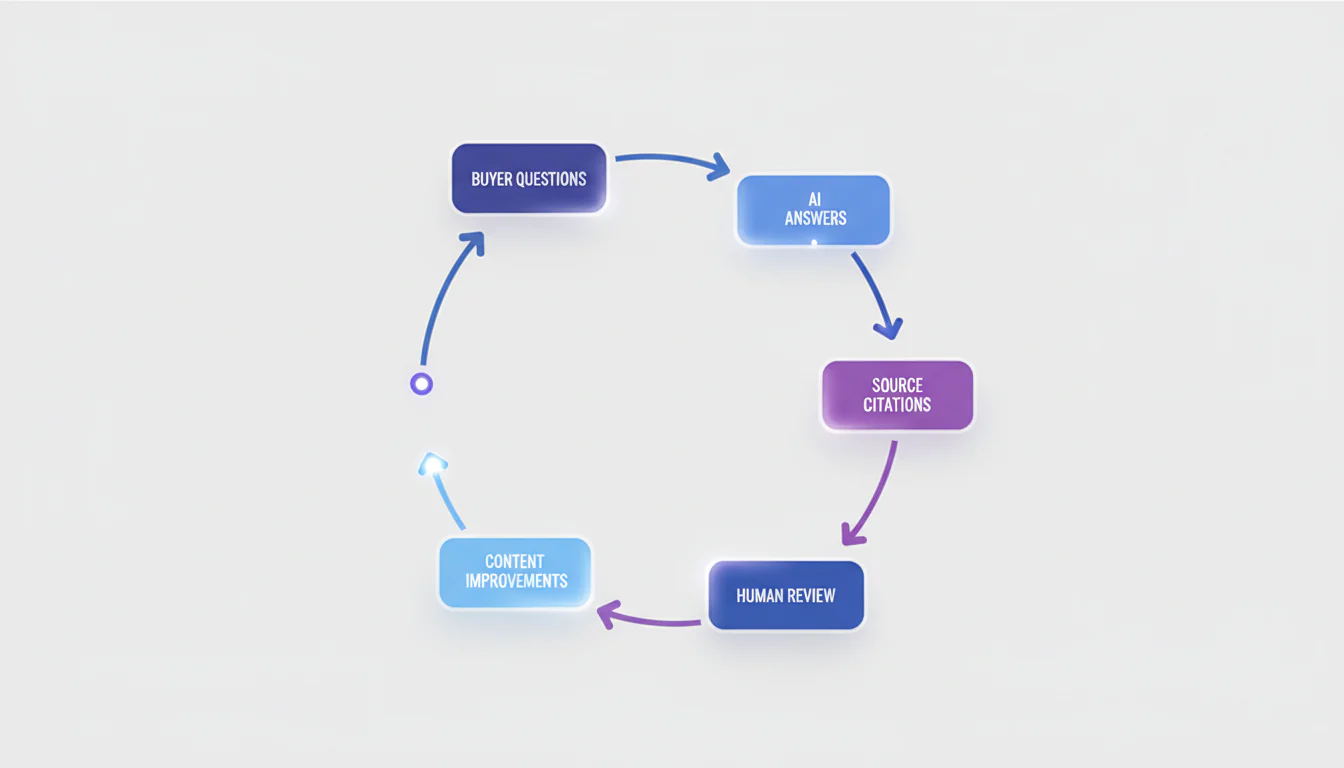
Measurement should mirror the buyer journey, not a dashboard vendor’s preferred metric. We recommend treating each observed answer as a record with a prompt, date, engine, brand mention, cited sources, surrounding language, and an action decision. That creates an evidence trail that can be reviewed when a claim, source, or recommendation changes.
Search platforms are also making this more observable. Google announced dedicated generative-search performance reporting for a subset of sites, which is useful for its own surfaces but does not replace answer-level checks elsewhere. Use Search reporting as one input, then preserve the actual answers that matter to your buyers.
Start with a Defensible Prompt Set
Build a prompt set around category discovery, use cases, implementation concerns, evaluation criteria, and comparisons buyers can reasonably ask. Include role-specific questions and only add branded prompts after the discovery set is established. Our real buyer prompts workflow is designed to make that starting set evidence-led rather than brainstorm-led.
Record Citation and Recommendation Evidence
For every run, capture the exact prompt, date, answer, cited URLs, brand presence, recommendation language, and notable omissions. Screenshots alone are not enough because they lose searchable context and make trend review difficult. Use a consistent citation-context record so content, SEO, and product teams can investigate the same evidence.
Separate Signal from Noise
One changed answer is an observation, not automatically a strategy change. Repeated movement across priority prompts, missing factual sources, or recurring qualification language are stronger signals. Human reviewers should validate whether an apparent decline came from a changed prompt interpretation, stale evidence, a real content gap, or an answer that was never stable.
Assign Decisions to Owners
Marketing can own the prompt set and reporting cadence. Content and SEO can own source quality, page clarity, and updates. Product, legal, and revenue teams should validate claims and identify recurring objections. This is why cross-engine tracking works best as a shared operating process, not a monthly export handed to one team.
| Signal | Unit Of Review | Suggested Cadence | Decision It Supports |
|---|---|---|---|
| Brand mention | Individual buyer prompt | Weekly | Where discovery coverage is missing |
| Cited source | URL and source type | Weekly | Which evidence assets need improvement |
| Recommendation language | Exact surrounding phrasing | Weekly | Whether positioning is accurate and credible |
| Repeated trend | Prompt group over time | Monthly | Which content or proof gaps deserve investment |
| Commercial outcome | Qualified traffic and pipeline context | Quarterly | Whether the program supports business goals |
What This Case Study Proves and What It Does Not
The strongest conclusion is practical: AI-mediated buying changes the work of marketing teams before it necessarily changes every reported outcome. Adobe’s example shows the value of assigning ownership, reviewing evidence frequently, and connecting visibility findings to content and governance decisions. It does not establish that every organization should use the same process, technology stack, or reporting model.
Adobe’s B2B research reinforces the need for caution. It found that 75% of B2B organizations cite data integration and quality as their largest agentic-AI implementation struggle, while only 41% report having the unified customer-data foundation needed to extract insights from conversational interfaces and agents. Those numbers come from a survey of nearly 800 B2B organizations, not a measurement of visibility performance, so they are best used as context about readiness. See the Adobe survey for its stated methodology and limitations.
A sound program makes room for ambiguity while still moving work forward:
- Verify Claims: Confirm that key facts, dates, product details, and policies are current on the pages buyers and answer engines can access.
- Preserve Context: Review exact answer language before responding to an apparent mention or citation change.
- Validate Interpretation: Use sentiment validation before reporting that a neutral or qualified mention represents a positive recommendation.
How PageLens.ai Helps Teams Operationalize AI Visibility
At PageLens.ai, we help teams turn this operating model into a working routine. We organize prompt sets around the questions buyers actually ask, run repeatable checks, preserve the answer language and cited sources, and surface changes that deserve a human decision. That gives marketing, SEO, content, and revenue leaders one shared evidence trail instead of scattered screenshots. Our goal is not to promise a fixed position in a changing answer engine. It is to make the change visible, explainable, and actionable. Use our methodology guide to see how we approach platform fit and measurement. During onboarding, we help clarify the prompt universe, reporting cadence, roles, and review standards that match your market, so leaders can prioritize real evidence over noisy score changes. When your team is ready to replace manual spot checks with a documented AI visibility workflow, Book a demo
FAQs on AI Visibility
These questions clarify how to apply the Adobe case study without overstating what any single answer, citation, or reporting snapshot can prove.
What Is AI Visibility?
AI visibility measures how often and how clearly answer engines mention, describe, or cite a brand when buyers ask relevant questions during their research journey.
Why Does AI Visibility Matter for B2B Marketing?
It matters because buyers can form shortlists before visiting a vendor site. Tracking answers, citations, and recommendation language shows whether your evidence appears during evaluation.
How Often Should We Measure AI Visibility?
Review priority buyer prompts weekly and discuss decisions monthly. Sample more often during launches, major content changes, or shifts that affect buyer discovery for your category.