.png)
What Is AI SEO? Technology Magazine Reports on the Emerging Discipline for AI Search


TL;DR
AI SEO extends search engine optimisation to the places where AI answer engines retrieve, cite, and describe brands. We unpack Technology Magazine's 19 August 2026 announcement against current platform guidance, show why foundational SEO still matters, and set out a repeatable way to measure citations, representation, referrals, and conversions.
What Is AI SEO? Technology Magazine Reports on the Emerging Discipline for AI Search
On 19 August 2026, Technology Magazine carried a syndicated announcement framing AI SEO as an emerging AI-search discipline. The news lands in a meaningful behavioral shift: 12,593 AI summaries appeared in a 2025 study of Google searches. This article separates the announcement from verified platform behavior and turns the implications into a practical operating model.
AI SEO is the practice of extending search engine optimisation to AI-generated discovery: keeping pages technically eligible and useful, then measuring whether priority prompts retrieve, cite, and accurately describe your brand. It does not replace foundational SEO or guarantee AI citations, but it does add evidence-led visibility measurement.
What Happened on August 19, 2026, and What It Changes
The confirmed event is narrow. The syndicated announcement presented AI SEO as a developing discipline for AI search. That is newsworthy because search visibility is no longer expressed only through ranked links and sessions. It is also expressed through what an answer engine selects, cites, and says about a company when a buyer asks a question.
What the announcement does not establish is equally important. It does not create a new Google policy, a new ranking factor, or a separate technical standard that every site must implement. For teams deciding what to do next, the useful response is not to chase a label. It is to monitor brand visibility across the prompts and answer surfaces that matter to revenue.
The practical change is a broader definition of search performance. Rankings, impressions, clicks, and conversions still matter. They now sit beside citation presence, answer context, recommendation language, and the accuracy of the brand information an AI system returns.
What AI SEO Means for Search Engine Optimisation
AI SEO is not a replacement for search engine optimisation. It is the discipline of making the existing SEO foundation work across AI-mediated discovery, then observing whether that discovery represents the brand correctly. The distinction matters because a page can rank, be technically sound, and still fail to appear in the answer a prospect sees first.
Google’s current AI search guidance is unusually clear on this point. Its generative features rely on core Search systems and retrieved pages from its index. The work remains grounded in crawlability, helpful content, technical clarity, and original expertise.
Keep Eligibility and Usefulness Intact
A page must be indexed and eligible to appear with a Search snippet before it can be considered for Google AI features. That makes basic technical hygiene a prerequisite, not legacy work to discard.
Teams should first check whether important claims are available as accessible text, whether pages are discoverable through internal links, and whether structured data matches visible content. The goal is not to make a page sound machine-written. The goal is to make the page useful, legible, and trustworthy for people and systems alike.
Plan for Connected Buyer Questions
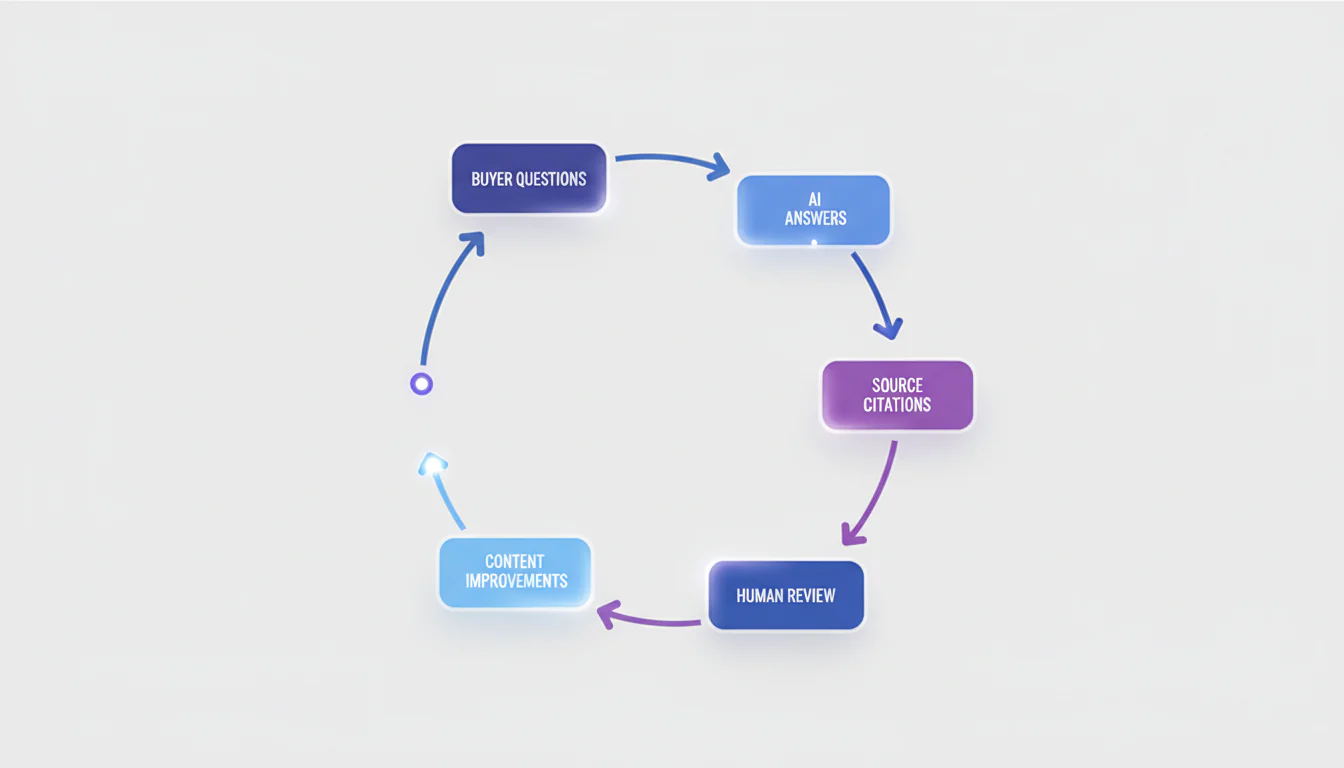
AI systems can pursue related subqueries while building an answer. That changes content planning from a single-keyword exercise into an evidence exercise. A buyer asking for a category recommendation may trigger questions about features, fit, pricing logic, implementation, proof, and alternatives.
This is where an AI recommendation audit becomes more valuable than a generic content refresh. It shows whether the brand’s owned pages, independent proof, and category language support the way buyers actually frame decisions.
Avoid Invented Requirements
There is no evidence-based shortcut that turns an ordinary page into an automatic citation. Special AI text files, excessive content fragmentation, and manufactured mentions can distract from the work that earns durable visibility.
The stronger test is simple: does the page contain a clear answer, specific evidence, accurate claims, and a reason for a buyer to trust it? If not, a technical add-on will not solve the underlying information gap.
What Current AI Search Sources Confirm
The announcement reflects a real expansion in how people discover information, but the mechanics differ by surface. Google AI Overviews and AI Mode can retrieve from Search, while ChatGPT can search the web and show sources in answers. The ChatGPT search guide confirms that web-enabled responses may include inline citations or a sources panel.
| Surface | Confirmed Behavior | Measurement Question |
|---|---|---|
| Google AI Overviews and AI Mode | Uses Search-indexed information and may pursue related queries | Are important pages eligible, visible, and producing qualified engagement? |
| ChatGPT Search | Can search the web and display cited sources | Does the response cite, recommend, or accurately describe the brand? |
| Other AI answer engines | Responses and source selection can vary by product and prompt | Is the observation repeatable across the buyer prompts that matter? |
This is why traffic alone is incomplete. Pew found that users clicked traditional results on 8% of visits with an AI summary, compared with 15% of visits without one. That observation does not predict every site’s outcome, but it does show why teams should track discovery and representation alongside clicks.
A defensible prompt set should include category questions, comparison questions, use-case questions, and brand questions. Our buyer prompt research approach helps teams turn that set into a repeatable sample instead of a collection of anecdotal screenshots.
How to Use Brand Citation Tracking Software
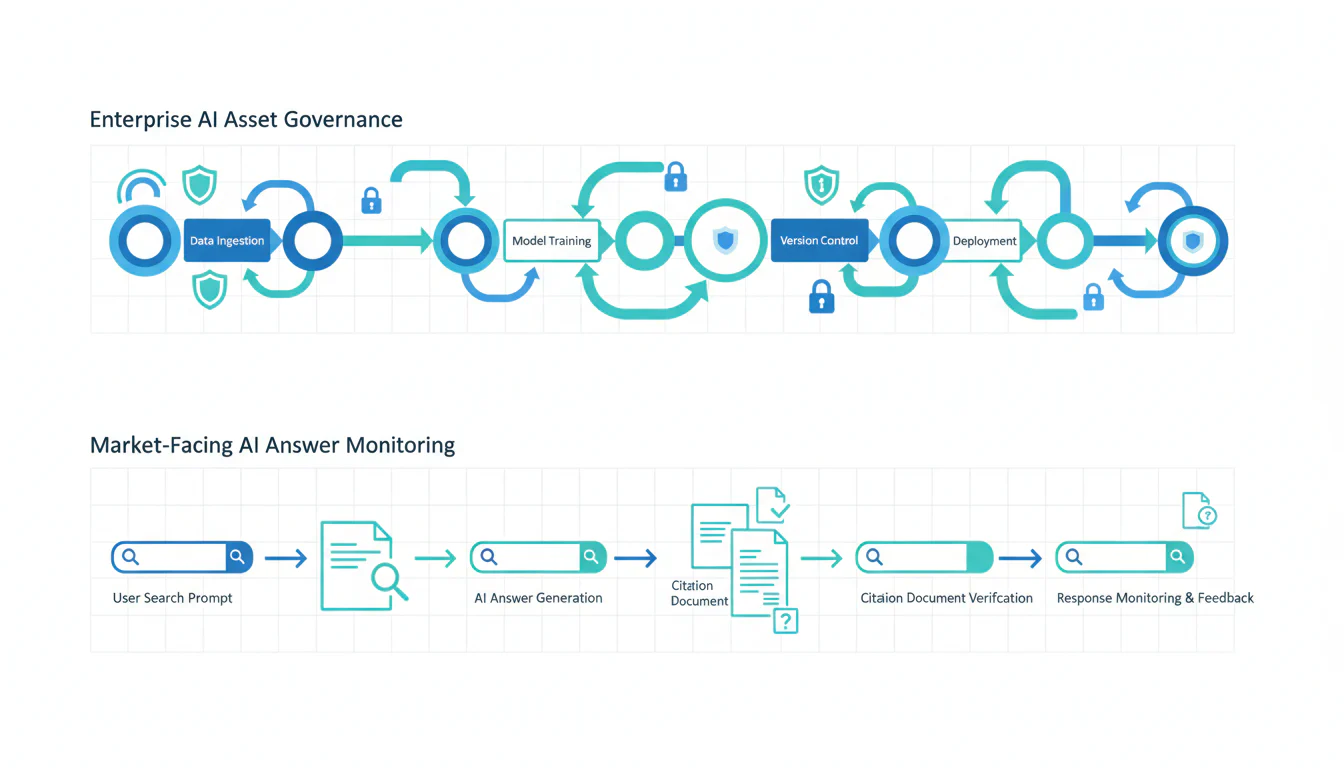
Brand citation tracking software should document what an answer engine did, not pretend to prove why it did it. A useful system preserves the exact prompt, the answer surface, response date, cited URLs, brand language, and recommendation status. That record makes it possible to distinguish a genuine trend from a one-off answer variation.
The official citation dashboard documentation from Microsoft describes measurable fields such as page citations, cited pages, grounding queries, authority share, referral traffic, and trendlines. Those are useful inputs, but none should be treated as a standalone business outcome.

Capture Citation Context, Not Just Counts
A citation count answers only one question: how often did an answer reference a page? It does not tell you whether the answer praised the brand, qualified it, cited another company, or contradicted the page’s intended message.
Start by comparing the same prompt set across surfaces. Multi-engine signals make it possible to preserve the engine, date, cited page, mention status, and answer framing instead of relying on a single score.
Compare Engines Without Flattening Their Differences
Different AI answer engines can retrieve different sources, phrase recommendations differently, and change behavior over time. A single score can hide those differences.
| Signal | It Can Show | It Cannot Prove |
|---|---|---|
| Citation | A page was referenced in an answer | A buyer clicked, trusted, or chose the brand |
| Brand Mention | The brand appeared in generated language | The description was accurate or favorable |
| Recommendation Language | The answer positioned the brand for a use case | The recommendation caused revenue |
| AI Referral Traffic | Visitors arrived from an AI surface | The citation alone created the visit |
Connect Observations to Business Evidence
The next step is to compare AI visibility records with qualified traffic, conversion paths, branded demand, and content changes. If a cited page gains referrals and assists conversions after a documented content improvement, that is stronger evidence than a citation increase alone.
Use citation context as the audit record for that comparison. It shows whether a source supports a recommendation, supplies background, or appears as a cautionary example.
The discipline is not about claiming certainty where none exists. It is about making decisions from a cleaner chain of evidence.
A 30-Day AI SEO Operating Plan
A useful first month should create a baseline, improve the highest-confidence gaps, and recheck the same evidence. Google now provides a Search Console report for generative AI performance, which gives teams a platform-native starting point for Google’s own AI features.
-
Days 1 to 7: Select 20 to 40 buyer, category, comparison, and brand prompts. Record the full answer, sources, brand wording, recommendation status, locale, and date.
-
Days 8 to 21: Review the pages that support weak or inaccurate answers. Fix missing evidence, unclear positioning, outdated claims, inaccessible content, and weak internal discovery paths.
-
Days 22 to 30: Re-run the exact prompt set, compare citation context and answer language, then review referrals and conversions before declaring a result.
Use AI search visibility measurement to keep this work reproducible across reporting periods. The essential discipline is consistency: same prompts, documented conditions, preserved outputs, and an explicit record of what changed on the site.
Why PageLens.ai Makes AI SEO Measurable
PageLens.ai is built for teams that want a defensible view of AI visibility, not a decorative score. We help marketing, growth, SEO, and content leaders organize buyer prompts, record the exact language generated by AI answer engines, identify cited pages and missing evidence, and prioritize content work against commercial intent. Our approach keeps the audit trail visible: teams can review the prompt, response, citation context, comparison set, and change over time before treating any movement as a result. That matters when a brand is mentioned without being recommended, when an answer cites a third party instead of an owned page, or when a new response exposes an outdated claim. Bring your existing search data and editorial priorities, then see how PageLens.ai works. We will help turn them into a repeatable visibility workflow that connects source evidence with real decisions across the places your prospective customers now research. Book a demo
FAQs on AI SEO
AI SEO raises practical questions because it adds new visibility signals without removing the established requirements of search engine optimisation.
Does AI SEO Replace Search Engine Optimisation?
AI SEO extends search engine optimisation into AI-generated discovery, retaining technical and editorial fundamentals while adding repeatable checks for citations, representation, referrals, and conversions across channels.
Do AI Features Require Special Files or Markup?
No. Google uses core Search systems for generative features and requires no special AI files or schema. Eligible, useful, crawlable pages remain the foundation for visibility.
Does a Citation Prove Business Impact?
A citation shows that an answer referenced a page. It cannot alone prove recommendation quality, clicks, accurate brand language, or revenue impact without supporting conversion evidence.
How Should We Start Tracking AI Visibility?
Start with recurring buyer prompts, preserve each complete response and cited source, then compare citation context with referrals, conversions, and content gaps across relevant answer surfaces.