.png)
Georgia Governor’s Tourism Conference 2026: AI Visibility, Tripadvisor Trendcast Data, and Generative Engine Optimization Trends


TL;DR
We confirmed that the Georgia Governor’s Tourism Conference will take place September 28 through 30, 2026, on Jekyll Island, while its public materials do not yet confirm AI visibility or Tripadvisor Trendcast sessions. We explain the verified travel-data signal, the generative search changes marketers should measure, and a practical workflow for turning destination expertise into citeable evidence.
Georgia Governor’s Tourism Conference 2026: AI Visibility, Tripadvisor Trendcast Data, and Generative Engine Optimization Trends
Georgia’s official conference registration says the 2026 event brings together more than 500 tourism professionals to exchange marketing and destination-growth ideas.
The conference is confirmed for September 28 through 30, 2026, on Jekyll Island. The supplied report linked it to AI visibility and Tripadvisor Trendcast data, but those specific sessions are not confirmed publicly. For marketers following Generative Engine Optimization Trends, verification and measurement come first. Next, we assess the event, data, and a practical monitoring workflow.
What Is Confirmed About the 2026 Conference
The official agenda confirms a three-day Georgia Governor’s Tourism Conference at the Jekyll Island Convention Center, with general sessions, concurrent breakouts, and a Governor’s Luncheon. It does not yet name the topics within those session blocks, and the public speaker page says the lineup is coming soon. Teams that need a baseline before programming is announced can begin with AI brand monitoring.
That distinction matters. It is accurate to report that AI visibility and Tripadvisor Trendcast data have been associated with the event by the referenced report. It is not accurate, at this point, to describe either as confirmed programming. For destination teams, the more useful story is what is known now and what should be monitored before the conference begins.
| Item | Current Status | What Marketers Can Reliably Say |
|---|---|---|
| Conference dates | Confirmed | September 28 through 30, 2026 |
| Venue | Confirmed | Jekyll Island Convention Center |
| General and breakout sessions | Confirmed | The agenda includes both formats |
| AI visibility session | Not publicly confirmed | Watch the official agenda and speaker updates |
| Tripadvisor Trendcast session | Not publicly confirmed | Treat the report’s claim as unverified programming |
The conference’s stated purpose is education, networking, and strategies that build destination awareness and visitation. That makes AI-search discovery a sensible topic for attendees, but sensible is not the same as scheduled. We recommend that teams use this interval to build an AI buyer prompt dataset rather than wait for a conference session to define their questions.
What the Report and Tripadvisor Data Actually Establish
The Nomad Lawyer report framed the conference around AI visibility and Tripadvisor Trendcast data. Independently, Tripadvisor’s January 2026 release confirms that its second annual Trendcast was published on January 28, 2026, using platform search, booking, behavioral, and user-generated signals.
What the Trendcast Measures
Tripadvisor says its report combines search, booking, hotel-demand, review, and broader traveler-behavior signals. The underlying data attribution covers 2024 and 2025, so it should be treated as platform research about observed patterns, not a forecast proving demand for every Georgia destination.
What the Numbers Suggest
The report identifies experience-led travel as a major theme. It reports pet-friendly travel experience bookings up 260% year over year and extreme-adventure experiences up 79%. It also highlights substantial visitor increases around major marathons, a useful reminder that travelers often plan around an activity, event, or identity before they choose a destination.
For content teams, this is a prompt-design signal. Travelers may ask about dog-friendly itineraries, race-weekend logistics, recovery options, family activities, or local experiences, then expect a single answer to connect the relevant details. A destination page that offers only broad inspiration is less useful than one that resolves the real planning question.
How to Use the Signal Responsibly
We would not convert global trend data into unsupported local claims. We would use it to prioritize research, identify experience categories worth documenting, and publish original local evidence. That evidence can include operational details, expert sources, accessible routes, seasonal constraints, booking information, and first-hand photographs.
When a destination is considering what language appears around a recommendation, citation context is more useful than a simple visibility count. The important question is whether the destination is cited as credible evidence for the traveler’s actual intent.
Generative Engine Optimization Trends That Matter for Destinations
Generative Engine Optimization Trends are increasingly best understood as disciplined search work, not a separate collection of shortcuts. Google’s current guidance says its generative features remain rooted in core Search ranking and quality systems, and it emphasizes crawlable, useful, original content over special markup or manufactured mentions.
Keep Foundational Search Work Intact
A destination site still needs pages that can be crawled, indexed, understood, and trusted. Clear page structure, accurate local facts, useful images, and distinctive expertise serve both traditional results and generative answers. That is especially important when a model expands a traveler’s original request into several related searches.
The practical shift is the unit of analysis. Instead of reporting only on a handful of destination keywords, teams should record how often their evidence appears across a defined set of traveler prompts. Our cross-engine tracking method explains how to keep that comparison reproducible.
Measure Visibility Separately from Clicks
Google announced generative-AI performance reports in Search Console in June 2026. The reports provide dedicated views of impressions, appearing pages, countries, devices, and time periods for a subset of sites during rollout. That is a meaningful operational development because teams can begin separating generative discovery from overall search reporting.
| Measurement Layer | Useful Question | Evidence To Capture |
|---|---|---|
| Mention | Is the destination named? | Presence and position in the answer |
| Citation | Is a page used as support? | Cited URL and page type |
| Recommendation | How is the destination described? | Exact qualifying language |
| Outcome | Did visibility support demand? | Qualified visits, leads, or bookings |
A name in an answer may be useful, but it does not prove that the response encouraged action. Teams should preserve the qualifying language around a mention and compare it with the local page evidence available to support that recommendation.
Interpret Click Data with Care
Independent research explains why visibility deserves its own measurement layer. In a 2025 study of 68,879 searches, Pew Research found users clicked traditional results on 8% of visits with an AI summary, compared with 15% without one. The study does not establish a universal traffic outcome, but it does show why rankings alone cannot describe the full discovery journey.
A Practical Workflow for Destination Marketing Teams
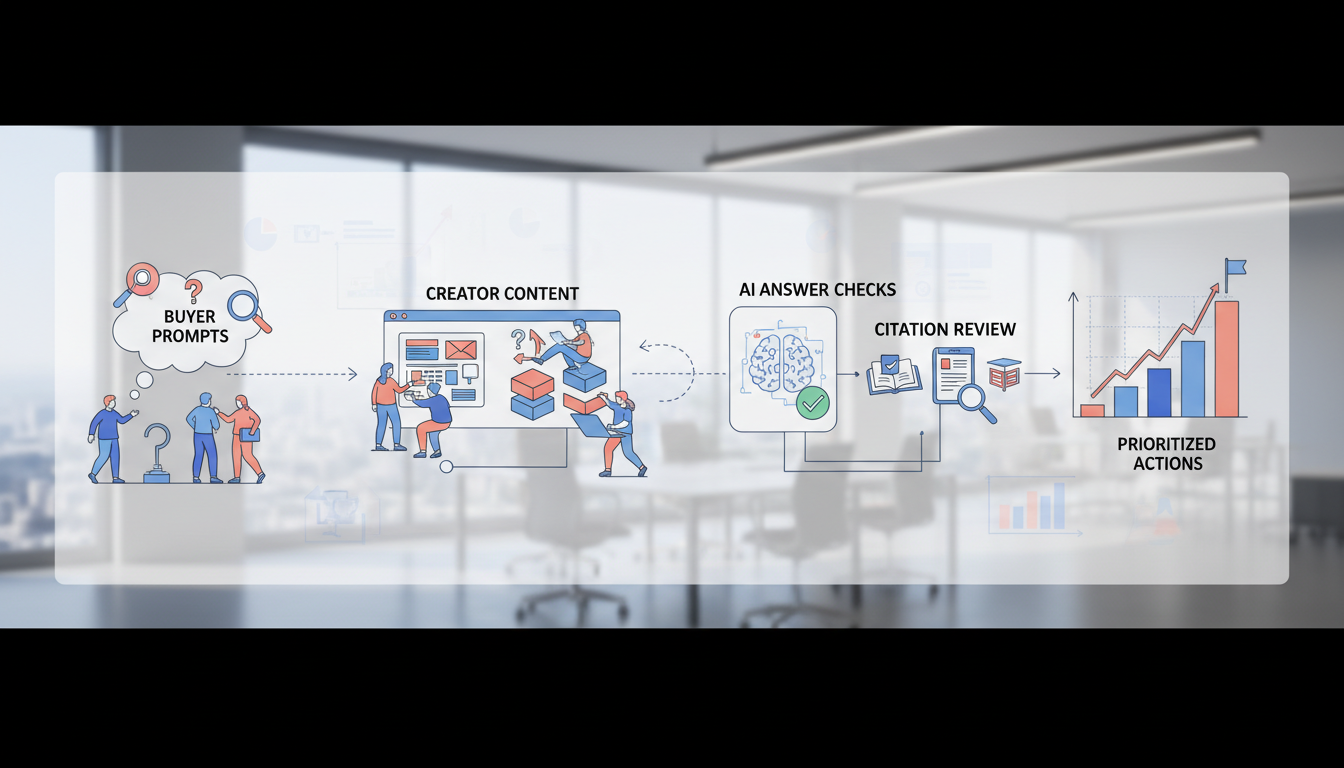
A useful workflow should turn a current conference signal into something measurable before, during, and after the event. We recommend starting with a limited prompt set, using a consistent review cadence, and preserving the exact answer language for later analysis.
Start with Traveler Decisions
Group prompts by decisions a visitor must make: where to stay, what to do with children, how to travel with a pet, which activities work in a season, or what to book around an event. Include local modifiers and realistic constraints, because those details create the evidence gaps that generic content often misses.
Our brand-monitoring workflow is built around repeating the same documented checks rather than relying on memorable screenshots. Consistency makes it possible to identify a real change instead of mistaking normal answer variation for progress.
Audit the Pages Models Could Cite
For each recurring prompt, identify the page that should be the strongest source. Then inspect whether it answers the question directly, shows who provided the information, includes current practical details, and leads to an appropriate next action. Improve one high-value page at a time, keeping a record of the change and the prompts it serves.
The objective is not to chase a single score. It is to make the evidence behind each visibility result inspectable, connect prompts to cited pages, and give editors a clear basis for deciding which source material to improve next.
Review the Exact Language
A model can mention a destination while attaching weak, outdated, or incomplete language to it. Save the response wording, cited pages, date, country, and prompt context. That allows content leaders to tell whether an editorial change improved factual coverage, recommendation framing, or neither.
For this reason, we recommend phrase-level sentiment analysis alongside citation monitoring. It keeps teams focused on the words that shape a traveler’s impression, not merely the fact that a brand or place was named.
What to Watch Before the Conference Opens
Georgia’s visitor economy makes better destination discovery consequential. The state reported 174.2 million visitors in 2024, with $45.2 billion in visitor spending, so even small improvements in how travelers discover credible local information can matter across communities.
The next reliable update should come from the conference’s official agenda or speaker materials. Until then, marketers should avoid assigning speakers, session titles, or partnerships that have not been published. When programming appears, update the article with the specific session name, presenter, date, and a clear separation between confirmed facts and analysis.
Teams can also identify the sources AI engines use before the conference opens. That establishes which external pages, local partners, and owned resources shape current answers.
We would also watch whether the published program treats AI visibility as content production, measurement, traveler service, or all three. Those are different disciplines. A presentation about prompt writing may be useful, but it does not replace an evidence-led system for tracking which pages appear in answers over time.
For teams publishing event coverage, page-level AI visibility offers a practical way to check whether the reporting itself becomes a cited source. That is the standard this article should meet as official conference details evolve.
Work with PageLens.ai on Measurable AI Visibility
At PageLens.ai, we help marketing, growth, SEO, and content leaders replace anecdotal checks with a repeatable view of where their brand appears in AI answers. Our workflow begins with the questions buyers actually ask, then records mentions, cited URLs, recommendation language, and the page evidence behind each response. That gives teams a shared baseline before they change content, and a defensible way to review whether those changes improve visibility. For destination marketers, the useful outcome is not a vanity score. It is knowing which traveler questions lack a credible answer, which local pages models can cite, and which recurring gaps deserve editorial investment. We help teams make these checks consistent and legible to stakeholders. If you want to turn this conference signal into a measurable operating rhythm with our team this quarter, Book a demo
FAQs on Generative Engine Optimization Trends
Are AI Visibility Sessions Confirmed for the Conference?
No. Official materials confirm the dates, venue, registration, and session blocks, but they do not name an AI visibility or Trendcast presentation for attendees yet.
How Should Marketers Use Tripadvisor Trendcast Data?
Use it as directional platform research, not as a forecast for Georgia. Turn its experience themes into testable prompts, localized pages, and recurring visibility reviews.
What Should a Destination Team Measure First?
Begin with a defined prompt set. Capture mentions, cited pages, and wording across engines, then connect shifts to qualified traffic and conversions each reporting period.