.png)
YouTube Changes How It Counts Views on Long-Form and Live: What It Means for AI Visibility

TL;DR
We explain YouTube’s August 24, 2026 long-form and live view-counting change, which records a public view when playback begins. We show why higher public totals do not prove stronger attention, recommendations, or AI visibility, and outline the measures marketing teams should preserve before and after the change.
YouTube Changes How It Counts Views on Long-Form and Live: What It Means for AI Visibility
Video discovery is becoming more conversational. In its 2026 CEO letter, YouTube said more than 20 million people used its Ask tool in December, making careful measurement more important for marketing teams that want to understand visibility beyond a channel dashboard. This report verifies the new view-count definition and separates it from the signals that indicate genuine audience attention.
On August 24, 2026, YouTube will count a public long-form or live view as soon as playback begins, with no minimum watch time. The YouTube long-form and live view count change can lift top-line totals, but it does not change creator earnings, eligibility, or the engagement signals marketers should use to judge attention and AI visibility.
What Changes on August 24
The announced change applies to long-form uploads and livestreams. YouTube’s official update says public views will count from the moment a video starts playing, bringing those formats in line with the way it already reports Shorts views. Existing public totals may rise faster after the change because a shorter playback can now qualify as a view.
We would not treat that as an algorithm update. It is a reporting-method change, which means a post-August 24 increase in public views can reflect the new definition rather than an improvement in packaging, relevance, or audience demand. For clean reporting, we recommend marking August 24 as a methodology break in every recurring channel report.
That distinction should carry into executive reporting. A public total still communicates exposure, but it cannot tell us whether a viewer stayed, learned, trusted the content, or took the next step. We keep those questions separate in our guide to AI visibility and SEO, because a channel metric and an answer-engine outcome need different evidence.
Views and Engaged Views Are No Longer Interchangeable
A public view will remain useful, but it now answers a narrower question: how often did playback begin? YouTube defines Engaged Views as instances where a channel’s videos were watched past the initial seconds. That makes it the stronger continuity metric when comparing attention across the reporting change.
| Measure | What It Represents After August 24 | Best Use |
|---|---|---|
| Public Views | Video or live playback starts | Exposure and public-facing reach |
| Engaged Views | Viewing continues past the initial seconds | Comparable attention trends |
| Estimated Minutes Watched | Total time viewers spent watching | Depth of consumption |
| Average View Duration | Average length of video playback | Retention and content quality |
| Concurrent Viewers | Simultaneous live audience | Live-event performance |
For long-form and live analysis, we would pair public views with watch time, average view duration, audience retention, and conversion data. Those measures give a more complete account of whether a video held attention after its opening moment. A public-view increase is valuable context, but it is not a replacement for the evidence needed to diagnose content quality.
Teams building a broader reporting model can use our AI visibility method to keep channel metrics and answer-engine outcomes distinct. It starts with a stable set of buyer questions, then records where a brand appears and how it is described, rather than treating one changing reach number as a complete visibility score.
The API implications are equally important. YouTube’s reporting documentation shows that authorized channel owners can query both views and engaged-view measures, while public viewCount data will reflect the updated definition. If a dashboard joins historical public views with post-change numbers, it should label that comparison rather than implying a like-for-like trend.
What the Change Does Not Alter
YouTube has said the shift does not change creator earnings or eligibility for the YouTube Partner Program. Its established program rules still distinguish between public watch hours and eligible Shorts-view requirements, as outlined in its eligibility guidance. That separation is useful for marketers as well: a louder public exposure number is not automatically a better commercial result.
The change also does not establish a new direct ranking factor. YouTube explains that discovery is shaped by how viewers respond to recommendations, including watch duration, percentage viewed, relevance, engagement, and satisfaction. A video with more counted starts but weak retention may look more popular in public while still failing to create a stronger viewer experience.
That is why we would avoid rewriting a video strategy around raw views alone. Keep improving the clarity of the topic, title, thumbnail, opening, and proof in the video. Then use content optimization to connect performance evidence to the content decision that caused it.
What It Means for AI Visibility
The YouTube long-form and live view count change does not prove that a brand will appear more often in AI-generated answers. There is no primary evidence that a revised public counter, by itself, improves inclusion in AI answers, recommendation language, or cited-source selection. We should treat those as separate questions that require separate observation.
Public Reach Is Not Answer Visibility
A high public view total can show that playback started frequently. AI visibility concerns whether a brand, source, or video appears when a buyer asks a relevant question. Those two outcomes can move together, but they can also diverge, especially when an answer engine favors a specific source, format, or explanation.
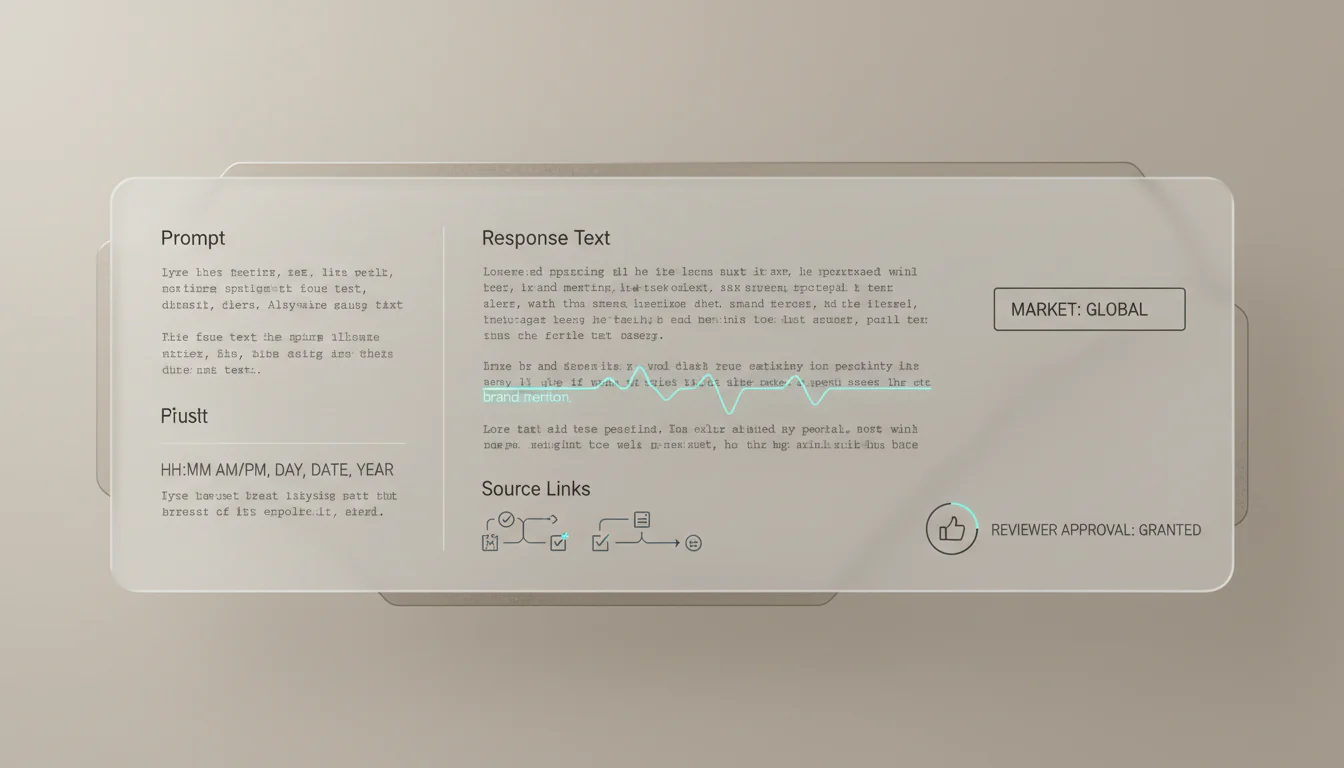
To assess that difference, we recommend recording the engine, prompt, date, answer, cited sources, and recommendation language. Our multi-engine brand tracking approach keeps these observations reproducible across multiple answer environments and prevents a single screenshot from becoming a broad conclusion.
YouTube Is Building Conversational Discovery
YouTube’s Ask YouTube launch says its conversational search can compile relevant long-form videos and Shorts into structured responses. That makes useful, well-scoped video content worth monitoring as an AI-mediated discovery asset, but it does not make public views a substitute for answer-level measurement.
A strong video can contribute to a wider content footprint when it explains a subject clearly, reflects first-hand expertise, and gives viewers useful next steps. The work is still to test whether it appears for relevant buyer questions, rather than assuming its public performance creates that outcome automatically.
Track the Evidence Separately
We recommend a fixed prompt set, documented dates and locations, and saved evidence of mentions, citations, and recommendation context. Our guide to cross-engine tracking explains how to compare these observations without turning a changing platform metric into an unsupported causal claim.

How to Report the Change Without Breaking Your Trendline
The practical answer is to preserve a baseline before the definition changes, then report the old and new measures side by side. Do not ask a single chart to carry two incompatible definitions without a visible annotation.
| Reporting Window | Preserve | Use For Decisions |
|---|---|---|
| Before August 24 | Public views, watch time, retention, conversions | Historical baseline |
| First 30 Days After | Public views and Engaged Views together | Identify methodology effects |
| Ongoing Long-Form Reporting | Retention, watch time, qualified actions | Content performance |
| Ongoing Live Reporting | Peak concurrent viewers, watch time, post-stream retention | Event and replay performance |
| AI Visibility Reporting | Mentions, citations, recommendation language | Buyer discovery outcomes |
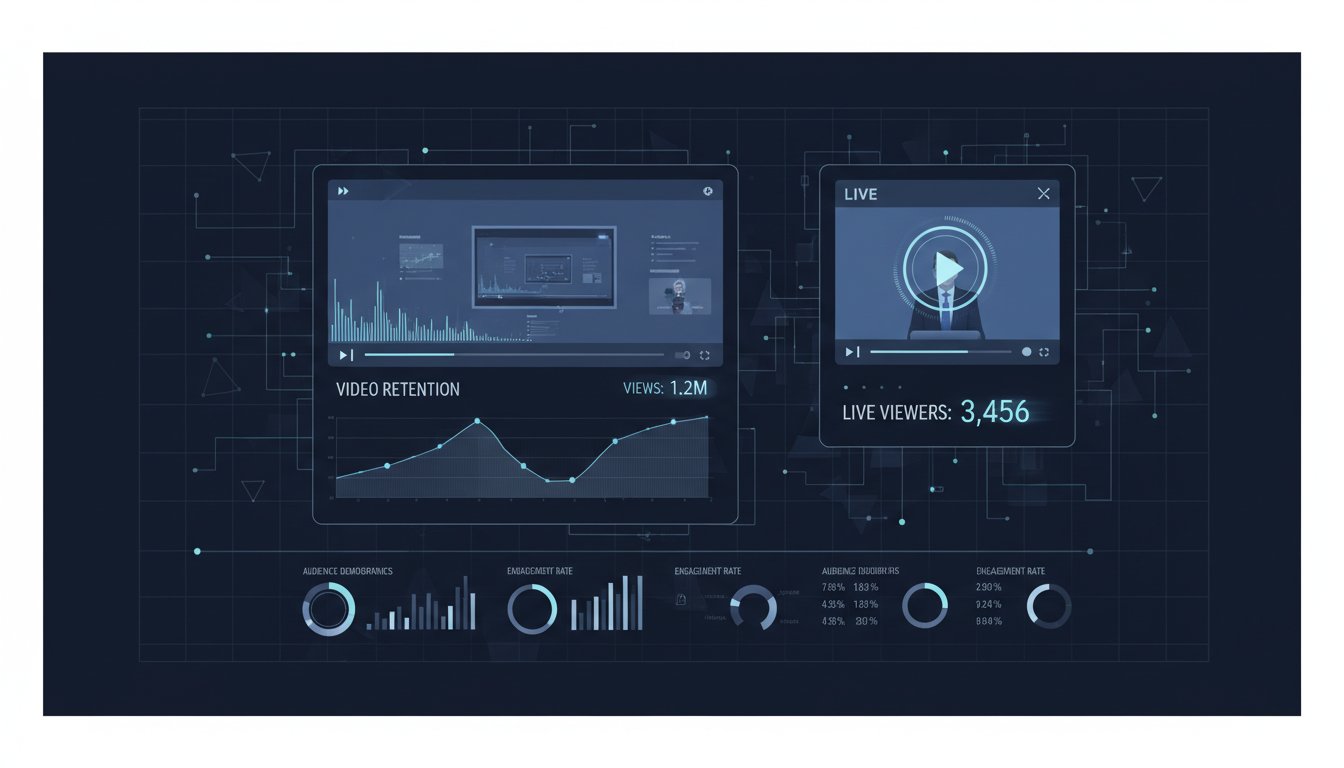
For live programming, keep concurrent viewers separate from total views. YouTube’s live metrics guide distinguishes simultaneous viewership, total views, watch time, and average view duration, each of which answers a different performance question.
We would also log material changes to titles, thumbnails, formats, promotion, and publishing cadence during this period. That creates a defensible record when stakeholders ask whether a result came from the content, the distribution, or the new counting method. Our citation context guide can help teams preserve source-level evidence alongside their video reporting.
A monthly review should then compare each metric with the decision it supports. Public views indicate starts, retention indicates attention, conversions indicate commercial response, and AI-answer evidence indicates whether a brand was actually surfaced for a relevant question. This keeps channel reporting useful without blending its meaning with a distinct answer-engine measurement.
PageLens.ai Helps Teams Measure What Changed
At PageLens.ai, our methodology helps marketing, growth, and SEO teams separate a loud metric from a useful decision. Our workflow starts with the buyer prompts that matter, records how AI systems describe and cite a brand, and keeps that evidence distinct from channel analytics. That matters after a reporting-method change, when a rising top-line number can look like momentum even if retention, conversion, or recommendation context has not moved.
We can help you create a baseline, define comparable measures, and review changes by engine, prompt, source, and language. We built our approach for teams that need an auditable view of exposure rather than a single opaque score. Use YouTube analytics to understand attention, then use answer-level evidence to understand discovery. If your reporting needs both across the full customer journey, our team can show you a practical method today. Book a demo
FAQs on YouTube Long-Form and Live View Count Change
Does the Change Apply to Existing Videos?
Yes. Beginning August 24, existing and new long-form videos and live streams will use the new public-view logic. Authorized channel owners can still access engaged-view reporting.
Will Higher Views Improve YouTube Rankings?
No. YouTube documents that discovery weighs viewer response, watch duration, percentage viewed, relevance, and satisfaction. A larger public counter alone does not prove stronger recommendations or AI discovery.
What Should Marketers Report After August 24?
Report public views as exposure, then pair them with Engaged Views, watch time, retention, conversions, and prompt-level AI-answer evidence. Keep pre-change and post-change counts visibly separated.