.png)
Beyond the GEO Playbook: Earned Media Is the Real AI Visibility Tiebreaker


TL;DR
We find that JD Supra’s earned-media argument points in the right direction, but current platform documentation does not establish a universal AI visibility tiebreaker. We explain what the August 17, 2026 listing means, distinguish evidence from inference, and provide a repeatable workflow for measuring citations, brand representation, and changes after credible coverage.
Beyond the GEO Playbook: Earned Media Is the Real AI Visibility Tiebreaker
The supplied Google News listing identifies the JD Supra commentary at the center of this story, and a Pew study of 68,879 searches shows why the argument matters: AI summaries change whether readers leave for outside websites.
Google News lists JD Supra’s commentary as last updated on August 17, 2026. Its thesis is that earned media becomes the AI visibility tiebreaker after basic GEO work. Current evidence supports a narrower conclusion: credible, specific coverage can reinforce visibility, but it neither guarantees citations nor replaces accurate, crawlable owned content and repeated measurement.
Below, we separate the reported claim from what platform documentation and research actually establish, then show how marketing, growth, SEO, and content teams can measure the effect of coverage.
What JD Supra Reported and Why the Date Matters
The reportable event is the commentary itself, which the Google News record marks as last updated on August 17, 2026. It is not a disclosed algorithm update, a new ranking factor, or evidence that a single placement causes a brand to appear in every AI answer.
The useful part of JD Supra’s argument is strategic. A brand cannot explain its own expertise as persuasively as a credible outside source can describe, quote, or validate it. That matters when an answer system has to synthesize a response from many possible sources and decide which claims to surface.
Still, we should treat “tiebreaker” as an informed interpretation, not a universal law. Our AI citation tracking approach starts with the more practical question: does independent coverage improve how accurately and how often a brand appears for the prompts its buyers ask?

What AI Platforms Actually Confirm
The strongest evidence does not say that earned coverage automatically wins. It says that AI search systems can draw on a broader source set than a classic results page, making the quality and consistency of a brand’s public information environment more consequential.
AI Search Can Surface Diverse Supporting Sources
Google says AI Overviews and AI Mode may use query fan-out, issuing related searches across subtopics and data sources while producing an answer. Its Google guidance also says these AI features can surface a wider and more diverse set of helpful links than classic search.
That makes credible third-party coverage relevant, especially when it contains a specific, supportable claim about a category, use case, or named expert. It does not make external coverage a replacement for pages that explain the offering accurately.
Basic SEO Still Determines Eligibility
Google states that there are no special technical requirements for appearing in AI Overviews or AI Mode. A page still needs to be indexed and eligible to appear with a Search snippet, so crawl access, useful text, internal links, and accurate structured data remain essential.
This is why we pair prompt research with a disciplined review of the pages, facts, and claims that answer engines can actually access. A strong external mention cannot rescue an unclear product page, and a polished page cannot fully compensate for a thin public record.
Citation Behavior Requires Measurement, Not Assumptions
AI answers can change by engine, prompt wording, location, available sources, and time. Research on generative search describes visibility as a distinct citation-and-influence problem, not simply a higher or lower traditional rank.
| Claim | What Current Evidence Supports | What Teams Should Do |
|---|---|---|
| Independent coverage can matter | AI systems may surface diverse supporting sources | Pursue relevant, credible coverage with specific evidence |
| GEO guarantees citations | No platform documentation makes that promise | Keep technical and editorial foundations strong |
| Earned media always wins | No independent causal rule establishes this | Test coverage against a documented baseline |
Why Earned Media Can Affect AI Visibility
Earned media can change the inputs available to an AI system. A well-reported article, expert quote, association publication, or independently produced analysis may corroborate a brand claim in a way that a self-authored page cannot.
That distinction matters because AI visibility is often about representation, not traffic alone. In Pew’s study, users who encountered an AI summary clicked a traditional result less often than users who did not, while cited sources still helped define the answer they saw. The commercial question becomes whether the answer identifies your brand correctly and in a useful buying context.
The 2024 KDD research found that adding citations, quotations, and statistics could improve source visibility in its tested generative-engine framework. That result supports evidence-rich content, but it does not prove that any paid distribution, generic mention, or isolated press hit will cause an outcome.
Because different systems can produce different source sets for the same prompt, multi-engine tracking is essential before treating one answer as representative. The coverage most likely to be useful is precise: it attributes a verifiable capability or point of view to the right entity, uses language buyers recognize, and remains consistent with the record on your own site.
Build the prompt set first, then evaluate whether coverage gives answer engines better material to work with. That order keeps a team from chasing mentions that sound impressive but do not affect the buyer questions that create demand.
Treat that comparison as a learning loop rather than a scorecard. When a brand is absent, review whether the source record lacks specificity, whether owned material is incomplete, or whether the prompt is not actually relevant to the audience.
How to Measure Earned Media’s Effect
The right workflow is less glamorous than a claim about a magic tiebreaker. We recommend setting a baseline before outreach, defining what a meaningful change would look like, and recording the output consistently after coverage appears. Start with buyer prompt data so the measurement set reflects real demand rather than a convenient collection of category phrases.
Establish the Prompt Baseline
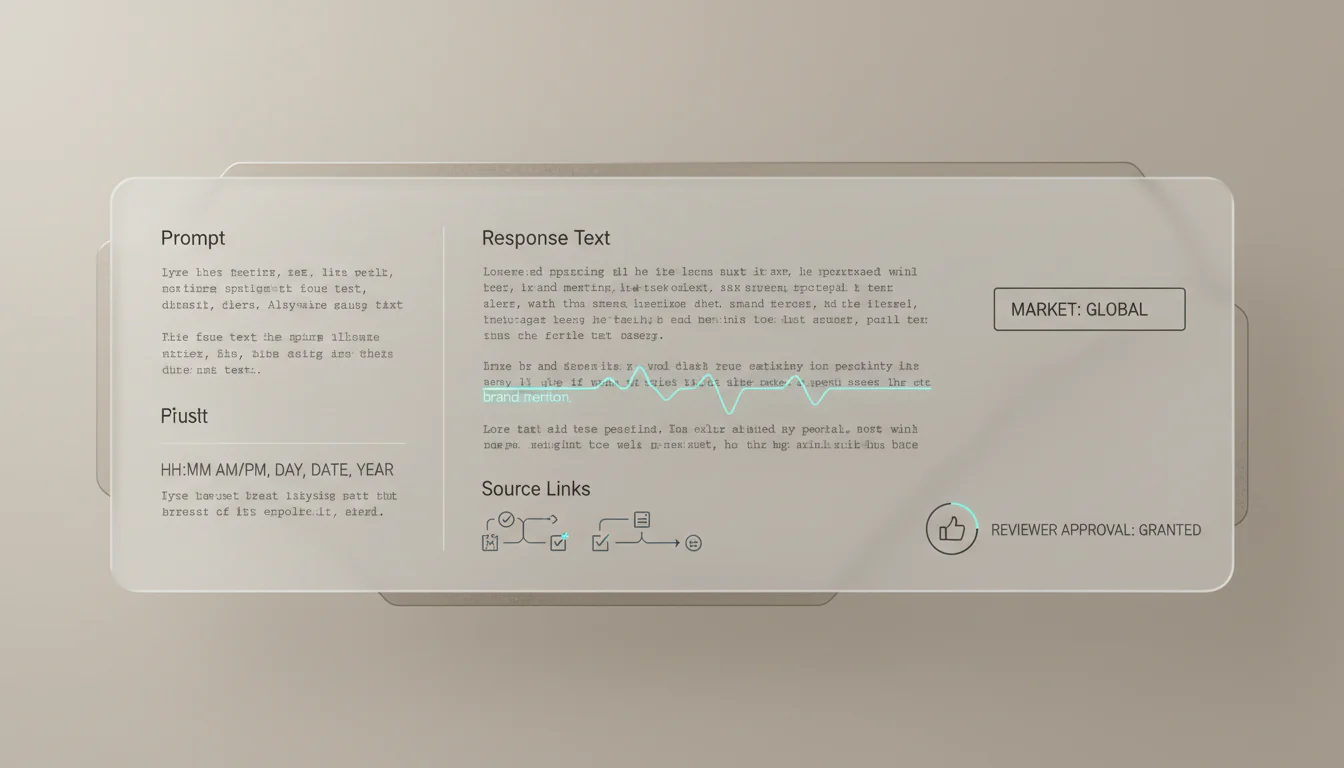
Select priority prompts by buying stage, use case, geography, and category. Save the complete response, cited sources, brand mentions, recommendation language, and date for each run.
Write a Coverage Hypothesis
Before pursuing a placement, document what it is meant to support. For example, an article could reinforce that your brand solves a specific workflow for a clearly defined audience. This gives PR, SEO, and content teams a shared standard for evaluating the coverage afterward.
A useful hypothesis also identifies what would count as a non-result. If a placement does not change citations, mentions, or the quality of AI-generated descriptions after repeated checks, it may still have communication value, but it should not be reported as a visibility win.
Audit the Published Record
Check whether the coverage names the correct entity, preserves accurate facts, and uses language that aligns with current product and category pages. Also verify that your owned pages remain accessible to crawlers, because search systems cannot support an answer with content they cannot reliably access.
Review the coverage for specificity, not merely publication prestige. The strongest evidence names a real problem, explains the relevant expertise, and gives readers details that can be checked against authoritative material. Our citation context approach helps teams assess the language around each source, not merely whether a source appeared.
Compare Repeated Results
Re-run the same prompts on a documented cadence. Treat a post-coverage movement as an association until multiple observations, comparable prompts, and source reviews support a stronger conclusion.
| Measurement Layer | Record Before Coverage | Review After Coverage |
|---|---|---|
| Brand representation | Mentions, descriptions, omissions | Accuracy and frequency of mentions |
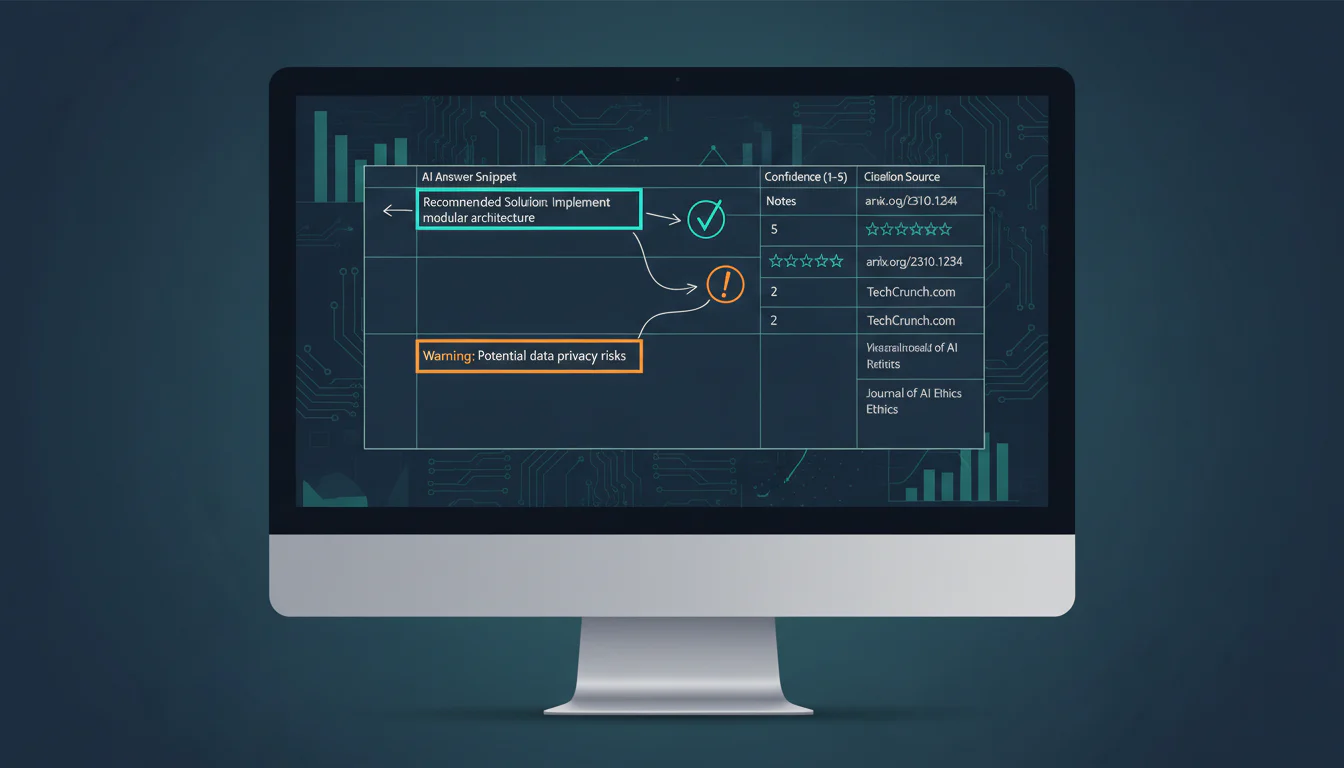
| Citation evidence | Source URLs and cited claims | New sources and citation context |
| Recommendation language | Qualifiers and alternatives | Changes in positioning or confidence |
| Prompt coverage | Included buyer questions | Engine and prompt-level movement |
Use a repeatable measurement system to keep the record auditable. A documented workflow gives teams a defensible basis for deciding whether to reinforce a claim, improve an owned page, or prioritize a more relevant external conversation.
How PageLens.ai Helps Teams Measure AI Visibility
At PageLens.ai, we help marketing, growth, SEO, and content leaders turn a broad visibility concern into a repeatable evidence loop. We start with the prompts buyers actually ask, then record the full answer, cited sources, brand mentions, recommendation language, and differences across engines. Our workflow makes it easier to see whether a new article, credible media placement, product update, or correction corresponds with a change in representation, without pretending that a single mention proves causation. We give teams a shared record for deciding which claims need stronger evidence, which pages need improvement, and which external conversations are worth pursuing. That helps PR, content, and search teams work from the same evidence instead of a vague visibility score. If you need to monitor how AI systems describe your brand and act on the gaps consistently, transparently, and across teams, Book a demo
FAQs on AI Visibility
These answers cover practical limits. See our PageLens methodology for definitions.
Is Earned Media More Important Than Owned Content?
Neither works alone. Independent coverage adds corroboration, while owned pages provide current evidence and crawlable detail that search systems need to surface supporting links responsibly.
Can a Single Placement Improve AI Visibility?
No. One placement can add evidence, but answers vary by prompt, engine, source availability, and time. Compare a documented baseline with repeated checks before claiming results.
How Often Should Teams Check AI Visibility?
Review priority prompts on a regular documented cadence, and after material coverage or product changes. Consistent prompts, locations, and recording rules make patterns more credible.