
How Can SaaS Teams Track ChatGPT Mentions? A ChatGPT Mention Tracking Workflow


TL;DR
Use a ChatGPT mention tracking workflow to monitor buyer prompts, recommendations, citations, competitors, and visibility changes over time.
ChatGPT has more than 900 million weekly users, making product recommendations inside AI answers a meaningful visibility question for SaaS teams.
A ChatGPT mention tracking workflow schedules representative buyer prompts, preserves every full response, and measures whether your product appears, how it is framed, which alternatives appear, and which sources are cited. It is controlled testing of chosen prompts, not access to private user chats, so its conclusions apply only to the documented sample.
This guide explains what to measure, which buyer questions to monitor, how to handle response variation, and how to turn findings into defensible content and source improvements.
What Can a ChatGPT Mention Tracking Workflow Measure?
A useful monitoring program treats each answer as evidence, not as a universal ranking. You define the prompt, the market, the model or mode, and whether search is enabled. Then you save the response and classify what happened. That discipline is what separates AI visibility tracking from an occasional screenshot.
The program can show whether a product was mentioned, recommended, cited, or omitted for a defined set of buyer questions. It cannot show private user chats or total demand. OpenAI’s workspace analytics provide aggregated usage patterns without exposing individual prompt text, which is why external monitoring must rely on a controlled sample.
| Monitoring Can Measure | Monitoring Cannot Reveal |
|---|---|
| Mentions in documented prompt runs | Private ChatGPT conversations |
| Recommendation language and list position | Total category search demand |
| Named alternatives and competitors | Every answer served to every user |
| Visible citations and cited domains | A guaranteed placement or causal result |
| Changes across matched test windows | A universal product reputation score |
A mention means the product name appears. A recommendation requires stronger evidence: the answer presents the product as a suitable choice, preferred option, or credible shortlist candidate. A citation is different again. It is a visible source link, and it may support a claim without naming your product at all.
Which Buyer Prompts Should SaaS Teams Track?
The best prompt set mirrors the questions buyers ask before they know your brand. Branded checks can still be useful for accuracy auditing, but they do not test whether an unfamiliar buyer would discover you. Start with buyer prompt research, then turn recurring buyer language into a stable monitoring set.
Build a Decision Prompt Set
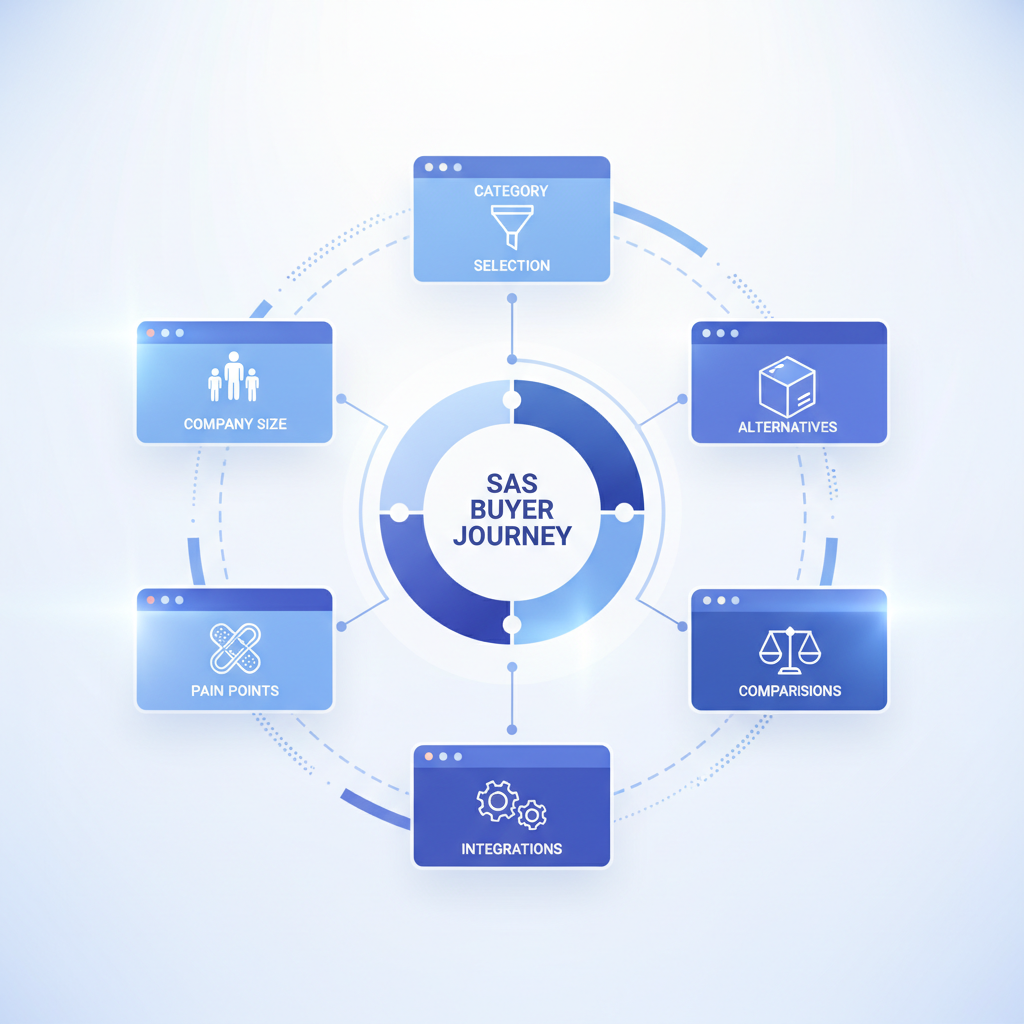
Use prompt families that reflect different ways a prospect reaches a shortlist.

- Category Prompts: “What are the best project management tools for distributed teams?”
- Alternative Prompts: “What are alternatives to a project management platform for agencies?”
- Comparison Prompts: “Which is better for a growing software team, tool A or tool B?”
- Integration Prompts: “Which project management tools work well with a CRM?”
- Company Size Prompts: “What should a mid-market product team use to plan releases?”
- Pain Point Prompts: “How can a remote team reduce missed handoffs between product and engineering?”
Use a Five-Step Setup
- Define the audience, product category, markets, aliases, and comparison set.
- Collect language from sales calls, support conversations, onsite search, and customer interviews.
- Group prompts by category, alternatives, integrations, company size, and pain points.
- Freeze a versioned baseline so future results remain comparable.
- Schedule repeat runs, retain raw answers, classify evidence, and review trends.
Treat Aliases as Data
Create an alias list before counting results. Include the company name, product name, old names, common spacing variants, and frequent misspellings. Ambiguous names need human review, because a keyword match alone can create a false positive. Use prompt research to keep the monitored language tied to real buyer intent.
Why Are Repeated Runs Necessary?
A manual spot check answers one narrow question: what did ChatGPT say in this session? It cannot tell you whether the answer is typical, whether a later answer changed, or whether a model or search condition affected the result. Repeated, matched runs make the evidence more reliable.
That approach follows the logic of ongoing monitoring: define realistic test conditions, preserve methodology, and measure performance over time. For SaaS visibility, that means holding prompt wording and run conditions steady when comparing periods.
Run Matched Repeats
Use fresh sessions and record the model or mode, search state, market, timestamp, and prompt version. If one of those changes, label the comparison accordingly instead of reporting a clean trend that the data cannot support.
Calculate Rates with Denominators
A dashboard should show the numerator and denominator behind every percentage. That lets a marketing leader distinguish a broad visibility change from a movement caused by one prompt.

| Metric | Calculation | Practical Meaning |
|---|---|---|
| Mention Rate | Brand-mentioned runs divided by eligible runs | How often the product appears |
| Recommendation Rate | Recommended runs divided by eligible recommendation-prompt runs | How often the answer actively favors it |
| Competitor Share Of Voice | Brand mentions divided by all tracked-brand mentions | Relative presence in the monitored set |
| Brand Citation Rate | Runs citing a brand-owned URL divided by search-enabled runs | How often the site is visibly cited |
| Change Over Time | Current matched-window rate minus prior matched-window rate | Direction of movement under comparable conditions |
Validate Before You Alert
Require a confirmation run before escalating a material drop. Check aliases, inspect the exact language, and verify cited pages before treating a negative statement as meaningful. A hallucinated claim is an accuracy incident, not automatically sentiment. Our guide to verbatim sentiment review helps teams preserve that distinction.
Which Tools Automate the Workflow?
Manual checks are valuable for learning how answers behave and for validating a new prompt set. They become difficult to sustain when a team needs recurring evidence, competitor context, citation capture, alerts, and reporting. Automation should reduce collection work without hiding the raw answer that supports each metric.
ChatGPT Search may include visible citations and source panels, but availability varies by response and settings. OpenAI describes search responses as answers that may use web sources and citations, so a monitoring system should store only the evidence actually returned in each run.
| Capability | Manual Testing | General Automation | Dedicated AI Visibility Platform |
|---|---|---|---|
| Recurring Runs | Manual scheduling | Configurable | Configurable |
| Full Response Storage | Spreadsheet or document | Database or workflow tool | Platform record |
| Citation Capture | Manual review | Depends on extraction rules | Depends on engine support |
| Competitor Tracking | Manual classification | Custom rules | Configured comparison set |
| Sentiment Classification | Manual review | Rules or model-assisted review | Configured with human review |
| Alerts | Manual review | Configurable | Configurable |
| Exports | Manual file management | Usually available | Usually available |
| Multi-Engine Expansion | Separate checks | Custom connections | Usually available |
The right category depends on volume, internal technical capacity, and how important an audit trail is to stakeholders. For teams comparing different answer surfaces, cross-engine coverage helps define the evidence that should stay consistent.
How Do You Act on the Data?
Monitoring is only useful when it produces a better next decision. A missing mention can reveal a prompt coverage problem, a source gap, an unclear product page, or a competitor context worth researching. It does not automatically tell you which remedy caused the gap.

Start with the evidence itself. Read the answer, review the cited sources, inspect the competing products named, and compare the language against your current pages. OpenAI notes that search visibility depends on reliable, relevant information and accessible content, without guaranteeing placement. Reliable And Relevant is the right standard, not a promise of ranking.
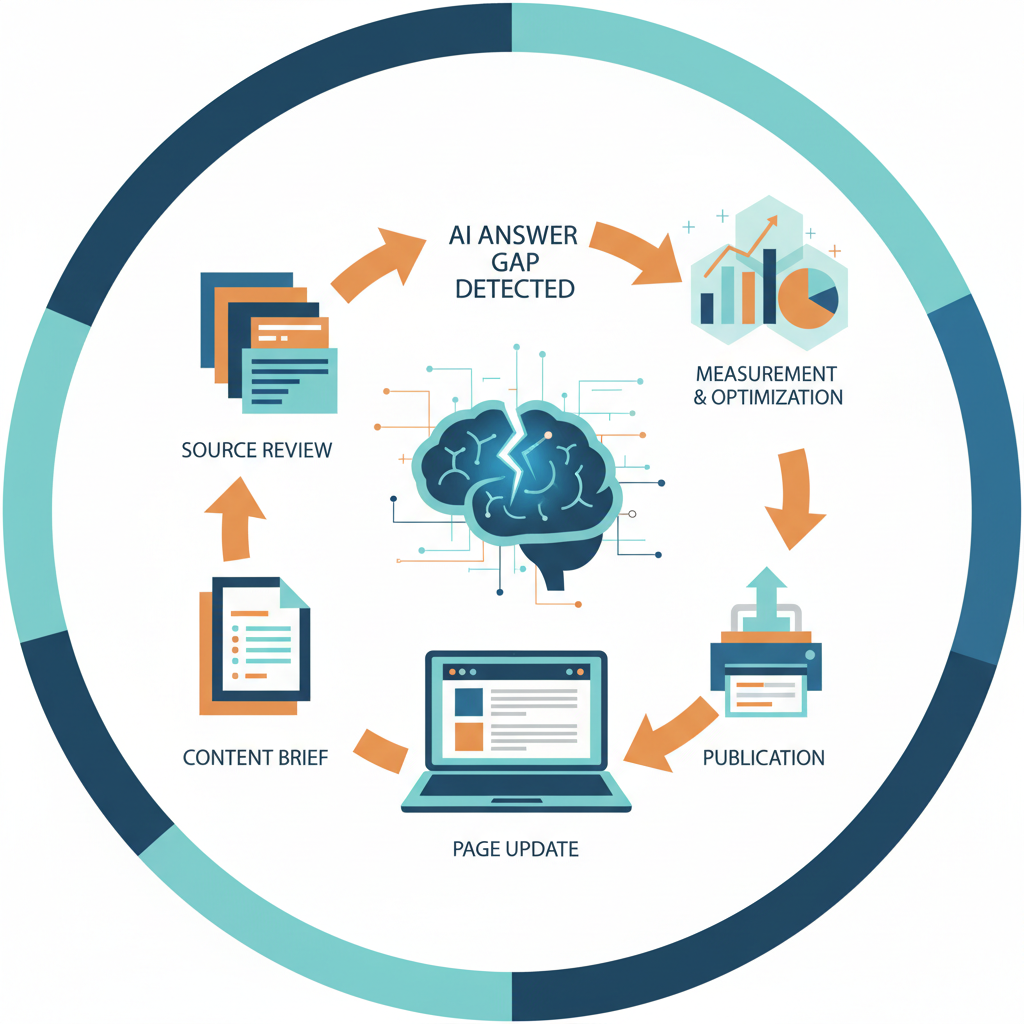
Use this operating loop:
- Detect a gap in a matched monitoring window.
- Validate the raw response, citations, aliases, and recommendation classification.
- Review sources and competitor context for a specific content or factual gap.
- Create a focused brief, update the relevant page, and log what changed.
- Re-run the unchanged prompt set and report correlation, not causation.
If a product is mentioned but described incorrectly, correct first-party information and investigate the source of the claim. If it is cited but not recommended, make the product, audience, and use case clearer where appropriate. When a competitor appears repeatedly, use content optimization to turn that evidence into a specific brief instead of publishing generic category content.
How PageLens.ai Helps SaaS Teams Monitor AI Visibility
At PageLens.ai, we help marketing, growth, SEO, and content leaders turn scattered AI answer checks into a disciplined evidence practice. We start with the buyer questions that matter, then help teams organize prompts, preserve the exact language returned, and review visibility changes against a stable baseline. That makes conversation about “are we showing up?” more useful: leaders can see the prompts, context, competitor set, and cited sources behind each reported change. Our approach is built for teams that need a repeatable monitoring plan before they decide where to invest in content, source cleanup, or competitive research. Explore enterprise monitoring. If you want to assess your prompt coverage, evidence requirements, and reporting workflow with our team, during that conversation, we will map the decisions your dashboard must support, identify validation gaps, and explain how an evidence trail can make each later action easier to defend. Book a demo
FAQs on ChatGPT Mention Tracking Workflow
Can a Tool See Every Mention?
No. A monitor records selected prompts under documented conditions. It cannot reveal private chats, total demand, or every answer seen by users across the service.
How Do We Know ChatGPT Recommends Our Product?
Classify a recommendation only when the answer presents your product as a suitable choice, preferred option, or shortlist candidate. Save exact wording for human review.
Why Should We Re-Run the Same Prompts?
Answers can change with model behavior, search access, market conditions, and response variation. Matched repeat runs show whether a shift persists rather than reflecting one isolated response.
Which Evidence Fields Matter Most?
Store the prompt, full answer, mention status, position, context, competitors, citations, model, market, timestamp, and reviewer decision. Raw evidence makes reported metrics explainable to stakeholders.
Can Monitoring Prove a Content Update Caused a Gain?
No. Monitoring can reveal a correlated change within a controlled prompt sample, but cannot prove causation. Keep a release log, validate sources, and measure again.